
Periodontology III Practice Test
$69.00
- Buy to unlock unlimited access to all Quiz questions and Answers in this Quiz.
- After purchase you can print a PDF of the whole quiz at any point. The PDF will contain the questions and the correct answers.
About this Exam
The Periodontology III Practice Exam is an essential preparatory tool designed for advanced dental and dental hygiene students nearing the completion of their advanced periodontics coursework. This comprehensive test serves as a simulated version of the critical Final Periodontology III Exam that students must pass within their respective educational programs. Periodontology III, at this level, represents the pinnacle of study in the advanced diagnosis, prevention, and therapeutic management of gum diseases and supporting structures, including advanced surgical techniques and the periodontal implications of implant dentistry. Taking this practice exam is a crucial step for students aiming to solidify their understanding of complex concepts, identify knowledge gaps, and confidently approach their final academic qualification in this specialized field.
Ready to test your knowledge?
Buy Now to Access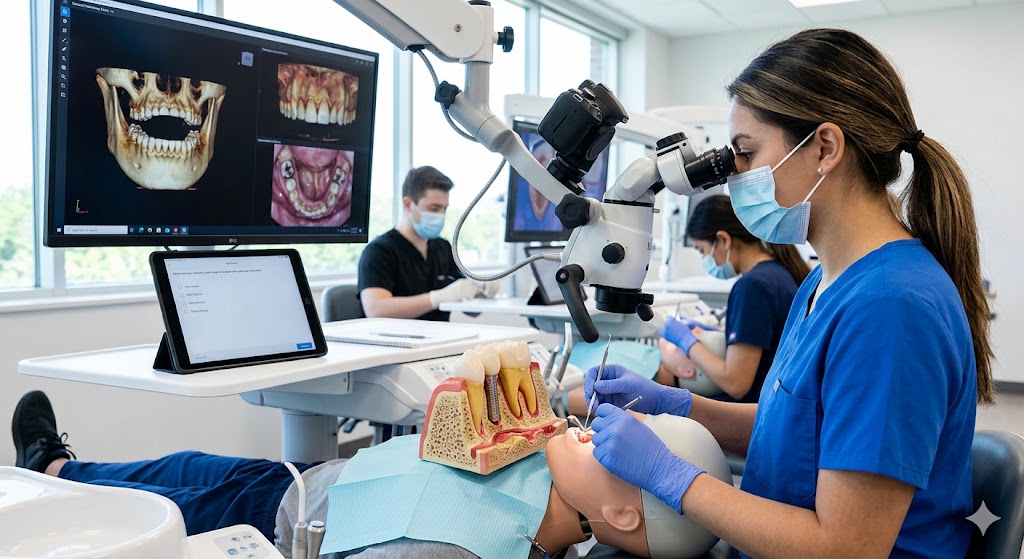
Additional Information
What the Course Entails and Exam Details
This final academic level of periodontology builds significantly on previous knowledge, delving into complex clinical scenarios and evidence-based practice.
The core topics typically covered in Periodontology III and reflected in the exam include:
Advanced pathogenesis and risk assessment of complex periodontal diseases.
Non-surgical periodontal therapies and their evidence-based efficacy.
Advanced surgical techniques: Flap procedures, resective and regenerative osseous surgeries, and periodontal plastic surgery.
The relationship between periodontics and overall systemic health.
Peri-implant diseases, advanced diagnosis, and contemporary treatment strategies.
Research methodology, critical literature review, and application of evidence-based dentistry to periodontal patient care.
Multidisciplinary treatment planning, coordinating with orthodontics, prosthodontics, and endodontics.
The final Periodontology III Exam, for which this test provides practice, is a comprehensive assessment administered directly by the student's accredited dental or hygiene program. It evaluates both theoretical knowledge and potential clinical application through various components.
What to Expect in the Final Exam
The Final Periodontology III Exam is designed to be rigorous, ensuring that students possess the advanced competency required in this field.
While specific formats and details can vary by institution, students can generally expect the following:
Format: The exam typically combines various question types to provide a comprehensive evaluation. This may include a substantial multiple-choice section testing key terminology, diagnostic principles, and treatment protocols. Additionally, students may face complex case-study questions requiring critical thinking to diagnose, treatment plan, and rationalize approaches for challenging patient scenarios. Some programs might also incorporate a practical or OSCE (Objective Structured Clinical Examination) component, assessing hands-on skills in a simulated environment, such as surgical instrument handling or clinical evaluation on models.
Time Limit: Expect a timed exam, typically ranging from 90 to 180 minutes depending on the complexity and format.
Passing Score Requirements: Students are required to achieve a passing score set by their program, which often aligns with professional licensing standards. This could be a percentage of total marks or a scaled score. Failing the final exam may result in a requirement to remediate and retake.
Specific Rules: Standard exam integrity rules will apply, whether administered on paper within a testing hall or via a secure online proctoring portal provided by the educational institution. No aids are permitted unless explicitly stated by the program guidelines.
How to Study and Exam Centers
Preparation for an advanced exam requires structured and dedicated effort. Effective study strategies include:
Reviewing Advanced Material: Revisit all lecture notes, required textbooks (such as standard periodontology and implantology references), key journal articles, and clinical guidelines covered throughout the course. Pay close attention to current literature reviews.
Case Studies Practice: Practice analyzing detailed patient case studies. Focus on synthesizing data, formulating comprehensive diagnoses, creating justified treatment plans, and predicting outcomes. Use standard forms and procedures common to your program.
Timed Practice Tests: Utilize practice exams like this one to simulate actual test conditions. Take it under a strict time limit without consulting resources to assess your speed, accuracy, and identify weak areas. Review all answers, understanding the why behind both correct and incorrect responses.
Practical Skills Refinement: If your final exam includes a practical or OSCE component, seek extra practice in your simulation lab or clinic. Work closely with instructors to refine surgical and diagnostic techniques on models or simulated patients.
Study Groups: Engage in collaborative study. Discussing complex cases and concepts with peers can deepen understanding and reveal different perspectives.
Exam Centers: The actual Final Periodontology III Exam is typically administered within the student's accredited dental or dental hygiene school. It is not taken at generic third-party professional testing centers (like Pearson VUE).
Online Portals: Many institutions deliver the written component of the exam through a secure online learning management system or a specialized proctoring portal accessible within the school's facilities.
Physical Testing Rooms: Students may also be required to take the exam, particularly any practical or OSCE sections, in designated classrooms, lecture halls, or the institution's simulation and clinical facilities on specific dates and times announced by their academic department. Always consult your official course syllabus and program administrators for precise exam dates, locations, and logistical instructions.
Job Opportunities from the Course
Successfully completing Periodontology III and passing the associated final exam is a critical academic and/or clinical requirement for several highly specialized and lucrative career paths within dentistry. This qualification, coupled with proper licensing and, in some cases, additional postgraduate training, unlocks diverse opportunities:
Licensed Dentist (General Practice or Specialization Path): General dentists with advanced periodontal training can provide a higher level of care to their patients and may choose to refer only the most complex cases to specialists. Completion of this coursework is often a prerequisite to applying for or advancing within postgraduate periodontal residency programs to become a board-certified Periodontist.
Specialist Periodontist (Requires Post-Doctoral Residency): For those who pursue the specialty path, after completing dental school and a subsequent 2-3 year periodontal residency, this foundational knowledge is essential. Periodontists specialize in prevention, diagnosis, and treatment of periodontal disease, as well as the placement and maintenance of dental implants. They often work in private practices, multi-specialty clinics, hospitals, and academic settings, commanding very high salaries.
Advanced Practice Dental Hygienist: Dental hygienists who complete advanced coursework (and depending on region, obtain specialized licensure/certification) can take on enhanced roles, including broader periodontal care responsibilities and independent practice capabilities in some areas.
Dental Educator: Advanced dental professionals often become educators, teaching future generations of dental and hygiene students in academic institutions. Specialized knowledge is highly valued in these roles.
Dental Researcher: Careers in dental research, either in academic, government, or private industry settings, focus on advancing the scientific understanding of periodontal health, disease, and treatments. Deep foundational knowledge from advanced coursework is paramount for conducting rigorous research in this field.
Frequently Asked Questions
Reviews
5.0
Based on 0 reviews
Leave a Review
No reviews yet. Be the first to review!