
Personal Care Assistants (PCA) Practice Test
$69.00
- Buy to unlock unlimited access to all Quiz questions and Answers in this Quiz.
- After purchase you can print a PDF of the whole quiz at any point. The PDF will contain the questions and the correct answers.
About this Exam
The Personal Care Assistant (PCA) certification is designed for individuals who have a passion for providing hands-on care and support to seniors, individuals with disabilities, and patients recovering from illness or injury. PCAs play a vital role in healthcare by assisting clients with daily living activities in a variety of settings, primarily within the client’s home. This exam validates the essential knowledge and practical skills required to work safely, compassionately, and professionally as a crucial part of a care team. It is a key step for aspiring caregivers seeking to launch a fulfilling career in direct patient care.
Ready to test your knowledge?
Buy Now to Access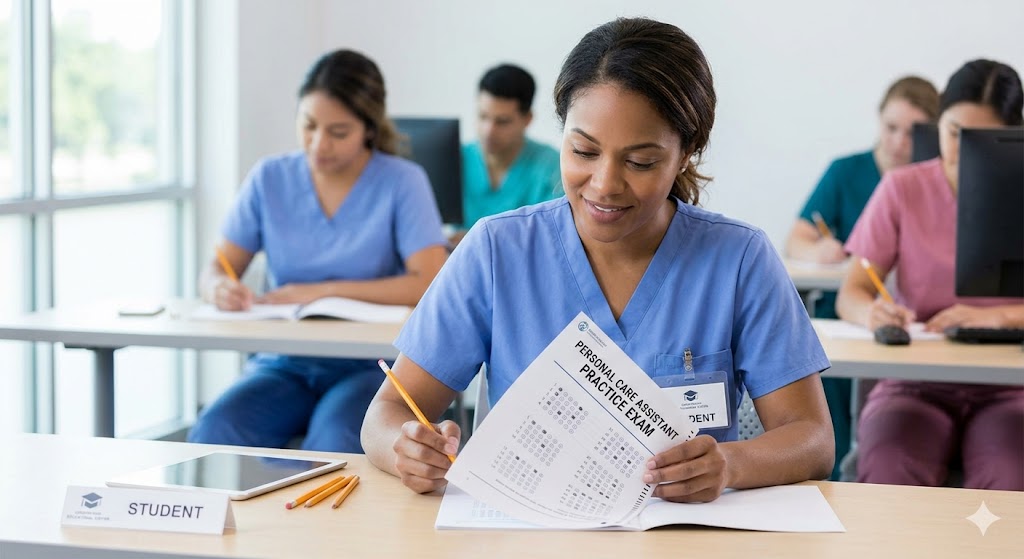
Additional Information
What the Course Entails and Exam Details
PCA training programs are generally brief, often ranging from 40 to 75 hours, and cover a wide range of topics focused on improving a client's quality of life and maintaining their safety. The core syllabus typically includes instructions on assisting with Activities of Daily Living (ADLs) like bathing, dressing, grooming, and eating. You will learn important procedures for infection control, safety and emergency protocols (such as basic first aid and CPR), safe client transfer and positioning techniques, and basic nutrition and meal preparation. Furthermore, significant emphasis is placed on soft skills like effective communication with clients and families, understanding client rights, observing ethical guidelines, and documenting care provided accurately. The exam itself assesses your retention and ability to apply this knowledge.
What to Expect in the Final Exam
The PCA final exam typically consists of a written (multiple-choice) section, and many programs also include a clinical skills demonstration. The written test is usually 50-100 questions covering the topics outlined in the course, with a time limit often between one and two hours. A passing score generally falls in the range of 70% to 80%. If there is a skills component, you will be required to perform a few random essential tasks—such as handwashing, transferring a client from bed to wheelchair, or measuring vital signs—in front of an evaluator to prove your practical competency. It is crucial to understand that specific requirements can vary by state and the training provider, so always confirm the exact format with your school.
How to Study and Exam Centers
A multi-faceted approach is best for PCA exam preparation. Begin by thoroughly reviewing all material provided in your training course, including textbooks, lecture notes, and any practical skills checklists. Utilize online resources to find various PCA practice tests; taking these repeatedly will familiarize you with the question formatting and help you identify areas where you need more study. For the skills portion, practice the required tasks repeatedly, either with a classmate or in front of a mirror, using a friend or family member as a mock patient if possible. Focus on performing each step smoothly, safely, and with attention to client dignity.
The final PCA exam is often administered directly by the state-approved training school or program you attended. Upon completion of your coursework, they will provide information on scheduling your test at their designated location. In some cases, states may use third-party testing services like Pearson VUE, which have dedicated, secure testing centers, or authorize specific physical testing locations or online proctoring platforms for the written exam. You must always check with your state's department of health or the licensing board that oversees PCAs to confirm the authorized testing methods and locations.
Job Opportunities from the Course
Obtaining your PCA certification opens the door to numerous vital roles across various healthcare and community settings.
Personal Care Assistant (PCA)
Home Health Aide (HHA) - often requires the same core certification
Caregiver
Resident Assistant (RA) in Assisted Living
Direct Support Professional (DSP) - supporting individuals with developmental disabilities
Patient Care Technician (PCT) - may require additional certifications
Hospice Aide
Homemaker/Personal Care Provider
Frequently Asked Questions
Reviews
5.0
Based on 0 reviews
Leave a Review
No reviews yet. Be the first to review!