
Pest Control Aircraft Pilot Practice Test
$69.00
- Buy to unlock unlimited access to all Quiz questions and Answers in this Quiz.
- After purchase you can print a PDF of the whole quiz at any point. The PDF will contain the questions and the correct answers.
About this Exam
The Pest Control Aircraft Pilot certification is designed for licensed commercial pilots who wish to specialize in the precision application of pesticides, fertilizers, and other agricultural products from the air. Often referred to as aerial applicators or crop dusters, these pilots play a crucial role in modern agriculture and public health (such as mosquito control).
This certification validates that a pilot possesses the specialized knowledge and skills required to safely and effectively operate agricultural aircraft, manage chemical applications, minimize environmental impact, and comply with strict federal and state regulations.
Ready to test your knowledge?
Buy Now to Access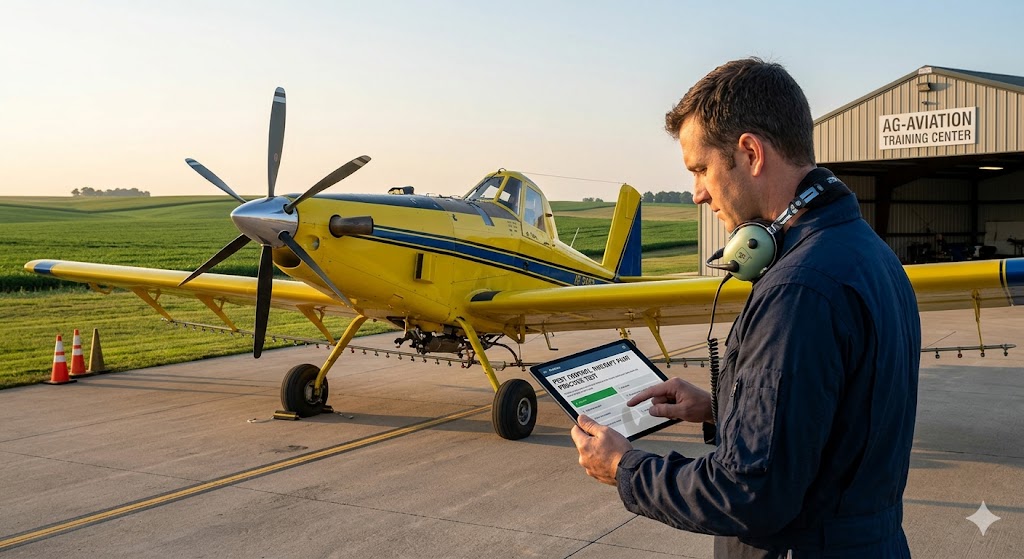
Additional Information
What the Course Entails and Exam Details
To become a certified aerial applicator, pilots must demonstrate proficiency in several key areas. The training course and subsequent examinations typically cover:
Federal and State Regulations: In-depth understanding of Federal Aviation Regulations (FARs) pertaining to agricultural operations (Part 137) and Environmental Protection Agency (EPA) regulations regarding pesticide use.
Pesticide Safety and Handling: Comprehensive knowledge of different types of pesticides, reading and interpreting chemical labels, proper mixing and loading procedures, and safety protocols to protect the pilot and the environment.
Aerial Application Techniques: Mastering precision flight profiles, managing spray drift, calculating application rates, swath planning, and efficient field coverage methods.
Aircraft Systems and Equipment: Understanding the operation and maintenance of specialized spray equipment, hoppers, pumps, and dispersal systems.
Meteorology for Aerial Application: Analyzing weather conditions, particularly wind speed and direction, stability, and inversions, and their critical effect on drift and application effectiveness.
Environmental Management: Recognizing sensitive areas, managing run-off, and implementing practices to protect wildlife, water sources, and adjacent crops.
What to Expect in the Final Exam
The certification process generally involves both knowledge tests and, in many cases, a practical flight demonstration.
FAA Knowledge Test: Pilots must pass an FAA-administered knowledge test (such as the Commercial Pilot Agricultural Aircraft rating knowledge test). This is typically a computer-based, multiple-choice exam covering regulations, weather, aircraft operations, and application principles.
State Pesticide Applicator Exam: Most states require a separate exam focused specifically on pesticide laws, safety, and integrated pest management (IPM) practices specific to that jurisdiction. This is also commonly a multiple-choice format.
Practical Flight Test (Checkride): After passing the knowledge requirements, pilots often undergo a practical test (checkride) with an FAA inspector or designated examiner. During this test, pilots must demonstrate competency in pre-flight planning, specialized takeoffs and landings, and actual or simulated aerial application maneuvers.
How to Study and Exam Centers
Effective preparation is essential for success in these rigorous exams. Here are recommended study strategies:
Review Official FAA Handbooks: Utilize publications like the FAA Agricultural Aviation Operations Handbook and relevant Advisory Circulars.
Study State Pesticide Manuals: Obtain the core manual and specialized aerial application sub-category manuals provided by your state's Department of Agriculture or environmental agency.
Utilize Practice Tests: Take online practice tests specifically designed for the Pest Control Aircraft Pilot and state applicator exams to familiarize yourself with the question formats and identify knowledge gaps.
Enroll in Specialized Training: Consider attending an agricultural aviation flight school that offers comprehensive ground school and flight training tailored to this industry.
Exam Centers:
FAA knowledge tests are administered at authorized computer testing centers nationwide (e.g., PSI). State pesticide applicator exams are managed by individual state regulatory agencies, and testing locations vary; they may be offered at county extension offices, state agency testing centers, or sometimes online via proctored portals.
Job Opportunities from the Course
Upon achieving certification as a Pest Control Aircraft Pilot, several career paths in the agricultural and public health sectors become available. Key job titles include:
Agricultural Pilot (Aerial Applicator)
Crop Duster Pilot
Forest Spray Pilot
Vector Control Pilot (for public health/mosquito abatement programs)
Aerial Firefighter (involving fire retardant application, which requires similar low-level flying skills)
Frequently Asked Questions
Reviews
5.0
Based on 0 reviews
Leave a Review
No reviews yet. Be the first to review!