
Pesticide Applicator Practice Test – Pass the Wisconsin Exam in 2026
$69.00
- Buy to unlock unlimited access to all Quiz questions and Answers in this Quiz.
- After purchase you can print a PDF of the whole quiz at any point. The PDF will contain the questions and the correct answers.
About this Exam
The Wisconsin Pesticide Applicator Certification is a mandatory qualification for individuals who intent to apply pesticides—including herbicides, insecticides, and fungicides—in a professional or commercial capacity within the state. This certification is designed to ensure that all applicators possess the critical knowledge required to handle, mix, apply, and dispose of pesticides safely and effectively, minimizing risks to human health and the environment. It is essential for anyone working in agriculture, landscaping, forestry, structural pest control, right-of-way maintenance, and other industries where pesticide use is a standard practice. Achieving this certification demonstrates a professional commitment to public safety and environmental stewardship, paving the way for a compliant and successful career.
Ready to test your knowledge?
Buy Now to Access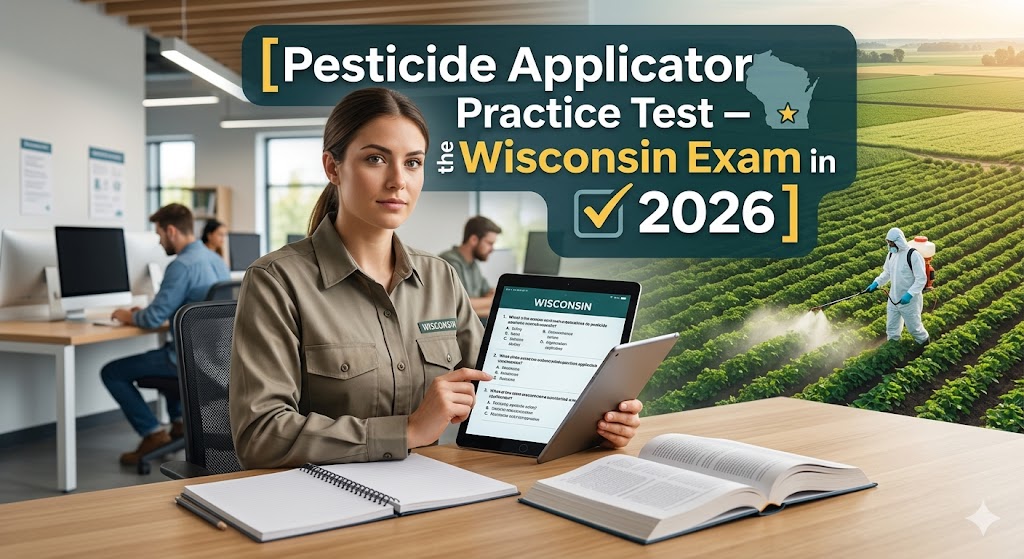
Additional Information
What the Course Entails and Exam Details
To become a certified applicator, candidates must master a comprehensive range of topics outlined in the official Wisconsin Department of Agriculture, Trade and Consumer Protection (DATCP) training materials. The core areas covered include:
Pesticide Laws and Regulations: Understanding federal (FIFRA) and state-level Wisconsin regulations governing pesticide use, registration, and enforcement.
Pesticide Safety and Health: Proper handling, personal protective equipment (PPE), emergency response, and first aid for pesticide exposure.
Environmental Protection: Factors affecting pesticide movement, preventing groundwater contamination, protecting endangered species, and minimizing drift.
Pesticide Labeling and Comprehension: How to accurately read, interpret, and follow instructions on pesticide labels.
Pesticide Formulations: Differentiating between various liquid and dry formulations and their specific application considerations.
Application Equipment and Calibration: Selecting the correct equipment for the job and calibrating it for accurate application rates.
Pest Identification and Management: Recognizing common pests and understanding Integrated Pest Management (IPM) principles.
The course is structured into various categories (e.g., Structural Pest Control, Turf & Landscape, Right-of-Way), and candidates must choose the specific category that matches their intended field of work. The depth of knowledge required depends on the complexity of the category.
What to Expect in the Final Exam
The Wisconsin Pesticide Applicator Exam is a rigorous test administered to ensure proficiency. It is a closed-book, multiple-choice exam, designed to test your comprehensive knowledge of the course materials. The passing score for most commercial categories is 70%, though it is always best to check the latest guidelines from DATCP for your specific category.
Candidates typically have a designated time limit to complete the exam, which varies depending on the number of questions. Specific rules regarding the use of calculators (if permitted), cell phones, and other materials are strictly enforced at the testing centers. Cheating is a serious offense that can result in immediate failure and potential bans from future exams.
How to Study and Exam Centers
Successfully passing the Wisconsin Pesticide Applicator Exam requires a combination of self-study and practice. The foundation of your preparation should be the official Wisconsin DATCP training manuals for your selected category.
Study Strategies:
Read and Re-read the Manuals: Thoroughly go through the official training manuals, taking detailed notes and highlighting key terms and concepts. Pay close attention to definitions, regulations, safety procedures, and calibration methods.
Use Practice Tests: Taking multiple practice exams is one of the most effective ways to study. Practice tests help you identify areas where you need further review and familiarize you with the format and phrasing of the exam questions. Look for reliable resources that offer questions based on the latest Wisconsin exam content.
Review the Label: Spend significant time reading sample pesticide labels and practicing interpreting them. Label comprehension is a major component of the exam.
Practice Calibration: Work through calibration problems using the formulas provided in the manual. This is a critical skill for any applicator.
Exam Centers:
Once you are ready, you can schedule your exam at one of the authorized testing centers across Wisconsin. These locations often include technical colleges and UW-Extension offices. DATCP provides online portals and scheduling services to help you find the most convenient location and time. It is crucial to register well in advance, especially during peak application seasons.
Job Opportunities from the Course
Obtaining a Wisconsin Pesticide Applicator Certification opens doors to a wide array of career paths in various industries. Here are some of the potential job opportunities:
Pest Control Technician: Residential, commercial, and industrial structural pest control.
Lawn Care and Landscape Applicator: Maintenance of turf and ornamental plants for residential and commercial properties.
Agricultural Pesticide Applicator: Applying crop protection products for farmers and agricultural service companies.
Forestry Technician / Applicator: Managing vegetation and pests in forested areas.
Right-of-Way Maintainer: Controlling vegetation along roadsides, railways, and utility corridors.
Greenhouse and Nursery Worker: Managing pests in controlled environmental agriculture.
Aquatic Pesticide Applicator: Controlling weeds and algae in ponds, lakes, and other water bodies.
Urban Forester / Arborist: Specialized application of pesticides for tree health and maintenance.
Frequently Asked Questions
Reviews
5.0
Based on 0 reviews
Leave a Review
No reviews yet. Be the first to review!