
Pharmacy PEBC Practice Exam
$69.00
- Buy to unlock unlimited access to all Quiz questions and Answers in this Quiz.
- After purchase you can print a PDF of the whole quiz at any point. The PDF will contain the questions and the correct answers.
About this Exam
Are you a pharmacy graduate aspiring to practice pharmacy in Canada? The mandatory final hurdle to achieving your goal is the Pharmacy Examining Board of Canada (PEBC) Qualifying Exam. This rigorous assessment ensures that all entry-level pharmacists possess the necessary knowledge and skills to practice safely and effectively in the Canadian healthcare landscape. Our comprehensive Pharmacy PEBC Practice Exam is meticulously designed to support your preparation, providing you with a valuable diagnostic tool to gauge your readiness. It helps international pharmacy graduates and recent Canadian graduates alike to bridge knowledge gaps and gain the confidence needed to succeed on test day.
Ready to test your knowledge?
Buy Now to Access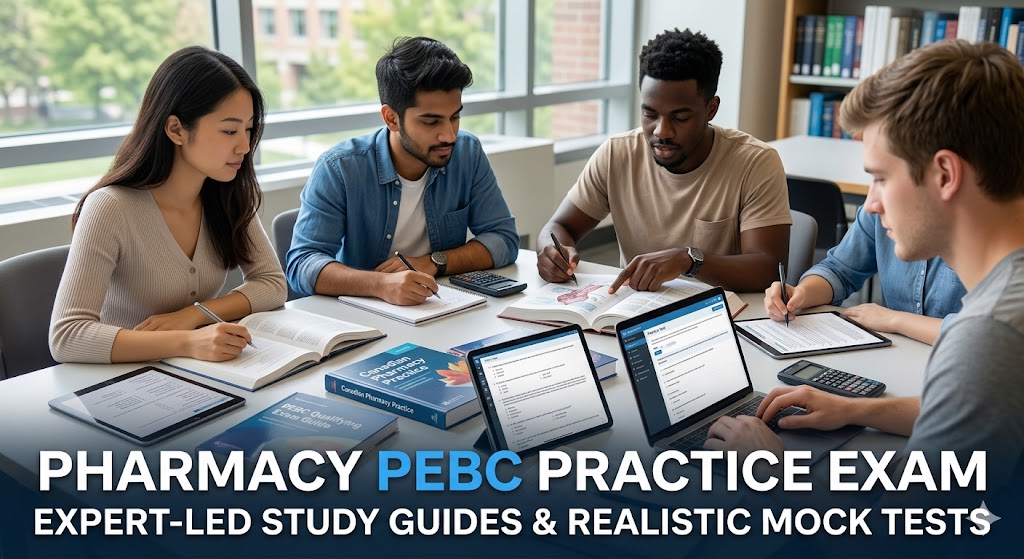
Additional Information
What the Course Entails and Exam Details
The ultimate goal of your PEBC preparation is to conquer the Qualifying Exam, which is the foundational standard for licensure. A comprehensive PEBC course or practice regimen must cover the extensive blueprint set by the board. These core competencies encompass several critical domains of practice. You must demonstrate proficiency in ethical, legal, and professional responsibilities, including a thorough understanding of the Canadian healthcare system and relevant legislation. A deep knowledge of drug distribution systems, medication safety practices, and pharmaceutical sciences is essential. Furthermore, the exam heavily tests your ability to apply therapeutic knowledge to provide effective patient care, from analyzing complex prescriptions to offering essential counseling and monitoring therapy outcomes. Finally, management skills and clear, professional communication are integrated into the assessment criteria.
What to Expect in the Final Exam
The PEBC Qualifying Exam for Pharmacists is a sophisticated, two-part assessment that you must pass within a specified time frame.
Part I: Multiple Choice Questions (MCQ) This section is a comprehensive computer-based test that evaluates your broad knowledge base across all key pharmacy competencies. The actual exam involves approximately 200 high-quality, clinical multiple-choice questions administered over a single day in several sessions. You must achieve a standardized passing score, often referenced as a score of 600 or higher on their statistical scaling, to demonstrate minimal competence.
Part II: Objective Structured Clinical Examination (OSCE) This is the practical, performance-based component. It assesses your hands-on skills through a series of "stations." In each station, you will interact with a "standardized patient" (trained actor) or an "assessor." You might be asked to solve a specific medication problem, counsel a patient on a complex new prescription, or provide an over-the-counter recommendation. Each station has a strict time limit (usually seven minutes), and you are evaluated on both your clinical knowledge and communication skills.
How to Study and Exam Centers
Succeeding in the PEBC exams requires a dedicated, long-term study plan and active preparation. Do not rely solely on passive reading. We highly recommend integrating practice exams early and often in your revision process. Reputable Pharmacy PEBC Practice Exams, like the one we provide, offer detailed feedback and allow you to simulate exam-day conditions, improving both your knowledge retention and time management skills. Form study groups to discuss complex scenarios, review official PEBC blueprint documents, and utilize authorized textbooks and practice resources.
Registration for the actual PEBC Qualifying Exams is completed exclusively through the PEBC official website. The computer-based MCQ exam (Part I) is typically administered at standardized Prometric testing centers located across Canada and at select international locations. The practical OSCE exam (Part II) is held at designated test centers specifically set up for clinical assessments within major Canadian cities. Always confirm official dates and locations directly with the PEBC.
Job Opportunities from the Course
Successfully navigating the PEBC journey is the master key that unlocks a vast array of rewarding career paths. Upon achieving full licensure as a Registered Pharmacist (RPh) in Canada, you can pursue diverse job opportunities:
Licensed Community Pharmacist
Hospital Pharmacist
Clinical Pharmacist (Specializing in areas like Oncology, Critical Care, or Infectious Disease)
Consultant Pharmacist for Long-Term Care
Industrial Pharmacist (Working in research, development, or quality assurance)
Regulatory Affairs Pharmacist (For government or private industry)
Pharmacy Manager or Owner
Frequently Asked Questions
Reviews
5.0
Based on 0 reviews
Leave a Review
No reviews yet. Be the first to review!