
Phlebotomy (PM) Class Practice Test
$69.00
- Buy to unlock unlimited access to all Quiz questions and Answers in this Quiz.
- After purchase you can print a PDF of the whole quiz at any point. The PDF will contain the questions and the correct answers.
About this Exam
This comprehensive guide and accompanying practice materials are designed specifically for students preparing for their official phlebotomy certification exam.
Whether you are completing a phlebotomy technician program or seeking a career change, mastering the core concepts of blood collection, specimen processing, and patient interaction is essential.
Our Phlebotomy Class Practice Test simulates the actual exam environment, helping you build confidence, identify knowledge gaps, and refine your test-taking strategies.
This resource is an invaluable tool for anyone aiming to become a certified phlebotomist and enter the dynamic field of healthcare.
Ready to test your knowledge?
Buy Now to Access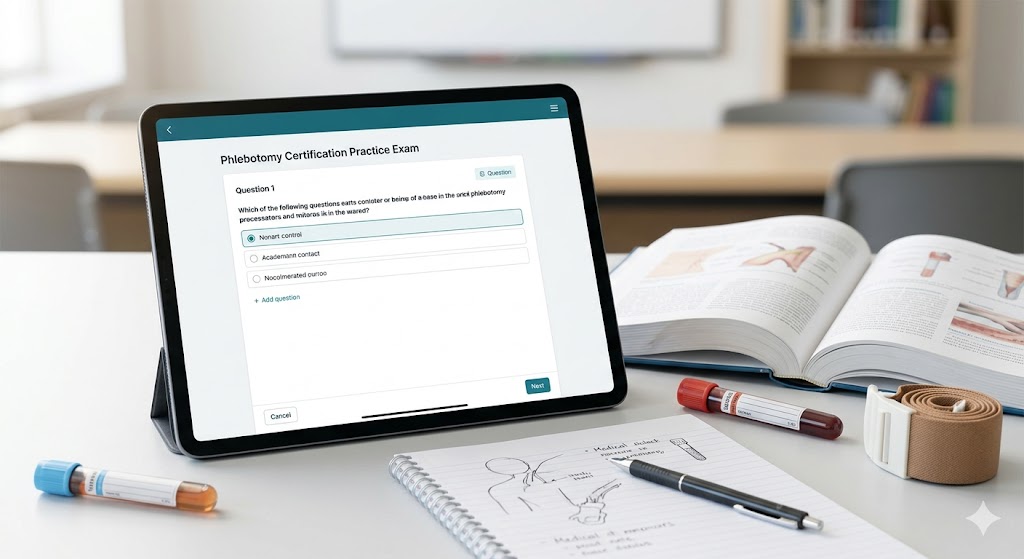
Additional Information
What the Course Entails and Exam Details
A phlebotomy course covers a wide array of vital topics necessary for safe and efficient blood collection and laboratory procedures.
Students learn human anatomy and physiology, with a specific focus on the circulatory system, vein location, and the composition of blood.
The curriculum extensively details phlebotomy equipment, including the types of needles, tubes, additives, and their corresponding order of draw.
Mastering proper venipuncture and capillary puncture techniques, adhering to strict safety protocols (such as Universal Precautions and OSHA guidelines), and maintaining quality control are central components.
Additionally, courses cover crucial soft skills like professional patient interaction, ethical considerations, legal standards in healthcare (HIPAA), and effective communication.
The exam details section of this practice material reflects these core topics, ensuring comprehensive preparation for the actual certification test.
What to Expect in the Final Exam
The final phlebotomy certification exam, whether administered by the NHA (National Healthcareer Association), AMT (American Medical Technologists), ASPT (American Society of Phlebotomy Technicians), or another accredited body, is a challenging assessment.
Most final exams are computer-based and consist of approximately 100 to 120 multiple-choice questions.
Candidates are typically given a time limit of 1.5 to 2 hours to complete the examination.
The content breakdown often focuses heavily on safety and infection control, patient preparation, collection procedures, and laboratory operations.
Passing scores vary by certifying agency but generally range from 70% to 75% or higher.
It is crucial to review the specific guidelines and passing requirements provided by your chosen certification organization.
Our practice test mirrors these common formats and question distributions to provide a realistic testing experience.
How to Study and Exam Centers
To succeed on your phlebotomy certification exam, a strategic approach to studying is essential.
Begin by thoroughly reviewing your course textbooks, lecture notes, and any study guides provided by your program.
Active learning is highly effective; create flashcards for key terms, definitions, tube colors, additives, and the order of draw.
Consistent practice with reliable sample questions and full-length simulated exams, like our Phlebotomy Class Practice Test, is critical for building stamina and accuracy.
Forming study groups can provide diverse perspectives and help you clarify complex concepts through discussion.
When you are ready to take the official exam, you must register through the specific certification agency you have chosen (e.g., NHA, AMT).
The actual certification exams are typically administered at authorized testing centers such as Pearson VUE, Prometric, or sometimes directly at your phlebotomy training school.
Official websites will provide a search tool to locate the nearest testing center and schedule your exam appointment.
Job Opportunities from the Course
Earning your phlebotomy certification opens doors to diverse and rewarding career paths within the healthcare sector.
Graduates with a phlebotomy certification can pursue roles such as:
Certified Phlebotomy Technician (CPT)
Phlebotomist
Medical Assistant (often requires additional cross-training)
Laboratory Assistant
Specimen Processor
Plasma Center Technician
Mobile Phlebotomist
Frequently Asked Questions
Reviews
5.0
Based on 0 reviews
Leave a Review
No reviews yet. Be the first to review!