
Phreesia Training Practice Test
$69.00
- Buy to unlock unlimited access to all Quiz questions and Answers in this Quiz.
- After purchase you can print a PDF of the whole quiz at any point. The PDF will contain the questions and the correct answers.
About this Exam
The Phreesia Training Practice Exam is an essential tool for healthcare professionals aiming to master the Phreesia patient intake and revenue cycle management platform.
This practice test is designed to evaluate and enhance your understanding of the Phreesia application, ensuring you are prepared to utilize its full potential in a clinical or administrative setting.
It is ideal for receptionists, medical assistants, office managers, and anyone responsible for patient registration, scheduling, and billing within a healthcare facility. By using this practice exam, you can gain the confidence needed to streamline office workflows, improve patient satisfaction, and ensure data accuracy.
Ready to test your knowledge?
Buy Now to Access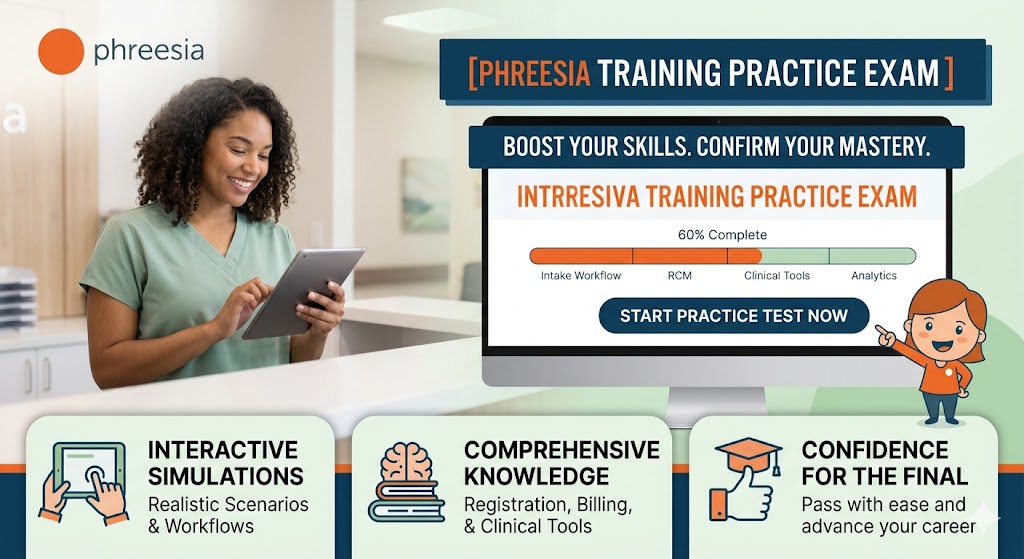
Additional Information
What the Course Entails and Exam Details
The course and corresponding exam cover a comprehensive range of topics central to the effective use of the Phreesia system. These areas include:
Patient Registration and Intake: Learning to navigate the check-in process, digitally collect patient information, and manage the digital clipboard.
Scheduling and Appointment Management: Understanding how to use the Appointment Accelerator and manage patient appointments efficiently.
Revenue Cycle Management: Gaining proficiency in real-time eligibility and benefits verification, collecting payments (pre-visit, point-of-service, and post-visit), and managing digital patient statements.
Clinical Integration: Utilizing tools for clinical screenings (e.g., PHQ-9, GAD-7) and integrating Phreesia with existing Electronic Health Records (EHR).
Analytics and Reporting: Accessing and interpreting key performance indicators (KPIs) and operational dashboards to improve practice efficiency.
The practice exam typically consists of multiple-choice questions, true/false questions, and interactive, scenario-based simulations.
What to Expect in the Final Exam
While the exact structure can vary depending on the specific training program or version of Phreesia being used, the final assessment generally includes:
Format: A computer-based test featuring a mix of knowledge-based and practical application questions. Scenario-based simulations are common to test real-world problem-solving skills.
Number of Questions: Approximately 40 to 60 questions, depending on the depth of the training.
Time Limit: Typically, you will have between 60 to 90 minutes to complete the exam.
Passing Score: A passing score is usually set between 70% and 80%, reflecting a strong proficiency in the platform.
Rules: Standard test conditions apply, and many exams are "open book" only regarding the official Phreesia user guides and internal training materials.
How to Study and Exam Centers
Preparation is the key to success on both the practice test and the final exam. Here are actionable strategies:
Engage with Official Phreesia Training Modules: Complete all assigned interactive video lessons, user guides, and training labs provided by your employer or Phreesia.
Use the Platform in a Sandbox Environment: Practical experience is invaluable. Spend time practicing daily tasks, such as patient check-ins, insurance verification, and payment processing, in a test or sandbox environment.
Take Multiple Practice Tests: Utilize practice exams, like this one, to identify knowledge gaps and get comfortable with the types of questions and simulations you will face. Focus on understanding why a particular answer is correct.
Form a Study Group: Collaborate with colleagues to discuss complex scenarios and share best practices for using the platform.
Exam Centers:
The final Phreesia user training exam is typically administered online through authorized learning management systems (LMS) provided by Phreesia or your healthcare organization. This allows you to take the test conveniently from your workplace or home.
Job Opportunities from the Course
Mastery of the Phreesia platform, validated by a completed training or certification, can advance your career and open new opportunities. Key career paths include:
Phreesia Platform Specialist: A dedicated role focusing on managing the system, troubleshooting user issues, and training new staff.
Implementation Specialist: Guiding other healthcare practices through the onboarding and go-live process for Phreesia.
Medical Office Manager: Leading administrative staff, optimizing workflows, and maximizing revenue cycle efficiency using Phreesia data.
Patient Access Manager: Supervising the entire registration and check-in process to enhance patient experience and operational flow.
Revenue Cycle Manager: Overseeing billing, collections, and financial reporting with a focus on leveraging Phreesia's RCM tools.
EHR and HIT Analyst: Specializing in the integration and optimization of Electronic Health Records and related health information technologies, including Phreesia.
Frequently Asked Questions
Reviews
5.0
Based on 0 reviews
Leave a Review
No reviews yet. Be the first to review!