
Pilot Café Instrument Flight Rules (IFR) Practice Test
$69.00
- Buy to unlock unlimited access to all Quiz questions and Answers in this Quiz.
- After purchase you can print a PDF of the whole quiz at any point. The PDF will contain the questions and the correct answers.
About this Exam
The Pilot Café Instrument Flight Rules (IFR) practice test is a crucial resource for aspiring pilots seeking their Instrument Rating, allowing them to fly in a wider range of weather conditions by relying solely on instruments. This comprehensive practice exam is specifically designed to simulate the challenge of the Federal Aviation Administration (FAA) or other relevant regulatory body's knowledge and practical tests for IFR certification. It is an essential step for pilots who already hold a Private Pilot License (PPL) or a higher certificate and are focused on upgrading their skills to the next professional tier.
Ready to test your knowledge?
Buy Now to Access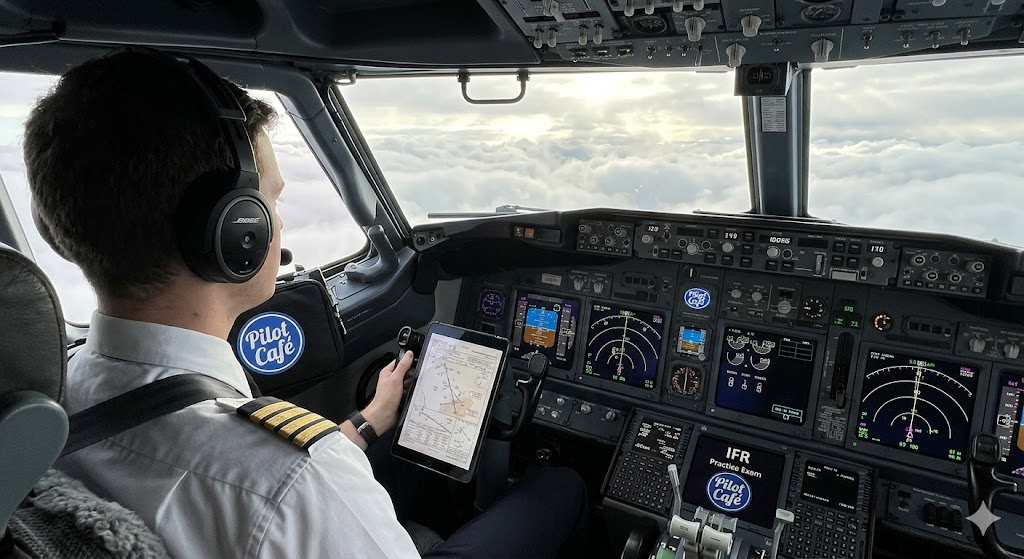
Additional Information
What the Course Entails and Exam Details
The material covered in the IFR course, which this practice test mirrors, dives deep into advanced aviation theory and practical skills. Core topics include mastering aircraft control by instrument reference, complex navigational procedures using VOR, GPS, and advanced flight management systems (FMS). A heavy emphasis is placed on understanding the intricate structure of the IFR enroute system, standard instrument departures (SIDs), standard terminal arrival routes (STARs), and the entire instrument approach procedure spectrum. Candidates are evaluated on their ability to interpret complex weather systems and forecasts, and most critically, on their judgment regarding when it is safe to fly in IFR conditions and how to manage contingencies. The final qualification entails both a written knowledge test and a practical flight exam, commonly known as a checkride.
What to Expect in the Final Exam
For the knowledge test, you should expect a multiple-choice format, typically with a set number of questions (e.g., 60 for the FAA knowledge test). The exam has a specific time limit, such as 2.5 hours, and requires a passing score of at least 70 percent. This test covers general information, weather, navigation, flight planning, regulations, and IFR procedures. Following successful completion of the knowledge test, pilots must pass the practical checkride with an authorized examiner. This flight exam requires demonstrating mastery in various IFR maneuvers, multiple types of precision and non-precision instrument approaches, holding procedures, and navigating complicated air traffic control instructions, all while wearing a view-limiting device to simulate IMC (Instrument Meteorological Conditions).
How to Study and Exam Centers
Effective preparation for the IFR exams demands a multi-faceted approach. To optimize success, candidates should utilize structured study courses, flight simulation software to practice procedures at home, and, of course, extensive hours with an authorized flight instructor. Taking the Pilot Café IFR Practice Exam multiple times is critical for familiarizing yourself with the depth and tone of actual questions, identifying weak areas, and building time management skills. When you are ready for the actual knowledge test, specific designated testing centers like Pearson VUE locations and computer-assisted testing service (CATS) sites administer these exams worldwide. The final checkride, however, takes place in a real aircraft and is scheduled with an FAA-Designated Pilot Examiner (DPE) or an authorized school's check pilot at a local airport or flight academy.
Job Opportunities from the Course
Earning an Instrument Rating is the single most important milestone for transitioning from a recreational pilot to a professional. This qualification opens doors to numerous career paths and job opportunities that require operating airplanes in varied weather environments. Below are some of the career paths unlocked by the IFR certification:
Charter Pilot (on-demand operations)
Corporate and Executive Pilot
Flight Instructor (certified to teach IFR ratings)
Airline First Officer (after acquiring sufficient hours and an ATP)
Cargo Pilot
Aerial Survey and Mapping Pilot
Medical Evacuation (Medevac) Pilot
Pipeline Patrol Pilot
Frequently Asked Questions
Reviews
5.0
Based on 0 reviews
Leave a Review
No reviews yet. Be the first to review!