
Pima JTED Film Practice Test
$69.00
- Buy to unlock unlimited access to all Quiz questions and Answers in this Quiz.
- After purchase you can print a PDF of the whole quiz at any point. The PDF will contain the questions and the correct answers.
About this Exam
The Pima JTED Film program provides high school students in Pima County with hands-on training and education in the exciting world of film production and media arts. This rigorous program is designed to equip aspiring filmmakers with the fundamental skills and knowledge needed to pursue advanced education or entry-level positions in the industry. The Pima JTED Film Practice Test serves as a vital tool for students to assess their readiness, identify areas for improvement, and build confidence before taking the final certification or end-of-program exam.
Ready to test your knowledge?
Buy Now to Access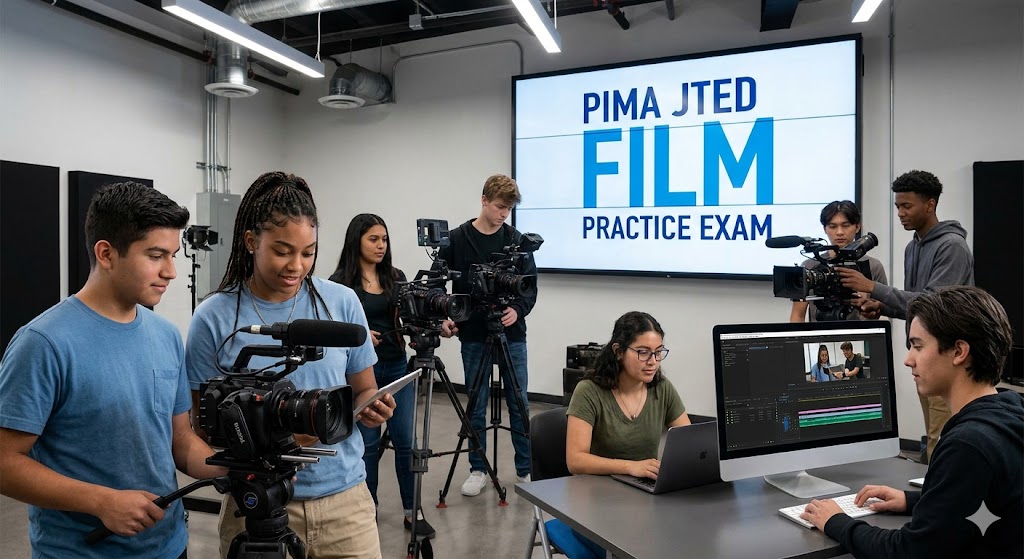
Additional Information
What the Course Entails and Exam Details
This comprehensive course covers the entire spectrum of filmmaking, blending theoretical concepts with practical application. Students dive deep into the creative and technical aspects of storytelling through a visual medium. Core topics typically covered in the syllabus and evaluated on the exam include:
Pre-production: Scriptwriting, storyboarding, location scouting, casting, budgeting, and scheduling.
Production: Cinematography, camera operation, lighting techniques, audio recording, and directing actors.
Post-production: Video editing, sound design, visual effects (VFX), color correction, and distribution strategies.
Film History and Theory: Analyzing the evolution of film, significant filmmakers, genre conventions, and critical analysis of cinematic techniques.
Safety and Ethics: Understanding industry safety standards and ethical practices on set.
What to Expect in the Final Exam
While the exact structure can vary, the final Pima JTED Film exam is typically a combined assessment of theoretical knowledge and practical application, reflecting the skills gained during the program. Students can usually expect the following components:
Written Examination: A significant portion of the test often consists of multiple-choice and short-answer questions. This section evaluates your grasp of film terminology, concepts, technical specifications (like camera settings), safety protocols, and film history.
Practical Assessment: This hands-on component is crucial and may require you to demonstrate proficiency in various film production skills. This could involve tasks like setting up and operating a camera, arranging lights for a specific mood, or demonstrating a basic sequence of video editing.
Passing Score: The required passing score is determined by the specific Pima JTED program and the academic standards set by the school district. It is designed to ensure students have a strong foundational competence in film production.
Time Limits: Both the written and practical portions of the exam will have strict time constraints to simulate the fast-paced, deadline-driven nature of the film industry.
How to Study and Exam Centers
Preparation is key to succeeding on the Pima JTED Film Practice Test and the final exam. Here are some actionable strategies to help you excel:
Leverage Practice Tests: Make full use of practice tests. They familiarize you with the question format, testing style, and help you gauge the depth of knowledge required. Analyze your incorrect answers to focus your studying.
Review Class Materials: Thoroughly study your notes, textbooks, handouts, and any feedback received on past projects. Pay close attention to definitions of film terminology and technical details.
Hands-on Practice: Filmmaking is a practical skill. Dedicate time to practicing with the equipment available in your program (cameras, lights, sound recorders) and the software (editing programs like Adobe Premiere Pro or Final Cut Pro).
Form Study Groups: Collaborating with your classmates can provide diverse perspectives, help clarify difficult concepts, and offer opportunities for practical practice (like setting up lights or cameras as a team).
Exam Centers: The final Pima JTED Film exam is almost always administered directly at the JTED facility or your designated high school campus within Pima County where you attended the program. Specific information regarding dates, times, and exact locations will be provided by your JTED instructor.
Job Opportunities from the Course
Completing the Pima JTED Film program unlocks numerous entry-level opportunities and provides a solid foundation for further specialization. Graduates can pursue various career paths in the diverse world of media and entertainment, including:
Core Career Paths:
Production Assistant (PA)
Camera Operator
Video Editor
Sound Mixer / Sound Designer
Grip or Electric (Set Technician)
Screenwriter / Script Supervisor
Director of Photography (DP) / Cinematographer (often with further experience or education)
Director (often with further experience or education)
Related Industries:
Digital Content Creator (YouTube, social media)
Corporate Video Production
Television Production
Commercial and Advertising Production
Independent Filmmaking and Production
Frequently Asked Questions
Reviews
5.0
Based on 0 reviews
Leave a Review
No reviews yet. Be the first to review!