
Pivot Point Life Skills 101 Practice Test
$69.00
- Buy to unlock unlimited access to all Quiz questions and Answers in this Quiz.
- After purchase you can print a PDF of the whole quiz at any point. The PDF will contain the questions and the correct answers.
About this Exam
The Pivot Point Life Skills 101 course and subsequent exam are fundamental pillars within the comprehensive beauty and wellness education curriculum, such as Fundamentals: Cosmetology and Fundamentals: Esthetics. It is designed to empower students with the essential, non-technical soft skills required to succeed and thrive in the professional world. This certification is specifically tailored for individuals who are enrolled in or are preparing to enter cosmetology, barbering, esthetics, or nail technology programs, acting as the bedrock upon which their technical expertise will be built.
It covers the crucial intersection of personal development and professional conduct. The course provides a structured path for students to master the interpersonal, organizational, and self-management tools that separate average service providers from top-tier, sought-after industry professionals. If you are aiming for longevity, satisfied clients, and a clear career trajectory in beauty, this course and its exam are your essential first steps.
Ready to test your knowledge?
Buy Now to Access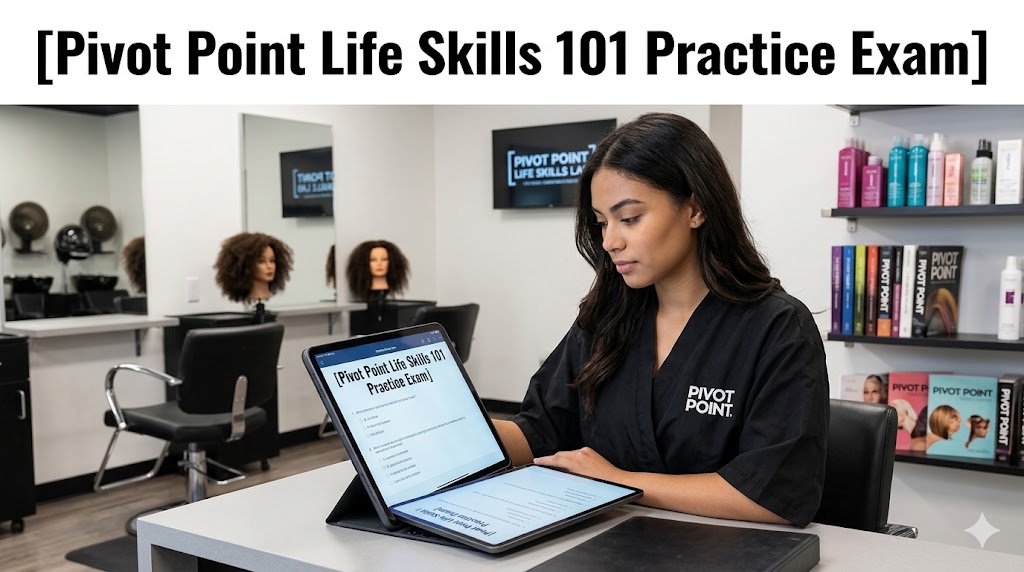
Additional Information
What the Course Entails and Exam Details
The Pivot Point Life Skills 101 course is a meticulously structured module that equips students with a versatile toolkit of interpersonal and personal management abilities. The syllabus is often broken down into six key foundational lessons, which serve as the primary focus for the certification exam:
Healthy Body and Mind: This section emphasizes the crucial role of self-care for the beauty professional, covering essential concepts like nutrition, exercise, sleep, and the importance of a positive mindset to prevent fatigue and burnout.
Ergonomics: Students learn the science of how to perform their work efficiently and safely, focusing on body movements, positioning, tool usage, and posture to prevent long-term physical strain or injury common in the industry.
Basic Communication: The module teaches both verbal and nonverbal communication techniques. Key concepts include effective listening, enunciation, inflection, rate of speech, and understanding the unspoken cues of body language.
Communicate With Confidence: This builds on basic skills, instructing students on how to speak clearly, professionally, and assertively, including techniques for client consultations and overcoming communication barriers.
Human Relations and Resilience: This crucial section focuses on the psychology of getting along with others. Students explore teamwork, professional ethics, building trust, and developing the resilience needed to manage the inherent challenges and emotional demands of a client-facing industry.
Goal Setting: The course provides actionable frameworks for setting, tracking, and achieving both personal and professional goals, ensuring a purposeful career path.
What to Expect in the Final Exam
While individual institutions or states may have variations, the final exam for Pivot Point Life Skills 101 typically takes the form of a formal theory assessment designed to mirror and prepare you for the life skills component of your state licensure exam.
Exam Format: You should expect a computer-based or written exam primarily consisting of multiple-choice questions. These questions will present scenarios and test your ability to apply the principles of communication, ethics, and professional conduct rather than just memorizing definitions.
Passing Score: The required passing score is generally set around 70% or higher, in line with typical academic and licensure standards, although this should be verified with your specific testing authority or school.
Time Limit: You will typically be allocated a predetermined time limit to complete the exam, often around one to two hours, designed to ensure you can think critically and efficiently.
Rules and Conduct: The test is usually proctored. You will not be allowed to consult outside materials, and strict codes of academic integrity are enforced, preparing you for the formal environment of a state board exam.
How to Study and Exam Centers
Successfully passing the Pivot Point Life Skills 101 exam requires a structured study plan that reinforces the core course principles. Here are actionable strategies for your preparation:
Leverage Official Materials: Your primary study resource should be the official Pivot Point textbook, "Fundamentals" series. Pay special attention to the chapter-ending summaries and self-quizzes.
Practice with Practice Tests: This is the single most effective method. Use the Pivot Point Life Skills 101 Practice Test to familiarize yourself with the question formatting and time management. Analyze your mistakes to identify knowledge gaps.
Utilize Study Aids: Use tools like flashcards for terminology and case study analysis to practice applying ethics and human relations concepts. Many schools offer integrated digital platforms with interactive practice materials.
Simulate Test Conditions: Take a practice exam in a quiet, timed environment to build stamina and reduce anxiety for the actual test day.
The exam is not typically taken at a national testing center like Pearson VUE independently. Instead, the Pivot Point Life Skills 101 test is almost exclusively administered through:
Authorized Schools: This is part of the accredited cosmetology, esthetics, or barbering program you are enrolled in. Your school will schedule and administer the test as a module completion requirement.
State-Level Licensure Support: In many regions, passing this course is a prerequisite for your official state board licensure exam, and the school will provide verification to the state.
Job Opportunities from the Course
A certification in Life Skills 101, combined with the technical licensure it supports, unlocks diverse and rewarding career paths within the multi-billion dollar beauty and wellness sector. The skills you master directly impact your ability to build a clientele, manage a business, and lead others. Potential job opportunities and career paths include:
Licensed Cosmetologist: Performing hair, nail, and skin services.
Esthetician: Specializing in skincare treatments and services.
Barber: Focusing on hair and beard grooming for male clients.
Nail Technician: Providing specialized hand and foot care services.
Makeup Artist: Working in retail, film, bridal, or freelance events.
Salon or Spa Manager: Overseeing business operations, staff, and client relations.
Beauty Educator/Instructor: Teaching at a cosmetology school (requires further education).
Beauty Sales Representative: Promoting products for cosmetic brands to salons and spas.
Freelance Beauty Business Owner: Launching your own service brand.
State Board Examiner or Inspector: Ensuring industry safety and compliance.
Frequently Asked Questions
Reviews
5.0
Based on 0 reviews
Leave a Review
No reviews yet. Be the first to review!