
Pleasure Craft Operator Card (PCOC) Practice Test
$69.00
- Buy to unlock unlimited access to all Quiz questions and Answers in this Quiz.
- After purchase you can print a PDF of the whole quiz at any point. The PDF will contain the questions and the correct answers.
About this Exam
Welcome to your essential guide for the Pleasure Craft Operator Card (PCOC) exam, commonly known as Canada's boating license.
This qualification is mandatory for all individuals operating a motorized pleasure craft in Canadian waters, regardless of age, engine size, or boat length. The PCOC is designed to ensure that everyone on the water possesses fundamental knowledge of boating safety, regulations, and emergency procedures.
Whether you are a seasoned sailor looking to formalize your experience or a first-time boater eager to explore the shoreline safely, successfully completing the PCOC exam is your first and most crucial step toward responsible and enjoyable boating.
Ready to test your knowledge?
Buy Now to Access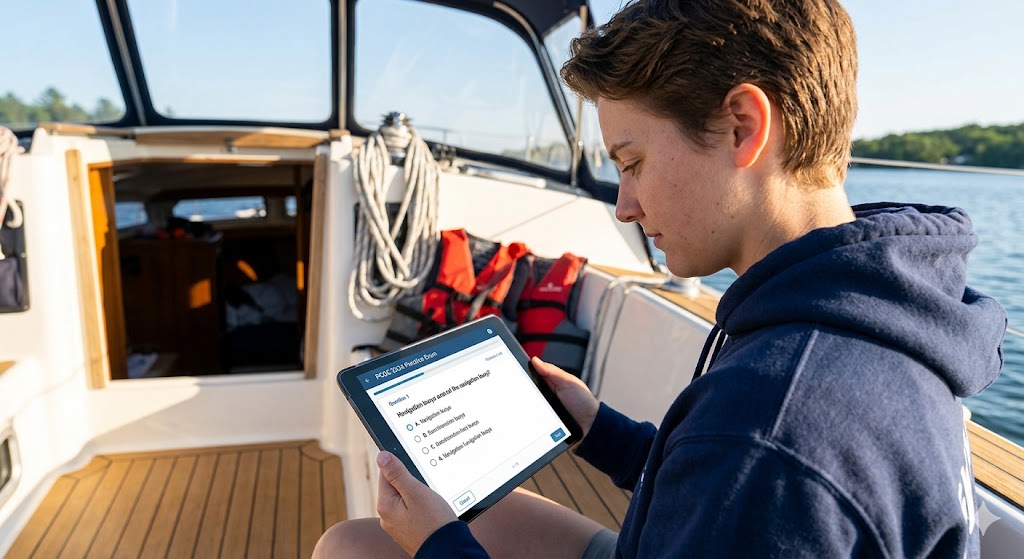
Additional Information
What the Course Entails and Exam Details
The path to obtaining your PCOC involves first completing a Transport Canada-accredited safety course. This comprehensive course covers a wide spectrum of essential topics critical for safe navigation.
You will delve into topics such as understanding navigation rules, recognizing buoyancy aids, identifying essential safety equipment, and mastering emergency protocols.
Key syllabus areas typically include boating safety basics, Canadian regulations and legal requirements, understanding the various types of hull designs, engine maintenance, required safety gear for different vessel types, pre-departure checklists, environmental protection laws, and weather forecasting for mariners.
The overall duration of accredited online courses is usually several hours, designed to be completed at your own pace before taking the final, Transport Canada-approved exam.
What to Expect in the Final Exam
After successfully completing the accredited course modules, you are eligible to attempt the final PCOC exam.
This exam is designed to validate your understanding of the materials covered and is administered online or, less commonly, in person by an authorized provider.
The standard exam format consists of multiple-choice questions, usually between 35 and 50 in total. You will be tested on all aspects of the course syllabus, from right-of-way rules to signaling requirements.
A passing score of 75% or 80% (depending on the specific provider and current regulations) is required.
Online exams are often open-book, meaning you can reference your course materials, but you are strictly timed—often around 75 to 90 minutes. You must complete the exam in a single session without significant interruptions.
How to Study and Exam Centers
Preparation is vital to success, and there are multiple proven strategies to help you ace the PCOC exam.
First and foremost, take comprehensive practice tests. Utilizing a reputable PCOC practice exam like this one helps you familiarize yourself with the question formats, timing, and areas where your knowledge may be lacking.
Review the official Transport Canada "Boating Safety Guide" (also referred to as the Safe Boating Guide) repeatedly. Focus your study on navigation markers and buoy systems, right-of-way scenarios, mandatory safety equipment lists, and emergency procedures, as these are frequently heavily weighted in the exam.
Create flashcards for essential terms and regulations.
To take the exam, you must use one of Transport Canada's recognized course providers. The vast majority of boaters now complete both the course and the proctored exam through accredited online portals, allowing for convenience and immediate results. Examples of such providers include companies like BoaterExam.com and MyBoatCard.com, both of which manage the testing process digitally. Physical testing at designated commercial schools or authorized physical examiner locations is also an option but is much less common than the online route.
Job Opportunities from the Course
While the PCOC is primarily a mandatory safety certification for recreational boating, holding this card is essential for entering several entry-level and support roles in the marine industry. Many employers view the PCOC as a foundational requirement indicating a commitment to safety. Specific career paths where a PCOC is required or highly beneficial include:
• Charter Boat Attendant – Supporting commercial sightseeing or recreational vessels. • Boat Rental Attendant/Agent – Operating from a marina or waterfront rental business. • Water Taxi Deckhand – Helping passengers and assisting the captain. • Marine Equipment Sales Representative – Working at chandleries, boat dealerships, or marine outfitters. • Fishing Guide Assistant – Assisting lead guides on inland or coastal excursions. • Marina Dockhand/Harbour Assistant – Handling vessel lines, refueling, and customer service. • Camp Waterfront Staff – Overseeing recreational boating activities at summer camps. • Sailing School Assistant Instructor – Providing support for recreational sailing courses.
Frequently Asked Questions
Reviews
5.0
Based on 0 reviews
Leave a Review
No reviews yet. Be the first to review!