
Plumbing Level 2 Diploma – Hot Water Practice Exam
$69.00
- Buy to unlock unlimited access to all Quiz questions and Answers in this Quiz.
- After purchase you can print a PDF of the whole quiz at any point. The PDF will contain the questions and the correct answers.
About this Exam
The Plumbing Level 2 Diploma, a widely recognized foundational qualification in the UK's Building Services Engineering sector, is designed for aspiring plumbers, apprentices, and career changers looking to enter the trade.
This comprehensive program provides the essential skills and technical knowledge required for a successful career in the plumbing industry.
The Hot Water Practice Exam is a crucial revision tool specifically focused on assessing and reinforcing your understanding of the essential principles, components, regulations, and practices related to domestic hot water systems.
It aims to prepare students for the final assessment of this unit, ensuring they possess the specific knowledge required to work safely and effectively with hot water installations.
This certification unlocks entry-level roles and serves as a vital stepping stone toward becoming a fully qualified plumber and domestic heating engineer.
Ready to test your knowledge?
Buy Now to Access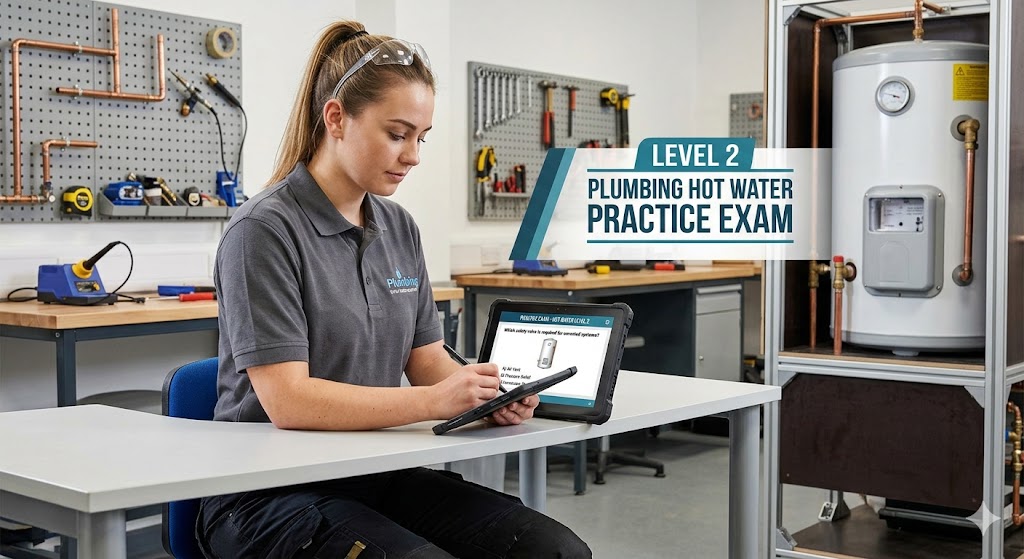
Additional Information
What the Course Entails and Exam Details
The Level 2 Plumbing Diploma covers a broad range of topics, including health and safety, scientific principles, pipework fabrication techniques, cold water systems, sanitation, and electrical principles.
The Domestic Hot Water Systems unit delves deeper into specific areas.
The syllabus includes an understanding of the difference between vented and unvented hot water systems, and the principles of their operation.
You will learn to identify key components such as hot water storage cylinders (both direct and indirect), immersion heaters, thermostats, safety relief valves, and various pipework materials and fittings.
The course covers the regulations, standards, and safety considerations essential for installation, maintenance, and fault finding on these systems, including relevant Building Regulations (like Approved Document G) and Water Supply Regulations.
This practice exam specifically tests your theoretical knowledge through numerous multiple-choice questions, mirroring the style and content of the real examination to help you build confidence and identify areas for improvement.
What to Expect in the Final Exam
The final assessment for the Plumbing Level 2 Diploma is typically composed of multiple parts, including practical workshop assignments and written or on-screen examinations.
For the Hot Water Systems unit, you should expect to take a multiple-choice exam, often delivered online through an authorized portal or testing center.
This exam will consist of a specific number of questions (commonly 30-50, but can vary by awarding body) to be completed within a set time limit, which usually ranges from 60 to 90 minutes.
You will need to demonstrate your knowledge of all theoretical aspects covered in the course syllabus, including system types, component identification, safety devices, relevant regulations, and fault finding principles.
A typical passing score for these types of vocational exams is around 60% to 70%, though you must check with your specific course provider and awarding body (e.g., City & Guilds or EAL) for the exact requirements.
The exam will be conducted under strict conditions, with no outside materials or electronic aids allowed unless explicitly stated.
How to Study and Exam Centers
Preparation is key to succeeding in your Level 2 Plumbing Hot Water Exam.
Start by thoroughly reviewing all your course materials, textbooks, lecture notes, and any relevant industry regulations or codes of practice.
Create focused revision summaries and flashcards for key terms, components, formulas (such as calculating pressure), and relevant safety procedures.
Make extensive use of practice exams like this one, as simulating exam conditions will help you manage your time effectively, get used to the multiple-choice format, and identify specific knowledge gaps.
Practice questions and answers provide immediate feedback and clarify complex concepts.
You should also seek practical application opportunities, even if limited, in your training workshop or through discussions with your tutor or mentor.
Regarding exam centers, the multiple-choice exams are usually taken at authorized testing locations.
These include your local college or private training center where you are completing the course, and increasingly, online through recognized platforms such as Pearson VUE, which has numerous centers across the UK and globally.
Your course provider will supply you with full details on how and where to register and sit your final examination, so be sure to consult with them well in advance.
Job Opportunities from the Course
A completed Plumbing Level 2 Diploma, including the essential knowledge of hot water systems, opens doors to various entry-level and developmental roles within the plumbing and heating industry.
This qualification demonstrates your foundational competence to employers.
Here is a clear list of job titles and career paths available:
Apprentice Plumber: A common and highly beneficial starting point, often allowing for earning while learning under a qualified plumber's supervision.
Domestic Plumber (Trainee/Improver): Working on installation, maintenance, and repair of plumbing systems, including hot water, in residential properties.
Maintenance Plumber: Focuses on the regular servicing and troubleshooting of existing systems within domestic, commercial, or industrial buildings.
Building Services Technician: Involved in the broader installation and upkeep of systems within a building, which includes plumbing and often overlaps with heating and electrical elements.
Specialized Hot Water Installer (Trainee): Some technicians choose to specialize in the installation and maintenance of advanced hot water systems, including unvented options.
Self-Employed Plumber (with further experience/Level 3): After gaining experience and ideally progressing to Level 3 and relevant unvented certifications, a plumber can establish their own successful business.
Progression to Level 3 Diploma in Plumbing and Heating: This advanced qualification is necessary to become a fully qualified plumber and gas engineer, unlocking the widest range of high-level career opportunities and the potential to register with Gas Safe.
Frequently Asked Questions
Reviews
5.0
Based on 0 reviews
Leave a Review
No reviews yet. Be the first to review!