
Praxis Chemistry 5246 Practice Test 2026 | Exam Prep Questions
$69.00
- Buy to unlock unlimited access to all Quiz questions and Answers in this Quiz.
- After purchase you can print a PDF of the whole quiz at any point. The PDF will contain the questions and the correct answers.
About this Exam
The Praxis Chemistry (5246) exam is a comprehensive assessment designed for individuals seeking certification to teach chemistry at the secondary school level. It evaluates the content knowledge and pedagogical skills necessary to effectively teach chemistry concepts in a middle or high school setting. This exam is a critical step for aspiring chemistry teachers to demonstrate their readiness to educate students in this foundational science.
Ready to test your knowledge?
Buy Now to Access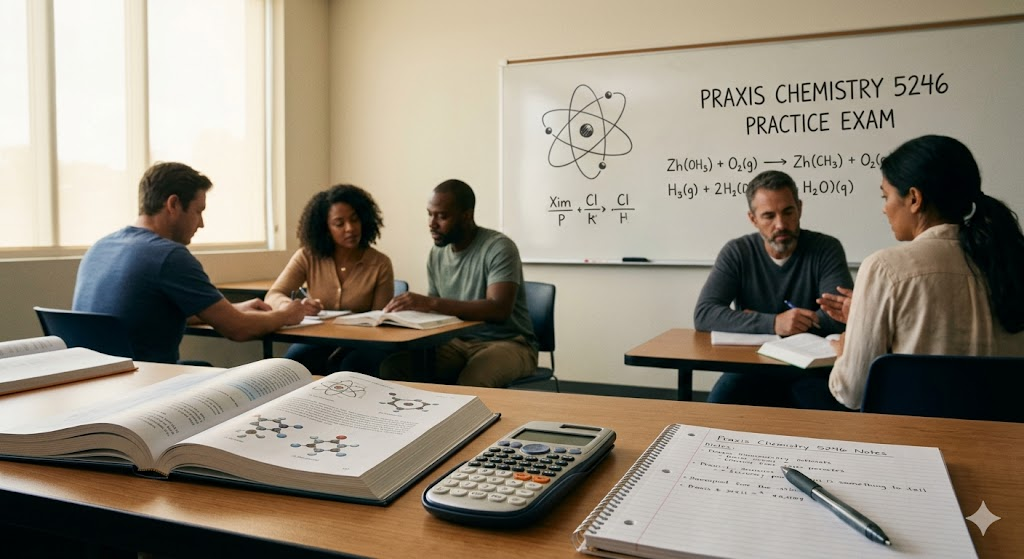
Additional Information
What the Course Entails and Exam Details
The Praxis Chemistry (5246) exam covers a wide range of core topics essential for effective chemistry instruction. Key areas include:
Scientific Inquiry and Processes: Understanding the scientific method, data analysis, and laboratory safety procedures.
Matter and Its Interactions: Atomic structure, chemical bonding, kinetic molecular theory, and states of matter.
Chemical Reactions: Types of reactions, stoichiometry, chemical equilibrium, and kinetics.
Thermodynamics and Solutions: Energy changes in chemical reactions, solution properties, and solubility.
Organic Chemistry and Biochemistry: Introduction to organic compounds, biochemical molecules, and their functions.
Nuclear Chemistry and Earth Science Applications: Principles of radioactivity, nuclear reactions, and the role of chemistry in Earth systems.
Science, Technology, and Society: Understanding the historical and social context of chemical discoveries and their impact on daily life.
The exam focuses on both conceptual understanding and practical application of chemistry principles, as well as pedagogical content knowledge.
What to Expect in the Final Exam
The Praxis Chemistry (5246) exam typically consists of multiple-choice questions designed to assess depth and breadth of chemistry knowledge.
Exam Format: The exam usually comprises about 120 multiple-choice questions.
Passing Score Requirements: Passing scores vary by state, so it's essential to check the specific requirements for the state where you intend to teach. Educational Testing Service (ETS), the administrator of the Praxis exams, provides detailed information on qualifying scores.
Time Limits: The total testing time for the Praxis Chemistry (5246) exam is typically around 2 hours and 30 minutes.
Specific Rules: Standard testing rules apply, including prohibitions on electronic devices and outside materials. Ensure you are familiar with the specific rules provided by ETS before the test day.
How to Study and Exam Centers
Effectively preparing for the Praxis Chemistry (5246) requires a structured approach. Here are some strategies:
Use Official Study Guides: Utilize the study resources provided by ETS, including test content outlines, study companions, and practice tests. These are designed specifically to reflect the content and format of the exam.
Review Key Concepts: Deepen your understanding of core chemistry topics using textbooks, online resources, and academic materials. Focus on understanding the relationships between different chemical concepts.
Take Practice Tests: Regularly complete practice exams to familiarize yourself with the question formats and time constraints. Analyze your results to identify areas where you need further study.
Join Study Groups: Collaborating with peers preparing for the same exam can provide support, motivation, and different perspectives on complex topics.
Time Management: Create a study schedule that allows for consistent, focused review of each content area. Break down large topics into smaller, manageable sections.
Exam Centers: The Praxis exams are typically taken at authorized testing centers. When you register for the exam through the ETS website, you will be able to select a convenient test date and location. Online testing options may also be available in certain circumstances. Be sure to check the ETS website for the most up-to-date information on test centers and scheduling.
Job Opportunities from the Course
Successfully passing the Praxis Chemistry (5246) exam is a crucial step toward becoming a certified chemistry teacher. Potential career paths and job opportunities include:
Secondary School Chemistry Teacher (Middle or High School)
High School Science Teacher with a concentration in Chemistry
Chemistry Department Chair or Curriculum Specialist
Private Tutor for Chemistry and related sciences
Educational Consultant for science curriculum development
Getting certified opens doors to dynamic careers dedicated to inspiring students in the field of chemistry.
Frequently Asked Questions
Reviews
5.0
Based on 0 reviews
Leave a Review
No reviews yet. Be the first to review!