
Praxis Principles of Learning and Teaching 5622 Practice Test 2026 | Exam Prep Questions
$69.00
- Buy to unlock unlimited access to all Quiz questions and Answers in this Quiz.
- After purchase you can print a PDF of the whole quiz at any point. The PDF will contain the questions and the correct answers.
About this Exam
The Praxis Principles of Learning and Teaching (PLT) 5622 is a foundational certification exam designed by the Educational Testing Service (ETS).
It specifically evaluates the pedagogical knowledge and skills of prospective educators who intend to teach students in kindergarten through sixth grade (K–6).
This assessment is a crucial stepping stone for aspiring elementary school teachers across many states.
It ensures that candidates have a solid grasp of educational psychology, instructional methodologies, and classroom management before they step into a real classroom.
Whether you are a recent graduate of an education program or an alternate-route candidate, mastering this exam is essential for proving your readiness to support young learners.
Ready to test your knowledge?
Buy Now to Access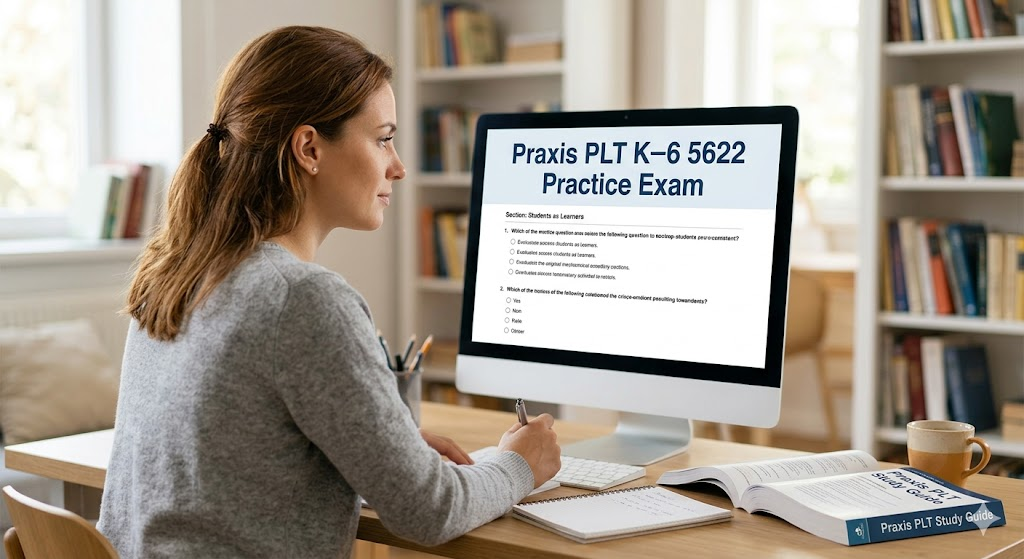
Additional Information
What the Course Entails and Exam Details
Preparing for the Praxis PLT 5622 requires a deep dive into the core principles of early and elementary childhood education.
The syllabus is carefully divided into several major foundational categories that reflect the daily realities of teaching.
First, you will explore "Students as Learners," which covers student development, the learning process, and how to accommodate diverse students and varying learning styles.
Next, the "Instructional Process" section requires you to understand instructional strategies, classroom planning, and effective communication techniques.
The exam also heavily emphasizes "Assessment," requiring you to know how to design, implement, and interpret both formative and summative evaluations.
Finally, "Professional Development, Leadership, and Community" covers the ethical responsibilities of a teacher and the importance of engaging with parents and the broader school community.
What to Expect in the Final Exam
The Praxis PLT 5622 is a comprehensive, computer-delivered test that evaluates both your theoretical knowledge and your practical application skills.
You will be given exactly two hours to complete the entire examination.
The test format consists of 70 selected-response (multiple-choice) questions and 4 constructed-response (short essay) questions.
The constructed-response questions are based on specific case studies where you must analyze a classroom scenario and write a pedagogical response.
Because passing scores are established by individual state licensing agencies, the required score can vary depending on where you plan to teach, though it typically ranges around 160.
There are strict testing rules, including no cell phones or unauthorized materials in the testing room, and you must manage your own pacing to ensure you have enough time to write the essay portions.
How to Study and Exam Centers
A strategic study plan is vital for conquering the Praxis PLT 5622.
Start by taking a full-length, timed practice exam to establish a baseline and identify your weakest subject areas.
Focus heavily on familiarizing yourself with major educational theorists—such as Piaget, Vygotsky, and Bloom—and understand how their theories apply to practical classroom scenarios.
Practice outlining and drafting constructed-response questions so that you can write clear, concise, and professional answers under time pressure.
When you are ready to test, you will register through the official ETS website.
The exam is administered globally at authorized Prometric testing centers, which offer secure and quiet testing environments.
Additionally, ETS now offers an "At Home" testing option monitored by a remote proctor via ProctorU, giving you the flexibility to take the exam from your personal computer if it meets the technical requirements.
Job Opportunities from the Course
Passing the Praxis PLT 5622 opens the door to a rewarding and stable career in primary education.
Elementary School Teacher: This is the most direct path, allowing you to manage a diverse classroom of young learners and teach fundamental subjects like math, reading, and science.
Kindergarten Teacher: You can specialize in early childhood development, helping young students transition into the formal schooling environment.
Special Education Teacher: With additional specific certifications, passing the PLT serves as a foundational step toward teaching children with mild to moderate disabilities.
Instructional Coordinator: Experienced educators who have mastered pedagogical principles can move into administrative roles to develop school curriculums and train other teachers.
Educational Consultant: Experts in the principles of learning and teaching can work independently or with educational organizations to improve school policies and classroom practices.
Frequently Asked Questions
Reviews
5.0
Based on 0 reviews
Leave a Review
No reviews yet. Be the first to review!