
Private Patrol Operator Practice Test
$69.00
- Buy to unlock unlimited access to all Quiz questions and Answers in this Quiz.
- After purchase you can print a PDF of the whole quiz at any point. The PDF will contain the questions and the correct answers.
About this Exam
The Private Patrol Operator (PPO) license is a critical credential for individuals or business entities seeking to establish and run a private security agency. Unlike a standard security guard license, this designation is designed for the business owners, operators, and managers who will oversee security operations, hire personnel, and ensure compliance with state regulations. Preparing for this licensing exam requires a deep understanding of industry best practices, legal framework, and administrative duties.
This comprehensive guide serves as a valuable resource and practice test for aspiring entrepreneurs and experienced professionals aiming to successfully navigate the licensing process and enter the private security market at the operational level.
Ready to test your knowledge?
Buy Now to Access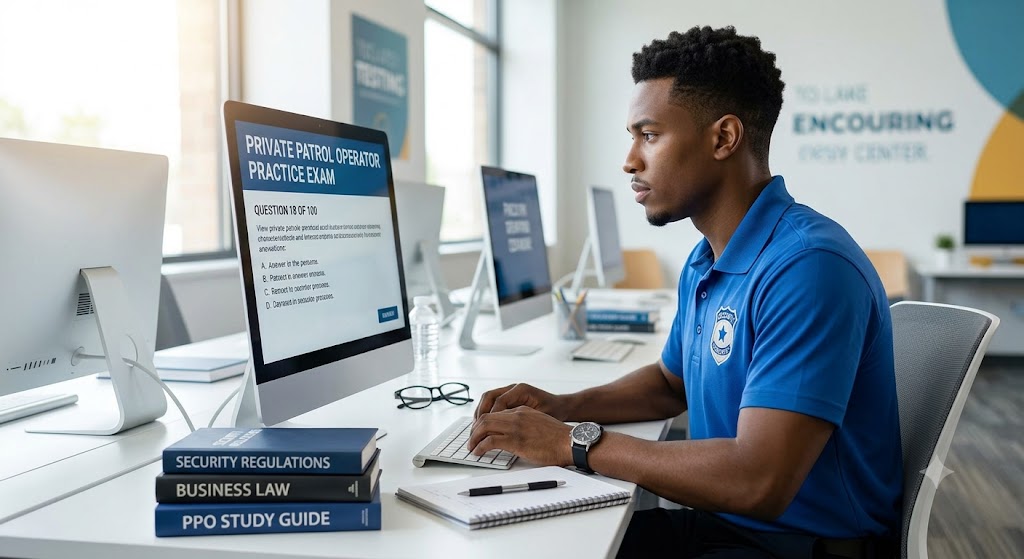
Additional Information
What the Course Entails and Exam Details
While the specific requirements vary significantly by state, the course curriculum or preparation materials for the Private Patrol Operator license typically cover a broad range of topics essential for managing a compliant and effective security firm. These core areas often include:
Private Security Regulations: Detailed knowledge of state laws, licensing procedures, and administrative rules governing the private patrol industry.
Business Law & Operations: Fundamentals of business management, contract law, insurance requirements, employment law, and taxation as they apply to security services.
Ethical Practices: Standards of conduct, professionalism, conflicts of interest, and reporting responsibilities for operators.
Report Writing & Record Keeping: Protocols for generating accurate incident reports, maintaining personnel files, and documentation requirements.
Training Standards: Familiarity with training mandates for security guards and staff.
Risk Management & Liability: Understanding potential legal issues, standard operating procedures, and methods for mitigating operational risk.
What to Expect in the Final Exam
The actual PPO licensing exam is typically a formal, proctored test administered by a state regulatory body or authorized testing agency. Here is a general breakdown of what you can expect:
Format: The exam predominantly consists of multiple-choice questions designed to assess your comprehension and application of the regulations and best practices. Some exams may include true/false or situational scenario-based questions.
Passing Score: Requirements differ by state but often require a minimum score, such as 70% or 75% correct answers, to pass and be eligible for the license.
Time Limits: Applicants are usually given a strict time limit to complete the entire exam. This duration can range from 90 minutes to over 2 hours, depending on the complexity and number of questions.
Testing Rules: Expect a strictly monitored environment. You will need a valid government-issued ID. The exam is typically computer-based and closed-book, with unauthorized electronics, notes, and materials strictly prohibited.
How to Study and Exam Centers
Effective preparation is key to success on the Private Patrol Operator licensing exam. Consider these actionable study strategies:
Review State Statutes and Regulations: Your primary study material should be the actual laws and regulatory codes of the state where you are applying. These are often available online through the state’s licensing website.
Utilize Study Guides and Material: Seek out official or reputable PPO exam study guides and review courses that break down the specific topics you will be tested on.
Take Practice Tests: Regularly complete full-length practice tests to familiarize yourself with the question style, time constraints, and assess your knowledge in a simulated environment. Analyze the answers, especially where you struggled.
Form Study Groups: Collaborating with other applicants can provide different perspectives and help reinforce learning through discussion.
Where to Take the Exam: The specific locations and scheduling methods are determined by each state. Common methods include:
State Regulatory Offices: Testing may be conducted directly at state Department of Consumer Affairs, Bureau of Security and Investigative Services (BSIS), or equivalent agency offices.
Third-Party Testing Centers: States often contract with professional testing organizations like Pearson VUE, PSI, or others to administer exams at numerous local testing facilities across the state.
Authorized Schools: In some jurisdictions, approved security training schools or associations may be authorized to conduct the examinations.
Always consult your specific state’s official private security licensing board or agency website for the most accurate and up-to-date information on exam scheduling and location.
Job Opportunities from the Course
A Private Patrol Operator license opens doors to leadership, business ownership, and senior management roles within the security industry. Completing the necessary preparation and passing the exam can unlock opportunities such as:
Private Security Firm Owner/Operator: Start and manage your own private patrol agency, hiring guards and securing clients.
Operations Manager for Security Companies: Oversee daily operations, client relations, and personnel management for an established firm.
Compliance Manager: Ensure a security company adheres to all state and federal regulations, licensing requirements, and ethical standards.
Security Administrator/Superintendent: Hold senior management positions within large corporate or institutional security departments.
Private Security Consultant: Use your expertise to advise businesses and organizations on security assessments, planning, and management strategies.
Frequently Asked Questions
Reviews
5.0
Based on 0 reviews
Leave a Review
No reviews yet. Be the first to review!