
Private Pilot Stage 3 Practice Test
$69.00
- Buy to unlock unlimited access to all Quiz questions and Answers in this Quiz.
- After purchase you can print a PDF of the whole quiz at any point. The PDF will contain the questions and the correct answers.
About this Exam
The Private Pilot Stage 3 Practice Exam is the final, comprehensive assessment for aspiring pilots before their official FAA practical test, also known as the check-ride. It is specifically designed for students who have completed all flight training requirements and are polished in their maneuvers, navigation, and decision-making skills. This exam simulates the pressure and scope of the actual check-ride, ensuring that candidates are fully prepared to demonstrate their proficiency to a Designated Pilot Examiner (DPE). Achieving success here signifies that a student is "check-ride ready."
Ready to test your knowledge?
Buy Now to Access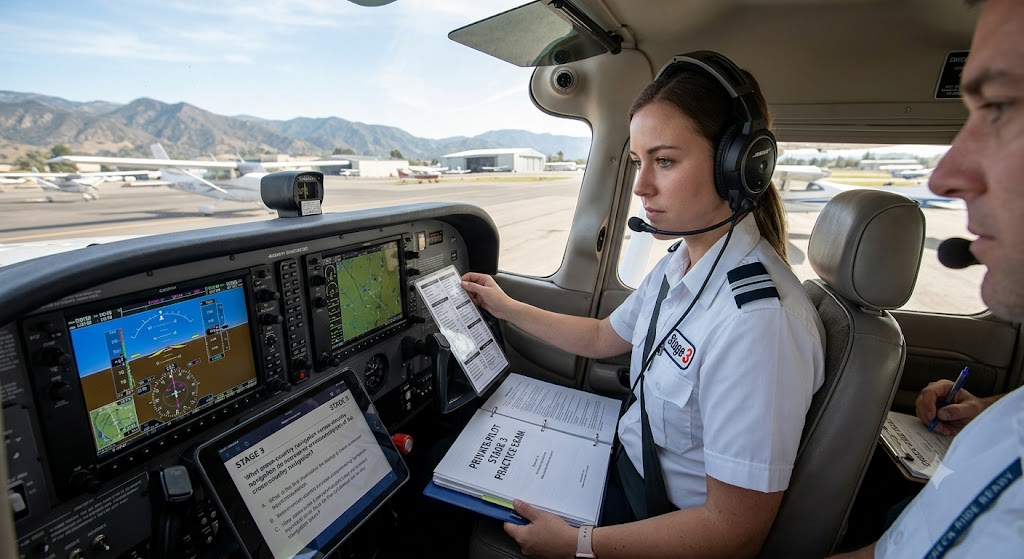
Additional Information
What the Course Entails and Exam Details
This practice exam covers the full spectrum of Private Pilot certification requirements, focusing on the synthesis of knowledge, skill, and judgment. Key areas of evaluation include advanced flight maneuvers, complex cross-country flight planning and execution, and mastery of emergency procedures. Candidates must demonstrate precise aircraft control, thorough pre-flight preparation, and consistent risk management throughout the flight. The syllabus mirrors the FAA Airman Certification Standards (ACS) for the Private Pilot rating. The exam details are structured to mimic the check-ride format, often divided into an oral examination and a flight portion, both of which must be passed to demonstrate readiness.
What to Expect in the Final Exam
The Private Pilot Stage 3 Practice Exam is a comprehensive, two-part evaluation consisting of a thorough oral exam and a practical flight test. The oral portion is an in-depth, scenario-based discussion covering aviation regulations, weather, navigation, aircraft systems, and performance planning, designed to assess aeronautical decision-making and judgment. The flight test requires the applicant to execute a cross-country flight plan and perform a wide range of maneuvers as specified in the FAA ACS, including steep turns, slow flight, stalls, and various takeoffs and landings. While there isn't a single passing percentage like a written exam, candidates must meet the specific ACS tolerance limits for each maneuver and show consistent safety, ensuring no single 'unsatisfactory' performance occurs. Expect the entire process to last several hours, reflecting the intensity of the actual check-ride.
How to Study and Exam Centers
Effective preparation for the Stage 3 practice exam requires a combination of intensive ground study and rigorous flight practice. Focus on reviewing the FAA Airman Certification Standards (ACS) thoroughly, as this document outlines exactly what is expected. Utilize mock oral exams with your flight instructor or peers to practice articulating your knowledge clearly under pressure. For the flight portion, dedicate hours to perfecting every ACS maneuver, ensuring you can perform them consistently within the defined tolerances, including under simulated emergency conditions. While the exam itself is administered by your flight school’s chief flight instructor or an authorized examiner, all preparation and practice must be coordinated through an FAA-approved (Part 141 or Part 61) flight training provider or authorized school, ensuring access to appropriate aircraft and certified instructors.
Job Opportunities from the Course
Earning a Private Pilot Certificate, which this exam prepares you for, opens the door to numerous exciting and rewarding career paths in aviation. While the certificate is primarily for personal use and cannot be used for commercial operations initially, it serves as the essential foundation for advanced ratings and a professional pilot career.
Private Pilot (Personal and Business Travel)
Flight Instructor (After earning a CFI rating)
Charter Pilot (After earning a Commercial and Instrument rating)
Airline Pilot (After earning an ATP certificate)
Corporate Pilot
Aerial Photographer
Agricultural Pilot (Crop Duster)
Flight Medic/Air Ambulance Pilot
Frequently Asked Questions
Reviews
5.0
Based on 0 reviews
Leave a Review
No reviews yet. Be the first to review!