
Professional Bartending School Practice Test
$69.00
- Buy to unlock unlimited access to all Quiz questions and Answers in this Quiz.
- After purchase you can print a PDF of the whole quiz at any point. The PDF will contain the questions and the correct answers.
About this Exam
This comprehensive Bartender Certification Practice Exam is specifically designed for aspiring and working bartenders who are preparing for a formal licensing or certification test in the hospitality industry. It assesses the essential knowledge and practical understanding required to mix drinks safely, legally, and professionally. The exam evaluates proficiency in various areas, including classic cocktails, customer service, responsible beverage service (RBS), and bar operations. It is an ideal study tool for newcomers seeking to enter the dynamic world of bartending or experienced professionals needing to validate their skills for regulatory requirements or career advancement. Completing a practice exam helps candidates gain confidence, identify knowledge gaps, and understand the expected standards for professional certification.
Ready to test your knowledge?
Buy Now to Access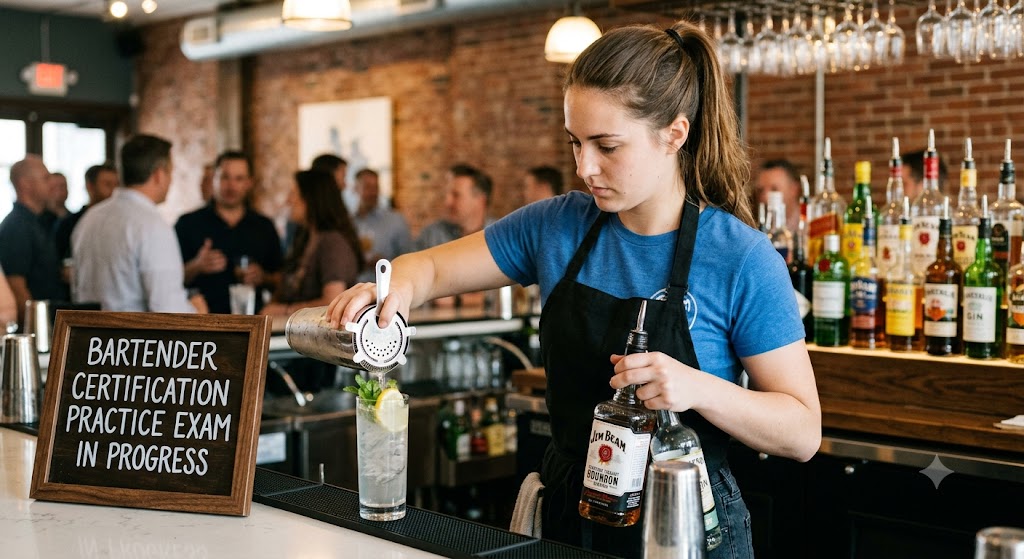
Additional Information
What the Course Entails and Exam Details
A professional bartending course or comprehensive training program typically covers a broad range of critical subjects. Students learn extensive mixology, mastering classic and contemporary cocktail recipes with focus on exact measurements and techniques. Instruction emphasizes responsible alcohol service and deep knowledge of relevant state and local liquor laws. Beyond mixing drinks, the training encompasses essential bar skills such as inventory management, ordering supplies, and maintaining equipment. Candidates develop effective customer service strategies, upselling techniques, and professional communication abilities. The exam detail evaluates mastery of all these areas, often featuring 100-150 multiple-choice questions assessing theoretical knowledge. Candidates should expect detailed inquiries into alcohol server liabilities and specific drink recipes.
What to Expect in the Final Exam
The final certification exam for a professional bartending program is structured to thoroughly evaluate a candidate's competence. It typically consists of a comprehensive written test, which is often composed of multiple-choice questions. Candidates might encounter around 100-150 questions covering a variety of topics, including responsible service, mixology, and operations. The time limit commonly ranges from 60 to 90 minutes for this portion of the examination. A common passing score of 70% or 80% is usually required to obtain the certification, depending on the specific program or state regulations. Furthermore, some comprehensive programs may also include a practical skills assessment, requiring students to efficiently and accurately demonstrate techniques by mixing a specified list of cocktails.
How to Study and Exam Centers
Effectively preparing for the Bartender Certification Exam is essential for success, requiring a combination of knowledge and practice. Thoroughly review all course textbooks and lecture materials multiple times. Dedicate consistent time to memorizing classic cocktail recipes and ingredients through flashcards and repetition. Utilize available practice tests and quizzes to reinforce key concepts and improve information retention. For the practical component, practice free-pouring, mixing, and speed techniques until they become fluid. Gain confidence in understanding responsible beverage service guidelines and the relevant legal regulations. As for exam centers, you can take the written portion online through school portals. Physical locations like Pearson VUE centers are common, while some local schools hold exams directly on-site at their facilities.
Job Opportunities from the Course
Obtaining a Bartender Certification unlocks numerous exciting career opportunities within the vibrant hospitality and foodservice industries. A certified professional can pursue a variety of engaging roles that leverage their specialized knowledge and skills. Some common positions include:
Bartender: Working in bars, restaurants, hotels, or night clubs.
Lead Bartender: Stepping into leadership roles and managing bar operations.
Bar Manager: Overseeing an entire bar program, inventory, and staff.
Mixologist: Crafting custom cocktails and innovative beverage menus.
Barback: Supporting the primary bartender and gaining valuable experience.
Bar Team Leader: Supervising a group of bartenders in larger venues.
Beverage Director: Managing the beverage program across multiple locations.
Sales Representative: Working for alcohol distributors or brands.
Private Event Bartender: Freelancing for private parties, weddings, and corporate events.
Frequently Asked Questions
Reviews
5.0
Based on 0 reviews
Leave a Review
No reviews yet. Be the first to review!