
Professional Cooking Practice Exam
$69.00
- Buy to unlock unlimited access to all Quiz questions and Answers in this Quiz.
- After purchase you can print a PDF of the whole quiz at any point. The PDF will contain the questions and the correct answers.
About this Exam
Welcome to your comprehensive guide to preparing for the Professional Cooking Practice Exam, a crucial stepping stone towards earning your esteemed industry certification. This exam is meticulously designed to validate the theoretical knowledge and practical culinary skills of aspiring chefs, line cooks, and food service professionals looking to elevate their careers in the dynamic world of culinary arts. Whether you are a dedicated culinary student or an experienced cook seeking formal validation, this guide and the accompanying practice materials will empower you with the confidence and knowledge needed to excel in your final certification assessment. Passing this exam signifies that you possess the core competencies, safety standards, and technical proficiency demanded by top professional kitchens globally.
Ready to test your knowledge?
Buy Now to Access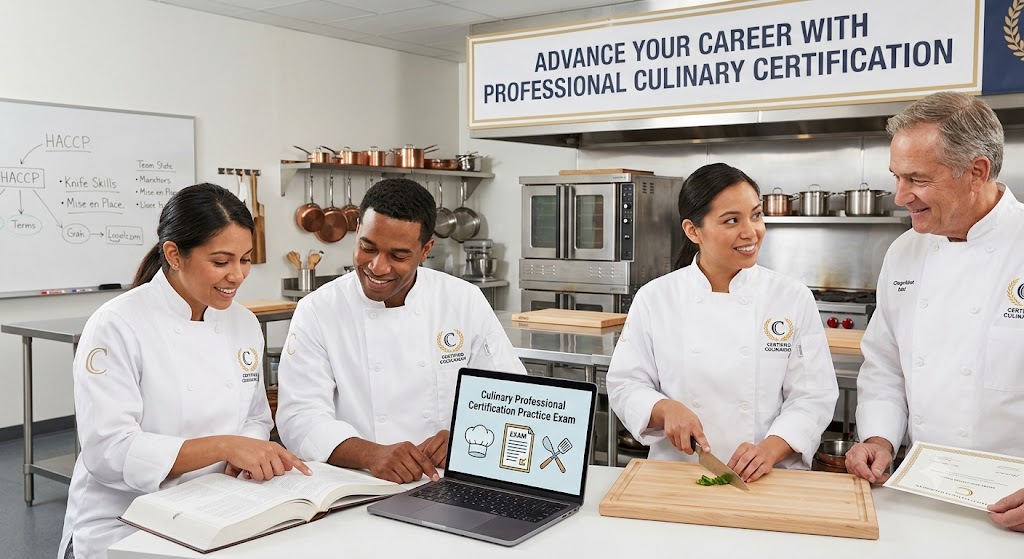
Additional Information
What the Course Entails and Exam Details
This comprehensive assessment covers the bedrock principles of professional cookery. The theoretical component delves deep into critical topics such as food safety and sanitation (HACCP), culinary math, menu planning, nutrition basics, and the history and structure of a professional kitchen. You will also be tested on essential management concepts, including food cost control and supervisory principles.
The practical evaluation is equally rigorous, typically assessing your ability to perform crucial tasks under timed conditions. Expect to demonstrate impeccable knife skills (all standard classical cuts), mastery of fundamental cooking methods (sautéing, braising, roasting, poaching), the creation of classic mother sauces and stocks, and the safe and efficient operation of professional kitchen equipment. The practice exam itself functions as a simulation of the multiple-choice or short-answer theoretical section, covering a representative sampling of these core subjects.
What to Expect in the Final Exam
The actual Professional Cooking Certification Exam is typically a multi-part process. The first stage is a theoretical examination, often conducted online or in a proctored test center. This portion usually consists of a substantial number of multiple-choice and scenario-based questions covering all theoretical subject areas. A specific time limit is set, and a minimum passing score (often 70% or higher, varying by certifying body) is required to proceed.
Upon successfully passing the theoretical exam, you will then be eligible for the practical cooking assessment. This is a hands-on event scheduled at an approved culinary facility or testing kitchen. Under the watchful eye of accredited culinary evaluators, you will execute a specific menu or series of tasks within a strict timeframe, demonstrating safety, cleanliness, organization, and technical skills in all aspects of preparation, cooking, and presentation. Strict adherence to food safety protocols, proper uniform, and professionalism are mandatory throughout this process.
How to Study and Exam Centers
Effective preparation is the key to success. Revisit your core culinary textbooks, class notes, and industry-standard resources. Enroll in a formal culinary arts program or a dedicated certification preparation course if possible, as these provide structured learning and valuable practical practice. Actively utilize practice exams, such as the one described in this guide, to familiarize yourself with the question formats, identify knowledge gaps, and build your test-taking stamina. Dedicate significant time to practical skill practice – hone your knife skills, rehearse cooking techniques, and master basic recipes repeatedly until they are second nature.
The location for your exams will depend on the specific certifying organization and type of assessment. Theoretical exams are often offered via secure online portals or at authorized professional testing centers, including worldwide networks like Pearson VUE. Practical cooking assessments are held at accredited culinary schools, community colleges with certified kitchen facilities, or specialized industry testing locations. Specific dates, locations, and registration details will be provided by your chosen certifying body upon application.
Job Opportunities from the Course
Earning this esteemed professional cooking certification opens a multitude of exciting career paths across the vast hospitality industry. Your validated skills and recognized credential can unlock opportunities for increased responsibility, faster career progression, and higher earning potential in various establishments. Potential career paths include:
Line Cook
Sous Chef
Executive Chef or Head Chef (with advanced experience)
Pastry Chef
Private Chef or Personal Chef
Caterer and Event Chef
Culinary Instructor and Educator
Food & Beverage Manager
Restaurant Owner/Entrepreneur
Recipe Developer or Test Kitchen Chef
Corporate Chef
Frequently Asked Questions
Reviews
5.0
Based on 0 reviews
Leave a Review
No reviews yet. Be the first to review!