
Professional Policing Practice Test
$69.00
- Buy to unlock unlimited access to all Quiz questions and Answers in this Quiz.
- After purchase you can print a PDF of the whole quiz at any point. The PDF will contain the questions and the correct answers.
About this Exam
The Professional Policing Practice Exam is a critical assessment designed for individuals aspiring to join modern police forces. This certification evaluates a candidate's readiness for the challenges and responsibilities of a policing career by testing core competencies and decision-making skills. Whether you are a fresh recruit, a college student aiming for a 'Pre-Join' Degree in Professional Policing, or exploring the Police Constable Degree Apprenticeship (PCDA) route, this exam ensures you possess the essential cognitive and ethical aptitude. Achieving success in this assessment is a major milestone, signaling to prospective law enforcement agencies that you have the foundation to undergo further intensive training and serve the community effectively.
Ready to test your knowledge?
Buy Now to Access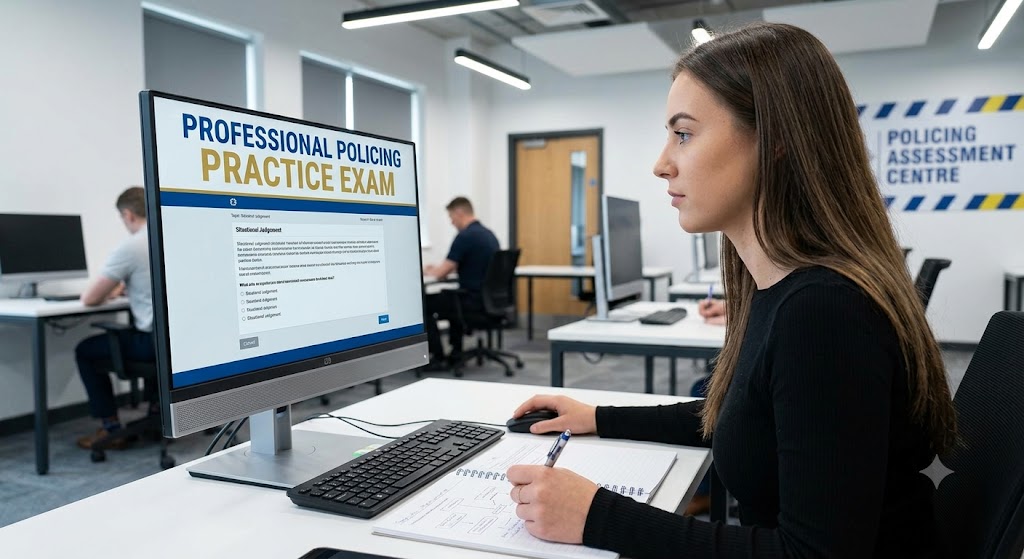
Additional Information
What the Course Entails and Exam Details
This practice exam simulates the core subject matter covered in the 'pre-join' knowledge qualifications, specifically the UK College of Policing national curriculum. It focuses on several key areas that form the theoretical foundation of effective policing. The content typically includes comprehensive modules on ethics and professional standards, the history of policing, the legal system, criminal law, criminology, and procedural justice. Candidates will delve into topics such as standard operating procedures, problem-solving methodologies (like SARA), conflict resolution strategies, and understanding diverse community needs. The practice test structure is designed to reflect these core principles, ensuring that aspiring officers are well-versed in the ethical and practical frameworks required by contemporary policing.
What to Expect in the Final Exam
The final certification exam for Professional Policing is a rigorous, multi-stage assessment. It often involves a combination of interactive elements and standardized tests, typically conducted via a secure online platform or at dedicated assessment centers. Candidates can expect situational judgement tests where they must choose the most appropriate response to challenging policing scenarios. There are also critical reasoning exercises, verbal and numerical reasoning assessments, and structured writing tasks where you will need to articulate clear and concise official communications. While specific passing scores can vary slightly, a strong, multi-faceted pass is required across all components. Strict time limits are enforced for each section to mirror the fast-paced nature of real-world police work. You will likely be prohibited from using external aids and will be monitored closely throughout the process.
How to Study and Exam Centers
Effective preparation is paramount. Begin by thoroughly studying the official curriculum materials provided by the licensing body, such as the College of Policing or your specific academic institution. Utilize comprehensive study guides that break down core concepts, legal frameworks, and ethical guidelines. Taking multiple mock examinations, like this practice test, is crucial; analyze your results to pinpoint weaknesses and understand the logic behind correct answers. Join online study forums, participate in group discussions, and practice situational simulations with peers. Additionally, physical fitness tests are a separate but vital requirement, so don't overlook physical preparation. For the formal examination, candidates often take the test via online proctoring services, authorized academic institutions (such as universities offering policing degrees), or designated professional testing centers. You will receive specific information on booking your test slot from your academic provider or law enforcement application coordinator.
Job Opportunities from the Course
Upon successfully completing the Professional Policing degree or pre-join qualification, several career paths open within law enforcement agencies, although some roles require further specialized training. The following list outlines key potential opportunities:
Police Constable (Traditional Entry)
Police Constable Degree Apprentice (PCDA Route)
Specialist Detective Constable (After further training)
Police Community Support Officer (PCSO - Though often a separate pathway, the knowledge is beneficial)
Police Staff/Civilian Support Roles (e.g., Intelligence Analyst, Control Room Operator)
Fraud Investigator
Compliance Officer
Private Security/Loss Prevention Specialist
Frequently Asked Questions
Reviews
5.0
Based on 0 reviews
Leave a Review
No reviews yet. Be the first to review!