
PRPA First Aid Practice Test
$69.00
- Buy to unlock unlimited access to all Quiz questions and Answers in this Quiz.
- After purchase you can print a PDF of the whole quiz at any point. The PDF will contain the questions and the correct answers.
About this Exam
Welcome to your essential guide for the PRPA First Aid certification and practice test. This comprehensive program, often associated with the Practical Rescue and First Aid guidelines, is designed to equip individuals from all backgrounds with the knowledge and confidence to respond effectively to common medical emergencies. Whether you're a workplace safety officer, a school teacher, a dedicated caregiver, or simply a concerned citizen looking to make a difference, this course provides a critical foundation in life-saving skills. This certification signifies that you have met recognized standards in basic first aid, ensuring you are prepared to stabilize situations, preserve life, and prevent further injury until professional medical help arrives.
Ready to test your knowledge?
Buy Now to Access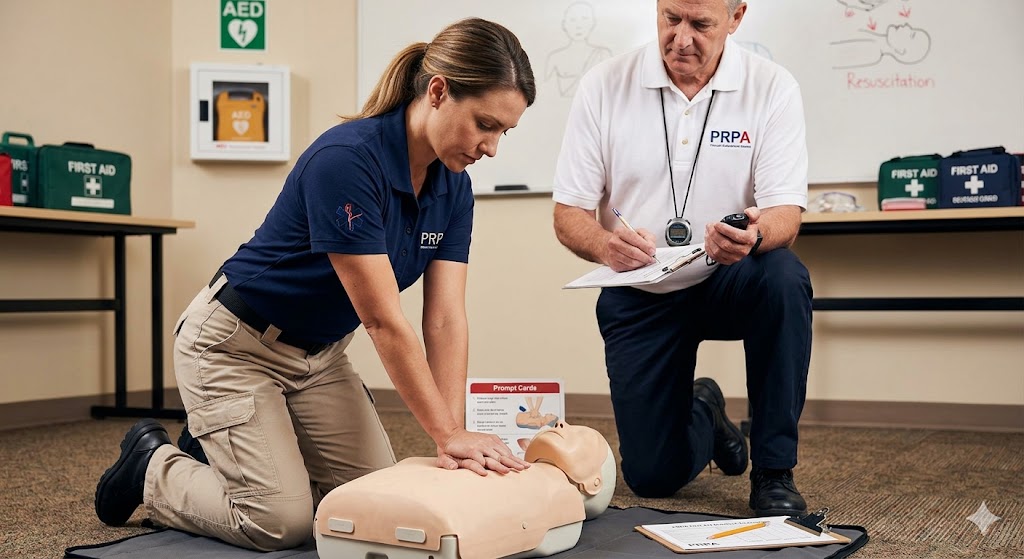
Additional Information
What the Course Entails and Exam Details
The PRPA First Aid course delves into a wide spectrum of essential topics, carefully balancing theoretical understanding with practical application. You can expect the course to cover:
Scene Safety & Assessment: Learning how to quickly evaluate a situation, ensure personal safety, and call for help.
Basic First Aid Principles: The general rulebook for providing immediate care.
CPR (Cardiopulmonary Resuscitation): Correct techniques for adults, children, and infants, ensuring you know how to support a person whose heart has stopped.
AED (Automated External Defibrillator) Use: Learning how to operate these potentially life-saving devices effectively.
Choking & Airway Obstructions: Techniques to clear blocked airways for all age groups.
Managing Wounds and Bleeding: From minor cuts to severe hemorrhage control.
Burns, Fractures, and Displacements: Identifying and stabilizing different types of injuries.
Medical Emergencies: Recognizing and responding to conditions like stroke, seizure, shock, and sudden illness.
Environmental Emergencies: Handling situations related to extreme heat, cold, or hazardous substances.
The actual PRPA First Aid practice test is a valuable tool within this program, designed to simulate the final exam and gauge your readiness. It typically consists of online multiple-choice questions that cover all the key course areas mentioned above. It allows for unlimited retakes and is an excellent way to identify and reinforce knowledge gaps.
What to Expect in the Final Exam
The culmination of your PRPA First Aid course is the final certification exam. Understanding its structure will help you prepare effectively:
Format: The primary component of the final exam is usually a rigorous multiple-choice test taken either online via an authorized portal or in a supervised setting. This test is designed to comprehensively assess your theoretical knowledge. Crucially, some blended or comprehensive PRPA programs may also include a required practical skills evaluation where you demonstrate CPR, AED usage, or basic wound care to a qualified instructor. The specific combination can vary depending on the exact PRPA provider or regional requirements.
Passing Score: To obtain your certification, you must typically achieve a minimum score, often around 70-80% on the multiple-choice portion. The practical skills portion, if included, is often a pass/fail assessment based on your accurate demonstration of key procedures.
Time Limit: Expect a reasonable time limit for the multiple-choice exam, perhaps around 60-90 minutes, depending on the number of questions.
Rules: Standard test conditions apply. The test is generally closed-book, and you must adhere to all instructions provided by the exam platform or in-person proctor. Practice tests are less formal but are invaluable for familiarizing yourself with the final exam environment.
How to Study and Exam Centers
Effective preparation is key to success on both the practice and final PRPA First Aid exams. Implement these actionable strategies:
Engage Actively with Course Material: Thoroughly review the official study guide, watch all video lessons, and pay close attention during any live or practical components. Note-taking is highly recommended.
Utilize the Practice Test Extensively: Take the PRPA First Aid Practice Test multiple times. Use it not just to check your answers, but to understand why the correct answer is correct. Identify topics where you consistently struggle and dedicate extra study time to those areas.
Practice Practical Skills (if applicable): If your course includes a practical element, practice CPR techniques, AED operation, and basic bandaging, even informally, to build muscle memory. Many online courses offer demonstration videos for this purpose.
Form a Study Group: Reviewing concepts and quizzing each other can enhance learning and memory retention.
Leverage Online Portals: Most PRPA First Aid programs are administered through dedicated online learning and testing portals. This is where you will likely access all study materials, take the practice test, and complete the official final online exam.
Authorized Schools & Physical Testing Centers: For programs with mandatory in-person practical assessments, you may need to complete those with an authorized instructor at a physical testing center, often linked to established first aid training organizations or authorized schools. These providers will communicate the location for any required hands-on sessions. Some programs also offer "blended" options (online theory, in-person practice/testing), while others might be entirely virtual with online practical skills checks (less common but possible, often requiring video conferencing). Always check the specific instructions and center details provided by your chosen PRPA program administrator.
Job Opportunities from the Course
A PRPA First Aid certification is not just a valuable life skill; it is a practical asset that unlocks and enhances numerous job opportunities and career paths. The ability to act confidently in an emergency is highly valued across diverse industries. The certification can open doors to, or meet vital requirements for, the following roles:
Workplace First Aider (in various corporate or industrial settings)
School Teacher or Teacher's Assistant
Daycare Provider or Childcare Worker
Sports Coach or Trainer
Tour Guide or Outdoor Activity Leader
Security Personnel
Event Staff or Steward
Construction or Industrial Worker (often with safety protocols requiring first aid)
Community Health Worker or Assistant
Basic Healthcare Assistant or Support Staff
Parent/Guardian or Caregiver (crucial for ensuring loved ones' safety)
Frequently Asked Questions
Reviews
5.0
Based on 0 reviews
Leave a Review
No reviews yet. Be the first to review!