
PTCB Pharmacy Law Practice Exam
$69.00
- Buy to unlock unlimited access to all Quiz questions and Answers in this Quiz.
- After purchase you can print a PDF of the whole quiz at any point. The PDF will contain the questions and the correct answers.
About this Exam
Navigating the complex landscape of pharmacy regulations is critical for ensuring patient safety and legal compliance. The PTCB Regulatory Compliance Certificate is designed specifically for Certified Pharmacy Technicians (CPhTs) who want to formally demonstrate their mastery of these essential laws and standards. This advanced credential validates your expertise in managing the intricate legal requirements that govern pharmacy operations, controlled substance handling, and patient privacy. This guide is your roadmap to preparing for and passing the final assessment through strategic use of a PTCB Pharmacy Law Practice Exam.
Ready to test your knowledge?
Buy Now to Access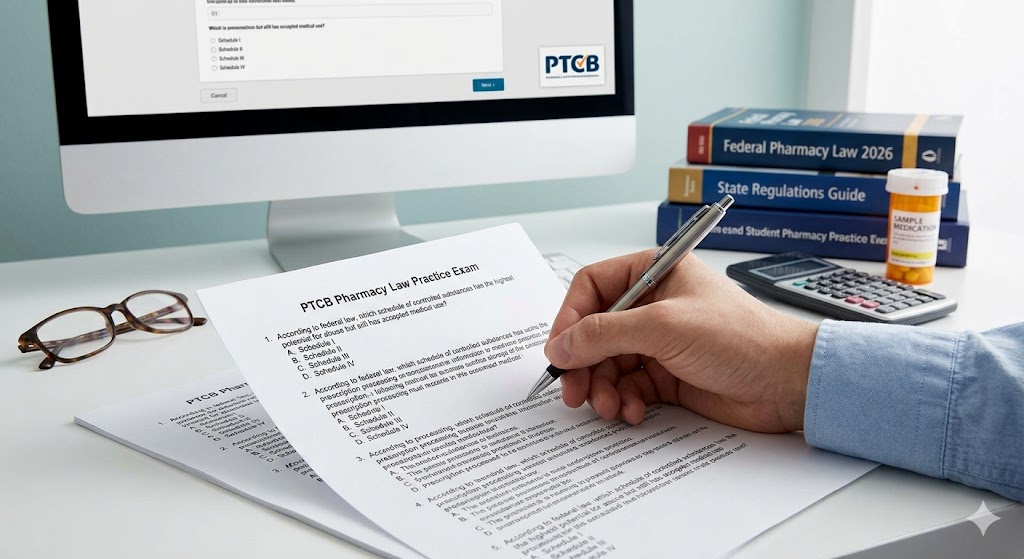
Additional Information
What the Course Entails and Exam Details
This specialty certificate program is a vital step for experienced technicians. It ensures you have the robust knowledge required to mitigate risks and maintain a lawful pharmacy environment. The program typically involves a self-paced training module, followed by a final, comprehensive assessment. The core knowledge domains you must master for the final exam include:
Federal Pharmacy Law: Deep understanding of key regulations, including the Controlled Substances Act (CSA), HIPAA, the Food, Drug, and Cosmetic Act (FD&C Act), and the Drug Supply Chain Security Act (DSCSA).
Regulatory Compliance Standards: Knowledge of state-specific laws and professional ethics in relation to federal mandates.
Practical Scenarios: Real-world applications of law in everyday pharmacy practice, from prescription processing and record-keeping to identifying and managing controlled substance diversion.
What to Expect in the Final Exam
The culmination of the PTCB Regulatory Compliance Certificate is a rigorous, computer-based assessment. While the primary CPhT (PTCE) exam is broader, this focused exam is shorter but demands deeper legal comprehension. Key features of the final assessment include:
Format: A multiple-choice examination.
Number of Questions: Typically between 60 and 90 questions.
Time Limit: Approximately one hour to complete the assessment.
Scoring: Like other PTCB assessments, a passing score is required to earn the credential. Your results will be scaled to ensure a standardized passing requirement.
Special Rules: Candidates have multiple attempts to pass the assessment if they complete the prerequisite training but must wait a predetermined period between attempts.
How to Study and Exam Centers
Successfully earning your Regulatory Compliance Certificate requires more than just passive reading. You must actively engage with the material to develop practical competency. Our expert recommendations for a winning study strategy include:
Utilize a PTCB Pharmacy Law Practice Exam: This is the single most effective tool. A high-quality practice exam will mimic the actual test format and difficulty, helping you identify your weaknesses and build time-management skills.
Master Federal and State Codes: Go beyond simple summaries and dive into the specific sections of the Controlled Substances Act and your state's pharmacy rules.
Review PTCB Official Resources: Always start with the official content outline and any recommended study aids provided by PTCB for this certificate.
Analyze Case Studies: Work through practical scenarios that force you to apply legal knowledge to make compliant, ethical decisions.
Exam Centers and Location: Once you have completed the required training modules, the final exam is an online assessment. You do not need to go to a physical testing center. You can take this computer-based test from the convenience of your own home or approved work environment using a personal computer with standard internet access.
Job Opportunities from the Course
Earning the PTCB Regulatory Compliance Certificate is a significant career milestone that sets you apart as a specialist. This credential validates specialized skills that are in high demand by employers seeking to elevate their compliance practices. This certification directly unlocks career advancement paths and specialized roles, including:
Lead Pharmacy Technician with a focus on compliance.
Specialized Compliance Technician.
Quality Assurance Technician.
Regulatory Affairs Technician.
Controlled Substances Diversion Prevention Specialist.
Pharmacy Supervisor/Manager (requiring legal oversight).
Hospital or Institutional Pharmacy Law Specialist.
Risk Management Technician.
Frequently Asked Questions
Reviews
5.0
Based on 0 reviews
Leave a Review
No reviews yet. Be the first to review!