
Puerto Rico Learner's Permit Practice Test
$69.00
- Buy to unlock unlimited access to all Quiz questions and Answers in this Quiz.
- After purchase you can print a PDF of the whole quiz at any point. The PDF will contain the questions and the correct answers.
About this Exam
The Puerto Rico Learner's Permit, locally known as the "Certificado de Aprendizaje," is the crucial first step for anyone looking to legally operate a motor vehicle on the island.
This initial certification is designed for new drivers, including teenagers who have just reached the eligible age of 16, as well as adults who are applying for their driving privileges for the very first time.
By taking a Puerto Rico learner's permit practice exam, prospective drivers can familiarize themselves with the local traffic laws and road safety standards before facing the official test.
It is an empowering educational tool that builds confidence, reduces test anxiety, and ensures that the roads of Puerto Rico remain safe for all commuters.
Ready to test your knowledge?
Buy Now to Access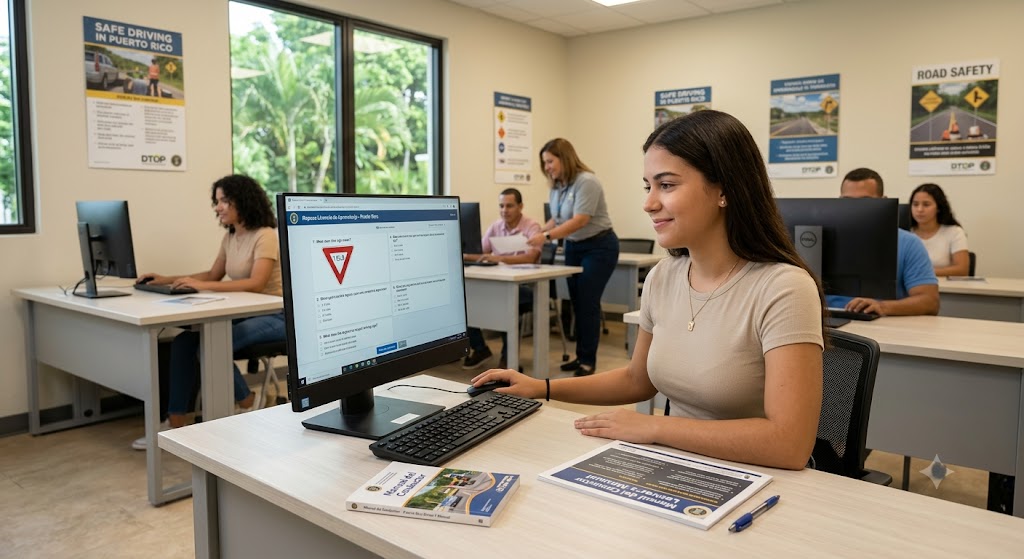
Additional Information
What the Course Entails and Exam Details
Preparing for this permit involves a thorough review of the official Puerto Rico Driver's Manual, which outlines the essential rules of the road.
The core topics covered in your study materials and practice exams heavily emphasize the "Ley de Vehículos y Tránsito de Puerto Rico" (Puerto Rico Vehicle and Traffic Law).
You will dive deep into understanding a wide array of traffic signs, many of which are unique to the island or presented in Spanish, making visual recognition skills vital.
The syllabus also covers critical safe driving practices, including proper lane usage, speed limits in various zones (such as urban, rural, and school areas), and the strict regulations surrounding driving under the influence (DUI) of alcohol or drugs.
Additionally, you will learn the necessary protocols for yielding the right-of-way, handling emergencies, and understanding the specific restrictions placed on learner's permit holders.
What to Expect in the Final Exam
When the day arrives to take your official permit exam, you will be seated at a computer station in a highly regulated testing environment.
The exam format consists entirely of multiple-choice questions designed to test your theoretical knowledge of the driver's manual.
You will typically face 20 questions on the test, and you must answer at least 14 of them correctly to achieve the required passing score of 70%.
While the test is not overwhelmingly long, there is usually a standard time limit of about 20 to 40 minutes, which provides more than enough time for well-prepared students to read and answer each prompt carefully.
Strict rules apply during the examination process; personal belongings, especially cell phones, smartwatches, and study materials, are strictly prohibited in the testing area to ensure the integrity of the test.
How to Study and Exam Centers
The most effective study strategy begins with thoroughly reading the most current edition of the official Puerto Rico Driver's Manual.
Once you are familiar with the text, transition into taking multiple online practice exams to test your retention and get comfortable with the multiple-choice format.
Using flashcards specifically dedicated to memorizing traffic signs in Spanish is highly recommended, as visual recognition makes up a significant portion of the test.
When you are ready to take the official exam, you must process your application through the Puerto Rico Department of Transportation and Public Works (DTOP).
The exam is administered in person at authorized CESCO (Centro de Servicios al Conductor) locations spread across the island.
To take the exam, you will need to book an appointment in advance, which can conveniently be done online through the CESCO Digital app or their official website.
Job Opportunities from the Course
While a learner's permit itself is primarily for educational and practice purposes, obtaining it is the mandatory gateway to securing a full driver's license, which unlocks numerous career paths.
Once you upgrade your permit to a standard license, you will instantly become eligible for a wide variety of roles that require mobility.
Here are some of the excellent career opportunities that begin with passing your permit exam:
Local Delivery Driver (Courier services, food delivery, and local logistics)
Outside Sales Representative (Traveling to various client locations across the island)
Field Service Technician (Driving to customer homes or businesses for repairs and installations)
Rideshare Driver (Working for platforms like Uber once full licensure and age requirements are met)
Real Estate Agent (Transporting yourself to property showings and client meetings)
Commercial Driver Candidate (The foundational step before pursuing a CDL for heavy trucks or buses)
Frequently Asked Questions
Reviews
5.0
Based on 0 reviews
Leave a Review
No reviews yet. Be the first to review!