
Qualified Applicator License (QAL) Category L – Fumigation Practice Test
$69.00
- Buy to unlock unlimited access to all Quiz questions and Answers in this Quiz.
- After purchase you can print a PDF of the whole quiz at any point. The PDF will contain the questions and the correct answers.
About this Exam
The Qualified Applicator License (QAL) Category L (Fumigation) is the premier certification for individuals seeking to operate, supervise, or oversee the application of fumigants, including restricted materials, within various structures, non-structural scenarios, and for stored products. It is designed for professionals working in structural pest control, agriculture (managing grain, seed, or commodities), and transportation industries (shipping containers, vehicles). This certification signals a commitment to the highest levels of safety, environmental responsibility, and technical proficiency in handling powerful and potentially dangerous fumigation compounds. Achieving your QAL Category L license opens the door to specialized roles, increased responsibility, and significant career advancement opportunities in both the private and public sectors. This guide will prepare you to excel.
Ready to test your knowledge?
Buy Now to Access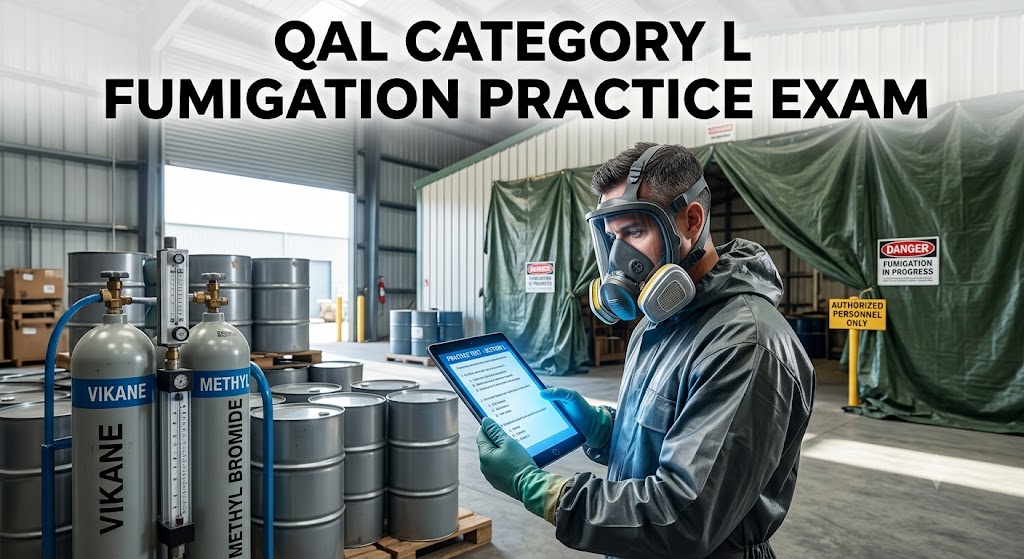
Additional Information
What the Course Entails and Exam Details
Successfully obtaining the QAL Category L certification requires mastering a comprehensive body of knowledge focused on safety, regulations, and effective application methods. While there is no official pre-requisite "course" required by California's Department of Pesticide Regulation (DPR) before taking the exam, candidates must self-study relevant materials. These topics are covered in practice tests to mirror the actual exam:
Fumigants and Chemistry: In-depth knowledge of common fumigation chemicals, including sulfuryl fluoride, methyl bromide alternatives, phosphine, and others. Focus on their properties, behavior, and toxicity.
Laws and Regulations: A critical understanding of federal and California state pesticide laws, regulations, and permit requirements for using restricted materials and conducting fumigations.
Safety Protocols and Equipment: Mastery of Personal Protective Equipment (PPE), including appropriate respirators and gas monitoring devices. Protocols for safety in handling, storing, and applying fumigants.
Application Techniques and Methods: Methods for preparing structures and commodities for fumigation, controlling dosage and concentration, and ensuring effective application across various scenarios.
Monitoring and Aeration Procedures: Procedures for continuous air monitoring during treatment, post-fumigation aeration, clearing a site for re-entry, and managing spills or emergencies.
Equipment Operation and Maintenance: Correct usage, calibration, maintenance, and storage of diverse fumigation application and detection equipment.
Environmental and Wildlife Considerations: Minimizing potential environmental impact and protecting non-target organisms and wildlife.
What to Expect in the Final Exam
The official QAL Category L certification exam is a rigorous test administered by the California Department of Pesticide Regulation (DPR). Candidates are tested on their ability to apply critical safety standards and regulations in real-world situations. While exact details can shift, you can typically anticipate the following structure:
Format: The exam usually consists of multiple-choice questions designed to assess factual knowledge and problem-solving abilities. Expect questions involving scenarios that test your practical judgment. A separate Core exam might also be a prerequisite.
Passing Score: You will likely need a score of approximately 70% or higher to pass, though you should always confirm the exact passing requirements with the DPR at the time of your application.
Time Limit: Expect a strict time limit for the entire exam, typically ranging from one to two hours per section, requiring efficient time management.
Content Weighting: Significant emphasis is placed on safety (PPE, emergency response, aeration) and legal regulations (label comprehension, permit requirements, reporting). Be prepared for detailed questions in these areas.
Rules: Cheating or any unauthorized behavior will result in disqualification. You will need to present valid identification at the testing location and will not be permitted to use notes or external materials during the test.
How to Study and Exam Centers
Preparation for the QAL Category L exam demands dedicated effort and a structured approach. Focus your efforts on official resources, practical application, and rigorous practice. Follow these proven study strategies:
Study Official Materials First: Start with the official QAL study manuals and regulatory summaries provided by the California Department of Pesticide Regulation (DPR). These contain the precise information you will be tested on.
Utilize Practice Exams: Practice tests, such as those discussed here, are indispensable. They help you get familiar with the question format, identify areas where your knowledge is weak, improve your speed, and build confidence. Analyze the explanations for correct and incorrect answers.
Deep Dive into Regulations and Labels: Dedicate specific study time to understanding state and federal laws, and practice interpreting actual pesticide labels carefully, as questions are often directly based on them.
Form or Join a Study Group: Collaborating with colleagues or peers preparing for the same exam can provide motivation, different perspectives, and a chance to discuss challenging concepts.
Consider Relevant Training: Look for reputable industry workshops, online courses, or university programs that offer focused training on fumigation safety and technology, although they may not be officially required.
Exam Centers: Unlike standard certification exams found at major testing providers like Pearson VUE, the official California DPR QAL exams are typically administered at specific locations designated by the DPR, often in state or local government buildings, state university facilities, or other physical testing centers. Check the official California DPR website for the current list of exam dates, locations, and registration procedures. Plan your travel and logistics well in advance, as availability can be limited. The practice exams themselves are typically online, providing flexibility in your preparation.
Job Opportunities from the Course
Earning your QAL Category L Fumigation license significantly enhances your marketability and creates pathways into advanced positions across a diverse range of industries. This credential demonstrates specialized skill and a commitment to safe practices in handling high-risk substances. Specific job opportunities that require or highly value this certification include:
Fumigation Supervisor / Manager
Structural Pest Control Field Representative (Certified in Fumigation)
Stored Product Pest Management Specialist (e.g., Grain Silos, Food Processing Plants)
Logistics and Transportation Pest Control Manager (Ships, Shipping Containers, Trains)
Quarantine and Inspection Officer (State or Federal, overseeing fumigation compliance)
Pest Control Operator (Specializing in Fumigation Services)
Agricultural Supervisor with a focus on fumigation
Environmental Health and Safety (EHS) Officer (with expertise in fumigants)
Consultant in Industrial Fumigation Practices
Business Owner / Operator (Licensed for fumigation operations)
Frequently Asked Questions
Reviews
5.0
Based on 0 reviews
Leave a Review
No reviews yet. Be the first to review!