
Qualified Medical Evaluator (QME) Practice Exam
$69.00
- Buy to unlock unlimited access to all Quiz questions and Answers in this Quiz.
- After purchase you can print a PDF of the whole quiz at any point. The PDF will contain the questions and the correct answers.
About this Exam
The Qualified Medical Evaluator (QME) designation is a critical certification for California physicians, psychologists, chiropractors, and other authorized medical professionals who wish to participate in the state’s workers' compensation system. A QME is an independent physician certified by the Division of Workers' Compensation (DWC) Medical Unit to examine injured workers and write medical-legal reports. These reports are essential for resolving disputes regarding the nature and extent of work-related injuries, work restrictions, and permanent impairment. This exam is designed specifically for licensed medical practitioners in California who meet the licensing and experience requirements set by the DWC and intend to provide neutral, objective medical evaluations in a legal context.
Ready to test your knowledge?
Buy Now to Access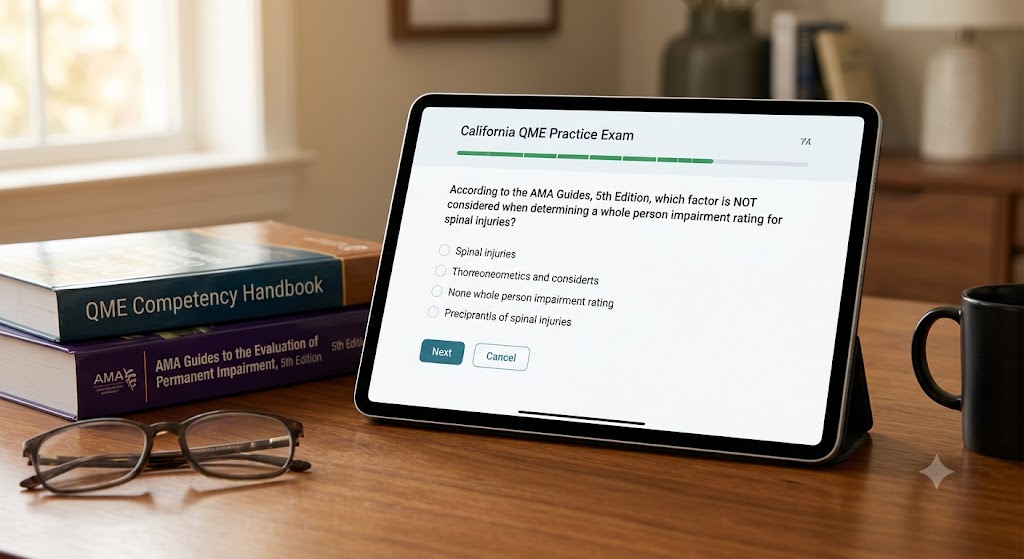
Additional Information
What the Course Entails and Exam Details
The QME competency examination is comprehensive, focusing intensely on the intersection of medicine and the California Labor Code. It does not test basic medical knowledge, which is assumed, but rather the application of that knowledge within the rules of the workers' compensation system. Core topics include:
Medical-Legal Reporting: The specific structure, required content, and timelines for QME reports (including Comprehensive, Follow-up, and Supplemental evaluations).
The AMA Guides: Mastery of the AMA Guides to the Evaluation of Permanent Impairment, 5th Edition, which is the mandatory standard in California for rating permanent disability. This includes detailed knowledge of rating different body systems and applying the combined values chart.
Causality and Apportionment: Understanding the legal definitions of industrial causation and how to properly apportion a disability between industrial and non-industrial causes, including pre-existing conditions.
Work Restrictions: Formulating objective, medically supported work restrictions based on the evaluation.
California Labor Code: Familiarity with the relevant statutes and regulations governing medical evaluations, terminology (e.g., "subjective" vs. "objective" findings), and ethical guidelines.
The syllabus is dynamic, reflecting current DWC regulations and precedent-setting court decisions.
What to Expect in the Final Exam
The QME final exam is a rigorous, proctored test. It typically consists of approximately 100 to 120 multiple-choice questions designed to test both knowledge and application of the complex rules. The questions cover both legal procedures and medical impairment rating scenarios. The exam is typically administered over a half-day session, often lasting three to four hours. A passing score is generally around 70%, though this can scale depending on the difficulty of the specific exam version. Candidates must bring valid identification and their medical license information. Specific materials, such as the AMA Guides, may sometimes be permitted as reference during certain portions of the exam, but this is strictly regulated and subject to change; candidates must verify current rules. The DWC provides an unconditional guarantee of fairness in administration.
How to Study and Exam Centers
Effective preparation for the QME exam requires a structured study plan focused on regulatory compliance and impairment rating mastery. Candidates should prioritize:
DWC Materials: Deeply studying the Physicians’ Guide to Medical Practice in the California Workers’ Compensation System and all current QME regulations provided by the DWC Medical Unit.
AMA Guides Mastery: Intensive review of the AMA Guides, 5th Edition, particularly the chapters most relevant to their specialty, including the methodology for calculating final impairment ratings.
Practice Exams: Utilizing practice tests to become familiar with the phrasing of medical-legal questions and the types of scenarios presented.
Education Providers: Enrolling in DWC-promoted or authorized QME preparation courses, which often provide essential guidance and consolidated study materials.
The examination is not taken online. It is administered at specific physical testing centers located throughout California on scheduled dates, typically several times a year. These locations are often large conference centers or authorized facilities in major metropolitan areas like Los Angeles, San Diego, and the San Francisco Bay Area. Registration must be completed through the DWC Medical Unit in advance of the testing dates.
Job Opportunities from the Course
Earning the QME certification significantly expands the professional scope for a medical practitioner. While most QMEs maintain their primary clinical practice, this designation allows them to legally perform and be compensated for the following highly specialized roles:
Qualified Medical Evaluator: Performing independent, objective evaluations for the California workers’ compensation system.
Independent Medical Evaluator (IME): Conducting similar neutral evaluations outside of the state workers' compensation system, such as for private disability insurers or personal injury litigation.
Medical-Legal Consultant: Advising attorneys (both applicant and defense) on the medical merits of a case.
Expert Witness: Providing expert testimony in depositions or before the Workers' Compensation Appeals Board (WCAB) based on their QME reports.
Agreed Medical Evaluator (AME): Selected by both parties (the injured worker's attorney and the claims administrator) specifically because of their reputation for fairness and expertise as a QME.
Frequently Asked Questions
Reviews
5.0
Based on 0 reviews
Leave a Review
No reviews yet. Be the first to review!