
Qualified Water Efficient Landscaper (QWEL) Practice Exam
$69.00
- Buy to unlock unlimited access to all Quiz questions and Answers in this Quiz.
- After purchase you can print a PDF of the whole quiz at any point. The PDF will contain the questions and the correct answers.
About this Exam
The Qualified Water Efficient Landscaper (QWEL) designation is a premier professional certification for individuals seeking specialized expertise in water-conserving landscape practices. Designed primarily for landscape maintenance professionals, irrigation technicians, water purveyor employees, and related industry specialists, the QWEL program bridges the gap between traditional landscaping and sustainable water management. Earning this certification demonstrates a comprehensive understanding of efficient irrigation design, installation, management, and the crucial skills needed to help properties reduce outdoor water use, a critical priority in resource-conscious communities.
Ready to test your knowledge?
Buy Now to Access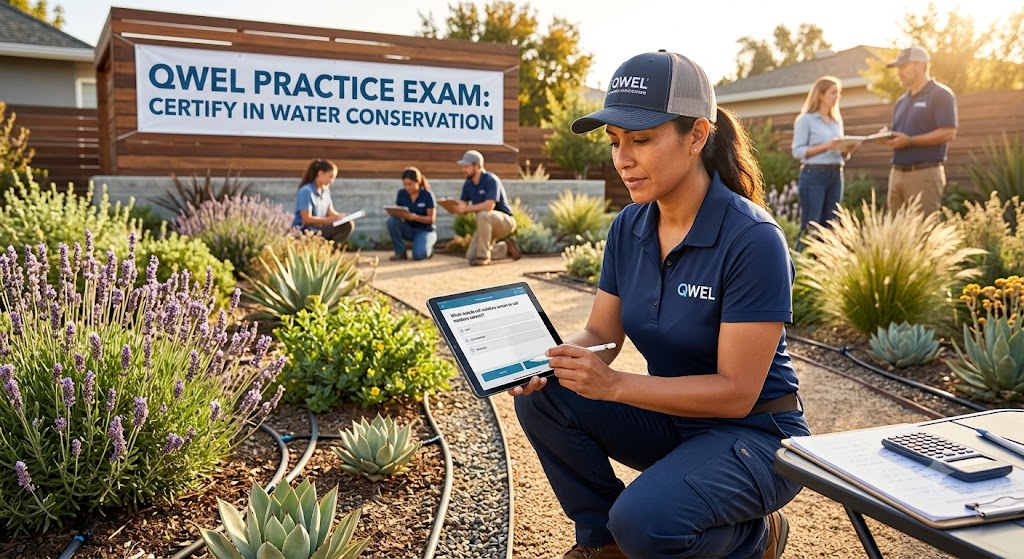
Additional Information
What the Course Entails and Exam Details
A QWEL course is a comprehensive educational program typically delivered by authorized training partners. The detailed curriculum focuses heavily on practical knowledge and site-specific applications. The core topics generally cover essential water auditing techniques, including practical soil moisture evaluation, efficient irrigation system controller programming, and advanced troubleshooting for irrigation components. Participants dive deep into the fundamentals of plant-water requirements, soil science, and the implementation of drip irrigation and multi-stream rotary nozzles. They also learn to create and implement comprehensive water budgets and analyze water consumption data to identify saving opportunities. The course equips professionals to perform a detailed landscape water audit, the central practical skill of the certification.
What to Expect in the Final Exam
The final QWEL exam is a rigorous test designed to evaluate both theoretical knowledge and practical competence. It usually consists of two distinct components. First, there is a comprehensive written exam, often featuring 80 to 100 multiple-choice questions covering all modules of the QWEL curriculum. This component assesses your understanding of efficient irrigation principles, water auditing concepts, and regulatory guidelines. Second, candidates must successfully complete a hands-on outdoor field audit. During this practical portion, you are evaluated on your ability to correctly perform a thorough evaluation of an existing irrigation system and accurately develop a revised watering schedule. The combined written score and practical audit results determine certification eligibility. A passing score of 70% or higher is typically required for both the written exam and the practical audit separately. The practical field audit is often timed, and specific rules regarding tools and procedures must be meticulously followed.
How to Study and Exam Centers
Effective preparation for the QWEL exam requires a strategic combination of classroom instruction and focused independent study. Start by attending all authorized QWEL training classes and actively participating in field exercises. Leverage the official QWEL study materials and reference manuals, which serve as the primary resource for the exam curriculum. Creating structured study notes and using online QWEL practice exams to simulated testing conditions are highly effective strategies for reinforcing knowledge. Many test takers find that reviewing local water conservation ordinances and common irrigation hardware enhances their practical application. Utilize authorized online portals, provided by specific training providers, to access interactive practice questions and mock audits. The final certification exams are not typically administered at generic testing centers like Pearson VUE; rather, they are facilitated directly by the authorized local organizations, specific water agencies, or designated horticultural schools that deliver the QWEL course series, usually immediately following the completion of the training modules.
Job Opportunities from the Course
A QWEL certification significantly improves professional marketability and opens diverse career paths within the green industry. Certified individuals frequently advance to positions focusing on sustainable practices and resource management. Graduates and certified professionals often find opportunities in the following roles:
Water Efficiency Specialist
Certified Water Auditor
Landscape Conservation Coordinator
Sustainable Landscape Manager
Irrigation Efficiency Technician
Property Water Budget Analyst
Green Building Sustainability Consultant
Environmental Resource Manager
Landscape Maintenance Supervisor focusing on resource efficiency
Water Purveyor Conservation Program Administrator
Frequently Asked Questions
Reviews
5.0
Based on 0 reviews
Leave a Review
No reviews yet. Be the first to review!