
Radiation Protection Practice Exam
$69.00
- Buy to unlock unlimited access to all Quiz questions and Answers in this Quiz.
- After purchase you can print a PDF of the whole quiz at any point. The PDF will contain the questions and the correct answers.
About this Exam
The Radiation Protection Practice Exam is an essential stepping stone for professionals aiming to demonstrate their expertise in managing ionizing radiation safely. This certification is crucial for those working in medical imaging, nuclear power, industrial radiography, or research facilities. It validates a candidate’s understanding of the risks associated with radiation and the necessary measures to protect themselves, their colleagues, the public, and the environment. Mastering this exam opens doors to careers focused on ensuring regulatory compliance and implementing robust safety protocols in diverse technical fields.
Ready to test your knowledge?
Buy Now to Access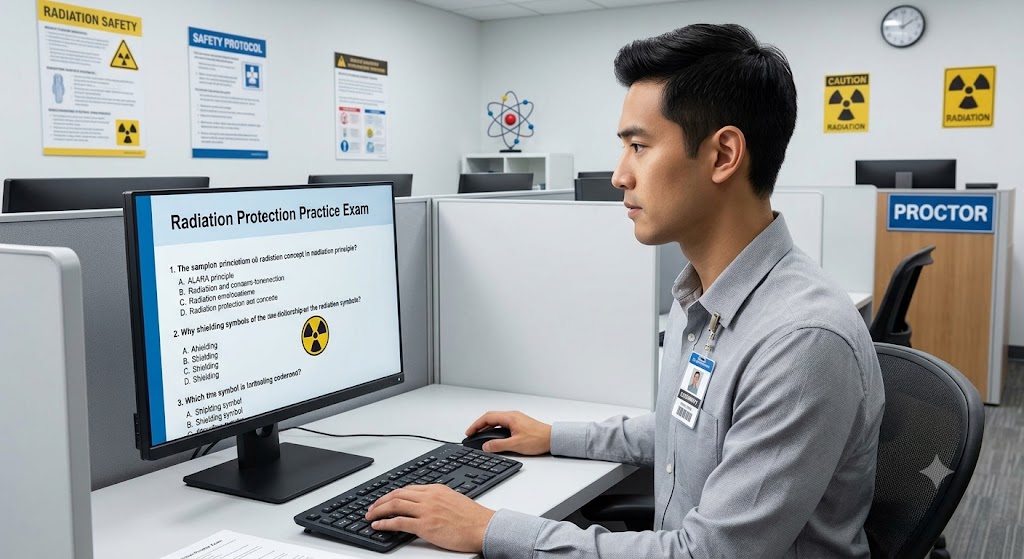
Additional Information
What the Course Entails and Exam Details
This comprehensive course covers the foundational principles and advanced practices required for effective radiation control. The curriculum typically includes detailed studies of radiation physics, identifying types of radiation, their sources, and the mechanics of radioactive decay.
Participants will learn critical aspects of radiation biology, exploring how ionizing radiation interacts with human cells and understanding both acute and long-term biological effects. A significant portion of the course is dedicated to radiation detection and measurement, teaching professionals how to operate various survey meters, spectrometers, and personal dosimetry devices accurately.
Furthermore, students are trained in fundamental radiation protection methods, applying the principle of ALARA (As Low As Reasonably Achievable) through effective shielding design, time management, and distance strategies. Finally, the program rigorously prepares candidates in regulatory compliance, ensuring a deep understanding of relevant guidelines from organizations such as the Nuclear Regulatory Commission (NRC) and international safety standards.
What to Expect in the Final Exam
The final Radiation Protection Practice Exam is designed to thoroughly assess both theoretical knowledge and practical application skills. The examination typically consists of multiple-choice questions, which may include scenario-based problems and calculations related to shielding and dose limits.
While the exact number of questions can vary, it is generally a timed test lasting between two and four hours. Candidates must achieve a passing score, often around 70-75%, to demonstrate proficiency. The exam is often computer-based and administered under strict proctored conditions to maintain academic integrity. Some specialized versions may also include a practical or oral component where the examiner evaluates hands-on skills in instrument calibration or emergency response.
How to Study and Exam Centers
Effective preparation for this exam requires a structured approach. We strongly recommend candidates begin by thoroughly reviewing all course materials, textbooks, and relevant regulatory documents. Actively engaging in practical sessions to master the use of radiation detection equipment is also critical.
Utilizing comprehensive practice tests, like this Radiation Protection Practice Exam, is vital to familiarize yourself with the question formats and identify knowledge gaps. Forming study groups to discuss complex topics such as shielding calculations can provide diverse perspectives. Consistent and focused study habits are key to building confidence.
Exam centers are widely accessible. Many standardized certification exams are administered through recognized online portals or professional testing networks such as Pearson VUE, which have locations globally. Additionally, authorized training providers, technical colleges, and university-affiliated centers frequently host these examinations upon completion of an approved course.
Job Opportunities from the Course
Earning a qualification in Radiation Protection significantly enhances career prospects in numerous critical industries. Successful completion of the exam makes you a prime candidate for roles such as:
Radiation Safety Officer (RSO) or RSO Assistant
Health Physics Technician
Medical Radiation Dosimetrist
Nuclear Medicine Technologist
Industrial Radiographer and NDT Specialist
Environmental Radiation Specialist
Radiation Protection Manager
Frequently Asked Questions
Reviews
5.0
Based on 0 reviews
Leave a Review
No reviews yet. Be the first to review!