
Radiation State Practice Exam
$69.00
- Buy to unlock unlimited access to all Quiz questions and Answers in this Quiz.
- After purchase you can print a PDF of the whole quiz at any point. The PDF will contain the questions and the correct answers.
About this Exam
The [Radiation State Practice Exam] is an essential certification for professionals seeking to demonstrate their competence in the principles and practices of radiation safety, regulation, and application. This exam is typically designed for individuals working in industries that utilize ionizing radiation, including healthcare (radiologic technologists, nuclear medicine technologists), industrial radiography, research institutions, and environmental safety. Obtaining this certification validates that you possess the critical knowledge and skills required to operate safely and ensure compliance with state-specific regulations governing radiation use.
Ready to test your knowledge?
Buy Now to Access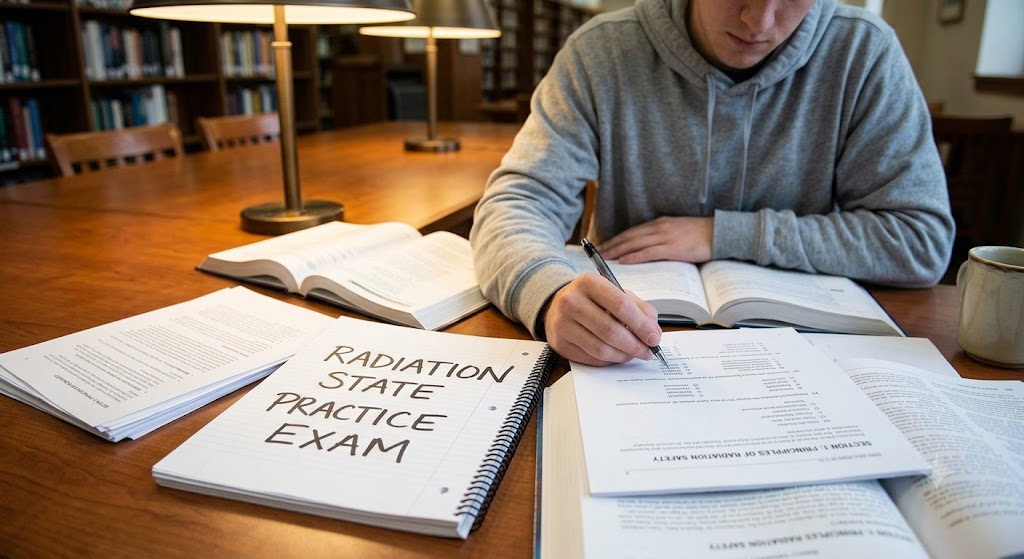
Additional Information
What the Course Entails and Exam Details
This examination is not derived from a single standardized course but rather comprehensive study materials reflecting state-level regulations and broader health physics principles. The syllabus covered by the exam typically encompasses foundational concepts such as: Principles of Radioactivity (radioactive decay, types of radiation); Interaction of Radiation with Matter; Biological Effects of Radiation; Radiation Detection and Measurement Instruments; Radiation Protection Principles (ALARA, shielding, time, distance); State-Specific Regulations and Licensing Requirements; and Emergency Procedures for radiological incidents.
What to Expect in the Final Exam
The final certification exam for the Radiation State qualification is generally a rigorous assessment administered in a closed-book environment. While specific formats can vary slightly by state, candidates should expect approximately 70 to 100 multiple-choice questions. The time limit for completing the exam is usually two to three hours. A passing score, often set at 70% or higher, is required to demonstrate adequate proficiency. It is crucial to review your specific state's regulatory guide, as it may include specific practical components or unique calculation questions.
How to Study and Exam Centers
Effective preparation for the [Radiation State Practice Exam] involves a structured approach combining theoretical review and practical application. Candidates should utilize official state regulatory guides and publications, which serve as primary resources. Actively solving practice questions modeled after past exams is highly recommended to assess readiness and identify areas needing improvement. Flashcards can be useful for memorizing regulatory limits and definitions. To take the exam, candidates must first apply through their state’s designated radiation control program or licensing board. Testing often takes place at authorized physical testing centers, such as Pearson VUE centers or specific state government facilities, and increasingly, some states offer proctored online examination options.
Job Opportunities from the Course
Upon successfully passing the [Radiation State Practice Exam] and achieving certification, graduates unlock a diverse range of career paths across multiple sectors. These include:
Radiologic Technologist
Nuclear Medicine Technologist
Radiation Therapist
Health Physics Technician
Radiation Safety Officer (RSO)
Industrial Radiographer
Environmental Health and Safety Specialist
Frequently Asked Questions
Reviews
5.0
Based on 0 reviews
Leave a Review
No reviews yet. Be the first to review!