
Radio Quality 1 Practice Exam
$69.00
- Buy to unlock unlimited access to all Quiz questions and Answers in this Quiz.
- After purchase you can print a PDF of the whole quiz at any point. The PDF will contain the questions and the correct answers.
About this Exam
The Radio Quality 1 certification is designed as a foundational stepping stone for individuals aiming to launch a career in radio broadcasting, audio production, and digital media. This certification validates essential knowledge and skills required to produce high-quality audio content for various platforms. It is ideal for high school students, college students, and anyone new to the industry who wants to demonstrate proficiency in core radio and audio concepts. The practice exam is your comprehensive tool to assess readiness and build confidence for the official certification.
Ready to test your knowledge?
Buy Now to Access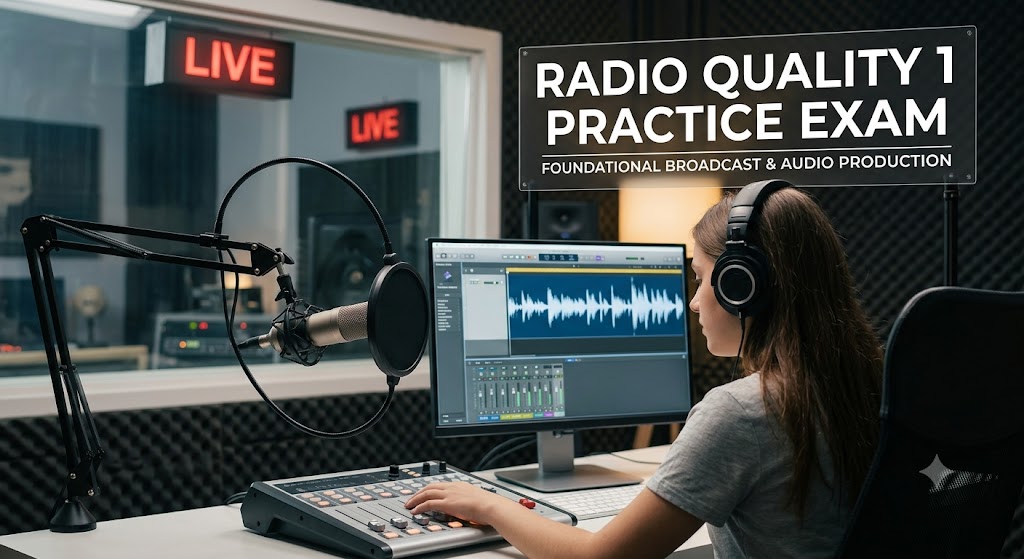
Additional Information
What the Course Entails and Exam Details
The curriculum behind the Radio Quality 1 certification covers a broad range of topics critical for modern audio professionals. It encompasses theoretical knowledge of sound and a practical understanding of equipment and production workflows. Key standards and objectives include:
Introduction to Audio Production: Understanding different types of content, including traditional AM/FM radio, Internet radio, podcasts, live sports broadcasts, and music production.
Basics of Sound and Acoustics: Exploring fundamental concepts such as frequency, amplitude, decibels, sample rate, bit depth, and how to manage clipping and distortion.
Audio Equipment and Signal Path: Learning proper setup and use of microphones (transducers like condenser, dynamic, ribbon), audio interfaces, mixing boards, and various cables (XLR, 1/4”, 1/8”). Master the path from input to final output.
Digital Audio Workstations (DAWs): Gaining basic proficiency in recording, editing, and mixing using professional software.
Creating Promotional Content: Learning to produce station IDs, sweepers, drops, commercials, and public service announcements (PSAs).
Distribution Outlets: Identifying proper channels for content, including traditional broadcast, major podcast distributors (Apple, Spotify), and social media platforms.
Copyright Laws and Career Readiness: Understanding basic copyright rules and exploring job roles, teamwork, and critical workplace skills like dependability.
What to Expect in the Final Exam
The official Radio Quality 1 certification process typically involves two distinct components. A practice exam is a crucial step in preparing for both.
Knowledge Exam: A comprehensive, multiple-choice assessment that tests theoretical understanding. Expect questions covering all major standards, such as equipment identification, signal flow diagrams, audio definitions, and copyright basics.
Performance Assessment: A hands-on evaluation where candidates must demonstrate a specific set of performance skills. This often requires completing practical tasks like setting up a microphone, recording clean audio, performing a basic edit in a DAW, and exporting a file in a high-quality format. The official performance assessment may be evaluated by an authorized instructor or test administrator, and candidates must achieve a passing score on all key tasks.
The combination ensures that certified individuals possess both the "know-how" and the practical ability to produce quality work.
How to Study and Exam Centers
A strategic approach is best for preparing for the Radio Quality 1 certification. Here are actionable steps:
Hands-on Practice is Key: Do not just read. Spend significant time in a real or simulated studio. Practice setting up different microphones, using a mix board, and working in a DAW to record, edit, and mix audio. Focus on achieving "radio-ready" sound quality.
Review Sample blueprints: If available, study the official exam blueprints to understand the exact weight given to different topics.
Utilize This Practice Exam: Use this comprehensive tool repeatedly. Pay close attention to the explanations for any missed questions, as they will highlight your knowledge gaps.
Create a Portfolio: Compile a set of your best audio projects, including a short podcast segment, a radio commercial, or a station ID. This builds your performance skills and provides a valuable asset for future job applications.
The final certification exam is typically proctored and administered in a controlled testing environment. These official exam centers often include authorized schools, technology centers, and specific organizations partners. When you are ready, check with your instructor or the certifying body for the list of approved locations to schedule your test.
Job Opportunities from the Course
Earning a Radio Quality 1 certification opens the door to numerous entry-level positions in the dynamic world of media and sound. The specific job titles this certification unlocks include:
Audio Engineer
Audio Producer
Sound Designer
Radio Show Host / Talent
Podcast Producer
A/V (Audio-Visual) Technician
Broadcast Technician
Foley Artist
Frequently Asked Questions
Reviews
5.0
Based on 0 reviews
Leave a Review
No reviews yet. Be the first to review!