
Radiological Fundamentals Practice Exam
$69.00
- Buy to unlock unlimited access to all Quiz questions and Answers in this Quiz.
- After purchase you can print a PDF of the whole quiz at any point. The PDF will contain the questions and the correct answers.
About this Exam
This comprehensive practice exam is meticulously designed for individuals preparing to demonstrate a foundational understanding of radiology principles. It is ideal for students enrolling in radiologic technology programs, medical professionals seeking cross-training, or those preparing for entry-level licensure and certification exams in imaging. This exam validates core knowledge across multiple critical domains.
Ready to test your knowledge?
Buy Now to Access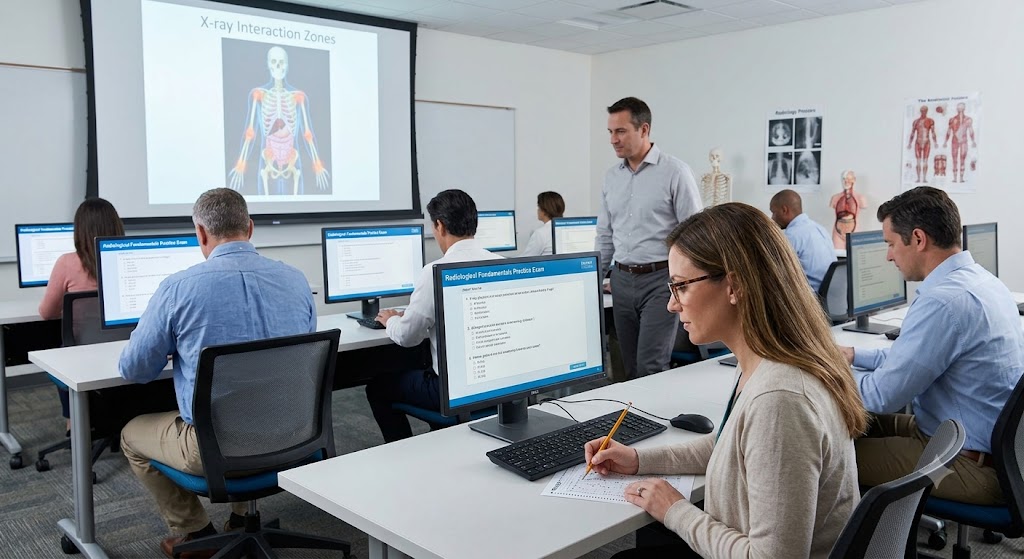
Additional Information
What the Course Entails and Exam Details
This preparation material covers the core topics essential for a strong foundation in medical imaging. The content ensures proficiency in areas such as:
Fundamental principles of X-ray production and physics.
Basic human anatomy and physiology related to imaging.
Radiation safety practices and biology, including dose optimization (ALARA).
Standard radiographic positioning and procedures.
Image acquisition, processing, and evaluation.
The use and maintenance of modern radiology equipment.
What to Expect in the Final Exam
While formats may vary by the specific governing body, the actual Radiological Fundamentals certification exam is typically a comprehensive, standardized, computer-based test. You should anticipate a challenging experience that often includes:
A predetermined number of multiple-choice questions, ranging from 100 to 150 items, testing both recall and application of knowledge.
A time limit, usually between 90 minutes and three hours, requiring efficient time management.
A required passing score, often around 70% to 75%, determined by psychometric standards.
Scenarios that require critical thinking to solve practical imaging problems.
How to Study and Exam Centers
Preparation is the key to success. Here are actionable strategies:
Utilize this Practice Exam: Simulate real exam conditions, analyze your mistakes, and identify weak knowledge areas.
Study Core Textbooks: Focus on standard radiologic technology textbooks for in-depth theory.
Review Anatomy: Use charts and digital models to visualize the anatomy from an imaging perspective.
Practice Positioning: If possible, practice positioning techniques with colleagues or using specialized phantoms.
Form Study Groups: Collaborating can reinforce difficult concepts like radiation physics.
Official certification exams are typically administered through secure, proctored testing centers, such as Pearson VUE, Prometric, or authorized schools and healthcare facilities. You can usually locate these centers through the accrediting organization's portal.
Job Opportunities from the Course
A strong grasp of radiological fundamentals opens doors to several rewarding career paths, including:
Radiologic Technologist (X-ray Technician)
Computed Tomography (CT) Technologist Trainee
Magnetic Resonance Imaging (MRI) Technologist Assistant
Cardiovascular Invasive Specialist Assistant
Mammographer Trainee
Healthcare Imaging Administrator Assistant
Radiology Department Aide
Radiology Assistant/Scheduler
Frequently Asked Questions
Reviews
5.0
Based on 0 reviews
Leave a Review
No reviews yet. Be the first to review!