
Radiology Physics Practice Test
$69.00
- Buy to unlock unlimited access to all Quiz questions and Answers in this Quiz.
- After purchase you can print a PDF of the whole quiz at any point. The PDF will contain the questions and the correct answers.
About this Exam
The Radiology Physics Practice Exam is a vital preparatory tool for individuals seeking certification in the fields of radiologic technology, radiology residency, or medical physics. It is specifically designed for students and professionals who are preparing for demanding licensure exams, such as those administered by the American Registry of Radiologic Technologists (ARRT) or the American Board of Radiology (ABR). This comprehensive test evaluates foundational knowledge in radiation physics, ensuring that candidates possess the essential scientific understanding required to operate imaging equipment safely and effectively in a clinical setting.
Ready to test your knowledge?
Buy Now to Access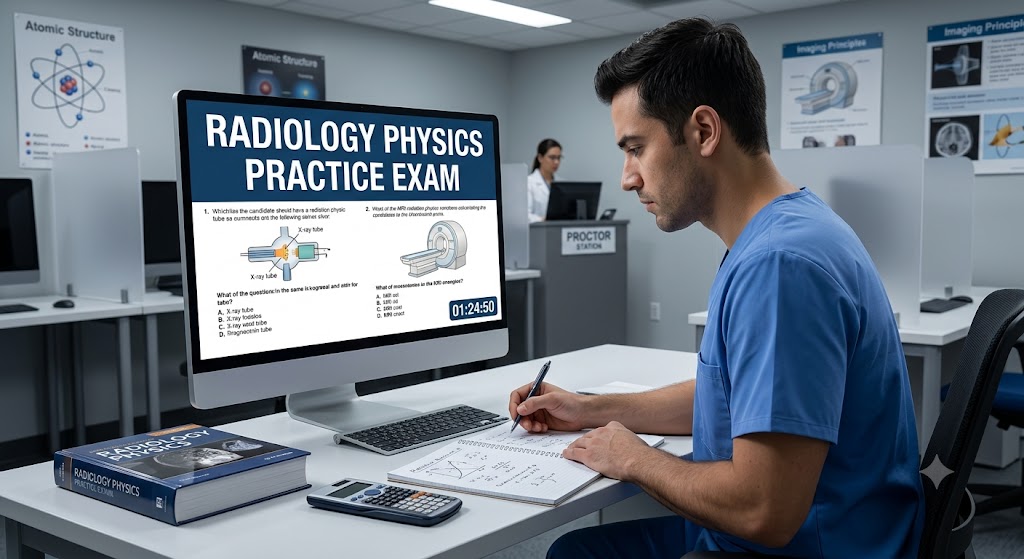
Additional Information
What the Course Entails and Exam Details
This practice exam covers the essential scientific principles and mathematical concepts that form the backbone of modern diagnostic imaging. The core areas of study included in the practice materials are detailed explanations of atomic structure, electromagnetic radiation, and the intricate physics of X-ray production. Candidates will delve into how X-rays interact with matter and learn the technical aspects of imaging equipment, including X-ray tubes, generators, and digital detectors. Furthermore, significant emphasis is placed on radiation biology and safety, ensuring test-takers understand the risks of ionizing radiation and adhere to regulatory guidelines and protection protocols (such as ALARA).
What to Expect in the Final Exam
While the exact structure may vary slightly depending on the specific certifying body (e.g., ARRT vs. ABR), candidates can expect a format predominantly composed of sophisticated multiple-choice questions. These questions are designed to test not only rote memorization but also the practical application of physics concepts to clinical scenarios. The final, official exam is usually computer-based and administered under strict, proctored conditions at authorized testing facilities. Time limits are stringent, typically allowing only a minute or two per question. A passing score is defined by the specific certification board but generally reflects a high level of competency.
How to Study and Exam Centers
Effective preparation requires a structured study plan that includes both theoretical review and practical application. Candidates are encouraged to use comprehensive textbooks alongside active recall methods, such as flashcards for key formulas and principles. Engaging regularly with a dedicated Radiology Physics Practice Exam is crucial for building stamina, identifying weak areas, and improving time management skills. The official exams themselves are generally hosted at professional assessment centers, such as Pearson VUE or Prometric facilities, located globally. Many unauthorized practice exams can be accessed via secure online portals.
Job Opportunities from the Course
Successfully mastering the Radiology Physics Practice Exam is a pivotal step toward achieving licensure and unlocking numerous career paths in healthcare and medical science. The resulting certifications facilitate entry into several highly sought-after professional roles. These include:
Radiologic Technologist (RT): Specializing in X-ray, CT, or Mammography imaging.
Medical Physicist: Ensuring safe and effective radiation use in hospitals.
Radiologist (MD): Medical doctors specializing in diagnosing and treating diseases using imaging.
MRI Technologist: Operating Magnetic Resonance Imaging scanners.
Radiation Safety Officer (RSO): Managing radiation protection programs.
Frequently Asked Questions
Reviews
5.0
Based on 0 reviews
Leave a Review
No reviews yet. Be the first to review!