
Rail Mechanic Service Worker Practice Test
$69.00
- Buy to unlock unlimited access to all Quiz questions and Answers in this Quiz.
- After purchase you can print a PDF of the whole quiz at any point. The PDF will contain the questions and the correct answers.
About this Exam
The Rail Mechanic Service Worker certification is designed to validate the essential technical skills and safety knowledge required to maintain and repair locomotive and railcar components. This practice test is a critical resource for aspiring rail mechanics, current railway service workers, and anyone aiming to formalize their mechanical skills within the transportation sector. It ensures that candidates are prepared to handle the complex challenges of modern railway maintenance, covering everything from diesel engines to complex hydraulic and electrical systems.
Ready to test your knowledge?
Buy Now to Access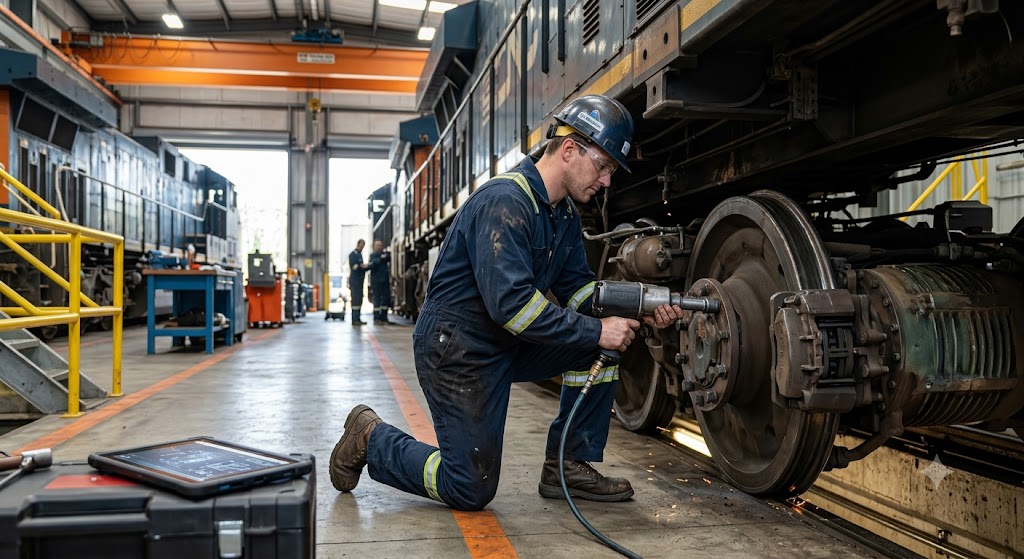
Additional Information
What the Course Entails and Exam Details
This course provides a complete syllabus that reflects the real-world demands of a rail mechanic service worker. The materials are structured to provide both foundational theory and practical diagnostic techniques.
Core areas covered in the practice exam include:
Safety Protocols: Mastery of Federal Railroad Administration (FRA) safety regulations, general workshop safety, and Lock-Out/Tag-Out (LOTO) procedures.
Locomotive Mechanical Systems: In-depth knowledge of diesel engine operation, air brake systems, fuel systems, and cooling systems.
Electrical Fundamentals: Basic and advanced principles of AC/DC circuits, traction motors, and locomotive electrical schematics.
Bogie and Wheel Maintenance: Proper techniques for inspecting and servicing wheel sets, bearings, suspensions, and braking mechanics.
Diagnostic Techniques: Learning how to systematically troubleshoot complex mechanical, electrical, and hydraulic faults using diagnostic tools and technical manuals.
What to Expect in the Final Exam
The final certification exam assesses a candidate’s ability to recall critical technical information and apply that knowledge in a practical diagnostic context.
Format: The exam typically consists of multiple-choice questions designed to test theoretical knowledge, regulatory compliance, and practical scenario-based troubleshooting.
Passing Score: A passing score of at least 70% to 80% is generally required, depending on the specific certification board or employer standard.
Time Limit: Candidates are usually given 2 to 3 hours to complete the examination, requiring efficient time management.
Specific Rules: The exam is typically closed-book. Electronic devices are prohibited, though certain relevant mathematical formulas or reference materials (like FRA safety charts) might be provided within the test interface itself.
How to Study and Exam Centers
Preparation for the Rail Mechanic Service Worker exam requires dedication to both academic study and practical practice.
Effective Study Strategies:
Intensive Practice: Utilize this Rail Mechanic Service Worker Practice Test extensively. Go beyond just finding the correct answer; understand why the distractors (incorrect answers) are wrong, especially in safety and regulatory scenarios.
Review Regulatory Material: Dedicate significant time to reviewing the latest FRA regulations, as these form a large part of the compliance knowledge required.
Focus on Diagrams: Practice reading and interpreting locomotive electrical, hydraulic, and air brake schematics. Being able to visualize the systems is crucial for diagnostic success.
Join Study Groups: Discussing concepts and diagnostic challenges with peers in the railway industry can provide new perspectives and reinforce your understanding.
Where to Take the Exam:
Testing centers can vary significantly based on who is administering the certification. The primary options are:
On-Site Employer Facilities: Many major freight and passenger railroads (e.g., Amtrak, BNSF, Union Pacific) host certification testing internally for their employees.
Vocational and Technical Schools: Accredited vocational centers with specialized railway mechanics programs often act as testing centers.
Specialized Testing Centers: Some certifications are administered through standard proctored vocational testing networks. Candidates should verify the authorized testing partner listed by their certifying body.
Job Opportunities from the Course
A Rail Mechanic Service Worker certification is a powerful asset in the transportation and logistics industry, unlocking several lucrative and stable career paths. This certification validates the specialized skills needed for maintaining complex rolling stock.
Certified individuals are highly qualified for positions such as:
Locomotive Mechanic: Specialized mechanics focused on maintaining diesel and electric locomotives for freight or passenger service.
Railcar Repairer / Freight Car Inspector: Technicians responsible for inspecting, maintaining, and repairing all types of freight and passenger cars.
Track Maintenance Mechanic: While sometimes distinct, many of the mechanical skills overlap with maintaining specialized track maintenance machinery.
Railway Service Technician: General technicians who perform both mechanical and electrical maintenance on rolling stock.
Maintenance Supervisor (with experience): This certification provides the technical foundation necessary to advance into leadership roles within a railway workshop.
Frequently Asked Questions
Reviews
5.0
Based on 0 reviews
Leave a Review
No reviews yet. Be the first to review!