
RTBC Image Evaluation and Quality Control (122) Practice Exam
$69.00
- Buy to unlock unlimited access to all Quiz questions and Answers in this Quiz.
- After purchase you can print a PDF of the whole quiz at any point. The PDF will contain the questions and the correct answers.
About this Exam
The RTBC Image Evaluation and Quality Control (122) certification validates professional competency in identifying artifacts, ensuring equipment calibration, and performing quality assurance in medical imaging environments.
This specialized credential is designed for radiologic technologists, medical imagers, and quality control specialists.
Professionals in this field play a critical role in producing accurate diagnostic images while minimizing patient exposure and optimizing healthcare delivery.
Ready to test your knowledge?
Buy Now to Access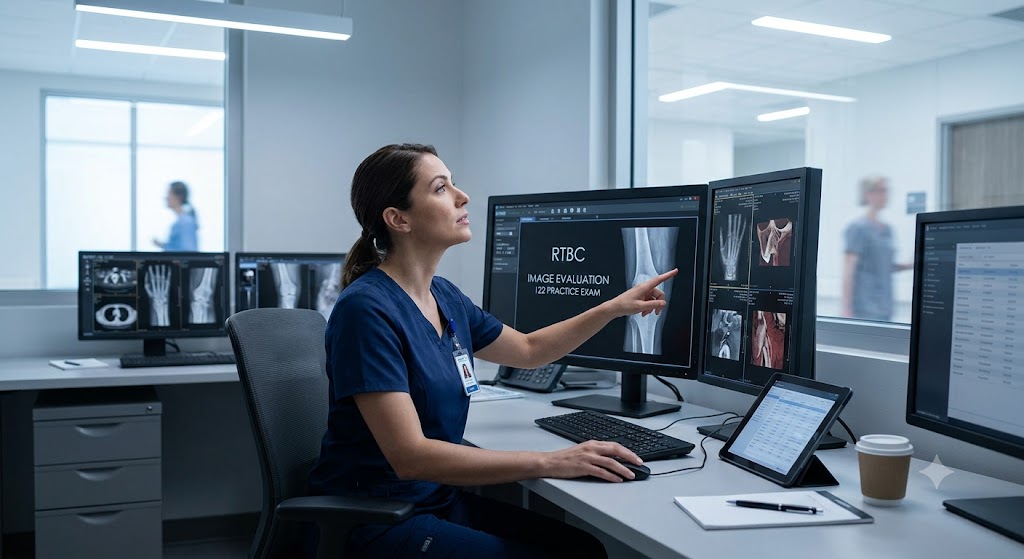
Additional Information
What the Course Entails and Exam Details
The corresponding course and the final examination cover a comprehensive curriculum focused on image production and quality assessment.
Students will study advanced principles of radiography, computerized imaging, and digital radiography (CR/DR) systems.
Core subjects typically include image acquisition techniques, processing parameters, technical analysis, quality control procedures, artifact identification, and regulatory compliance standards.
You will learn to recognize and troubleshoot image defects and ensure adherence to equipment maintenance protocols.
What to Expect in the Final Exam
The RTBC Image Evaluation and Quality Control (122) final exam is usually a comprehensive multiple-choice test administered in a controlled environment.
It is designed to evaluate practical and theoretical knowledge through standardized questions.
Candidates are typically tested on their ability to solve real-world QC scenarios and analyze complex images.
While specific details can vary by institution or organization, standard parameters often include a high passing score, with a time limit of several hours to complete a large number of questions.
Specific instructions regarding permissible materials and academic integrity will be provided.
How to Study and Exam Centers
Preparation requires a structured approach to master the image analysis concepts.
Leverage comprehensive textbooks, official study guides, and review courses specifically aligned with the curriculum.
Actively practice with specimen images, analyzing them for quality, artifacts, and anatomical alignment, just as you would in the field.
Taking practice exams is highly recommended to build stamina, identify knowledge gaps, and understand the exam's structure.
Official exams are typically administered through secure online portals, specific authorized institutions, or authorized testing centers like Pearson VUE, which offer standardized testing conditions for professional certifications.
Job Opportunities from the Course
Achieving this certification opens doors to various rewarding career paths within the healthcare and diagnostic imaging sectors.
Key job titles and career opportunities that this credential unlocks include:
Quality Assurance Specialist
Radiology Quality Control Manager
Radiologic Technologist (Advanced/Lead)
Image Processing Analyst
Medical Imaging Supervisor
Diagnostic Equipment Specialist
Specialized roles in clinical research or equipment sales and training
Frequently Asked Questions
Reviews
5.0
Based on 0 reviews
Leave a Review
No reviews yet. Be the first to review!