
RTBC Infection Control Practice Test
$69.00
- Buy to unlock unlimited access to all Quiz questions and Answers in this Quiz.
- After purchase you can print a PDF of the whole quiz at any point. The PDF will contain the questions and the correct answers.
About this Exam
Welcome to your comprehensive preparation resource for the RTBC Infection Control certification. This rigorous exam is designed for healthcare professionals—including nurses, dental assistants, sterile processing technicians, and public health workers—who are seeking to validate their specialized knowledge in preventing the spread of infectious diseases.
Earning this certification demonstrates your commitment to patient safety and your mastery of critical aseptic techniques. This practice test is a vital step in your journey, helping you identify knowledge gaps and build the confidence necessary to succeed on exam day.
Ready to test your knowledge?
Buy Now to Access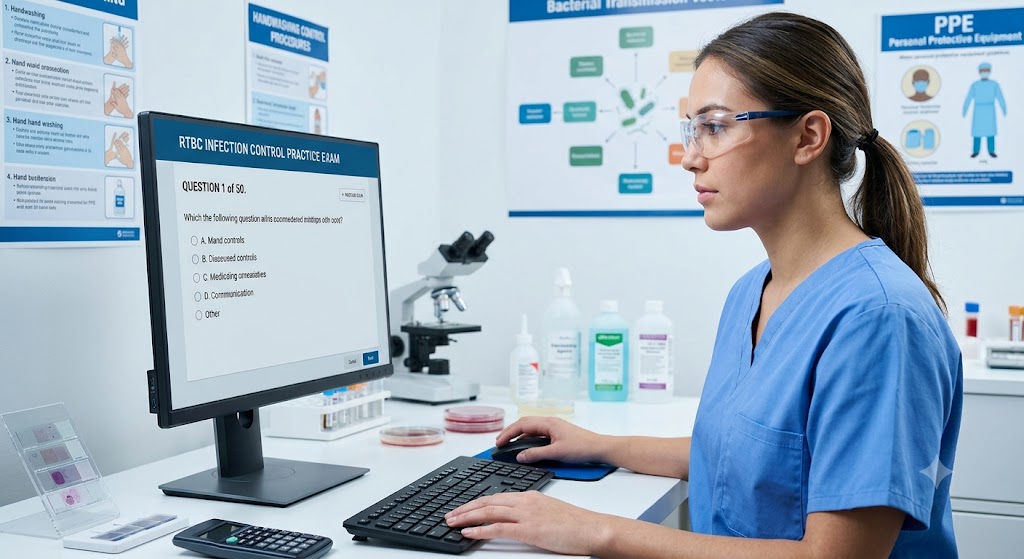
Additional Information
What the Course Entails and Exam Details
The RTBC Infection Control curriculum covers a wide spectrum of critical competencies necessary for maintaining a safe healthcare environment. Candidates are expected to demonstrate proficiency in identifying pathogens, understanding modes of transmission, and implementing standard and transmission-based precautions.
Core topics include:
Microbiology and the chain of infection.
Proper selection and use of Personal Protective Equipment (PPE).
Correct hand hygiene protocols and handwashing techniques.
Environmental cleaning, disinfection, and sterilization processes.
Handling of sharps and regulated medical waste.
Occupational health policies and bloodborne pathogen standards.
What to Expect in the Final Exam
The final RTBC Infection Control Exam is a standardized assessment designed to evaluate your practical application of these infection control principles.
Format: The exam typically consists of 75 to 100 multiple-choice questions, which may include scenario-based problems.
Time Limit: Candidates are generally allotted 90 to 120 minutes to complete the test.
Passing Score: The required passing grade varies slightly by jurisdiction but is typically set around 70% to 75%.
Environment: This is a proctored exam, which means it will be taken under strict supervision to ensure integrity.
How to Study and Exam Centers
Preparation is key to passing the RTBC Infection Control Exam. A multifaceted approach is highly recommended.
Actionable Study Strategies:
Utilize Practice Tests: Take multiple practice exams, such as this one, to familiarize yourself with the question format and manage your time effectively. Review every incorrect answer thoroughly.
Review Core Regulations: Study the latest guidelines from the CDC (Centers for Disease Control and Prevention) and OSHA (Occupational Safety and Health Administration) regarding bloodborne pathogens and healthcare safety.
Create Flashcards: Memorize critical terminology, types of PPE, and sterilization parameters (time, temperature, pressure).
Exam Centers:
The final certification exam is administered through authorized testing providers. Depending on your location and the specific certifying body (which may vary regionally), you can typically schedule your exam at a Pearson VUE testing center or through an authorized online proctoring service, allowing you to take the test from your home or workplace under secure conditions.
Job Opportunities from the Course
Validating your expertise through this certification can significantly enhance your career trajectory in the healthcare sector.
Job titles and career paths this certification unlocks include:
Infection Control Coordinator: Supervising infection prevention programs within a hospital or clinic.
Sterile Processing Technician: Ensuring the proper sterilization of surgical instruments.
Dental Assistant (with specialized functions): Managing infection control protocols in a dental office.
Public Health Investigator: Tracking and managing disease outbreaks in the community.
Occupational Health Nurse: Developing and enforcing safety protocols for healthcare staff.
Quality Improvement Specialist: Analyzing data to improve patient safety outcomes.
Frequently Asked Questions
Reviews
5.0
Based on 0 reviews
Leave a Review
No reviews yet. Be the first to review!