
SAFE MLO Exam Prep 2026 | Practice Test Questions and Answers
$69.00
- Buy to unlock unlimited access to all Quiz questions and Answers in this Quiz.
- After purchase you can print a PDF of the whole quiz at any point. The PDF will contain the questions and the correct answers.
About this Exam
The 2026 SAFE MLO Exam Prep is a definitive study guide designed to help aspiring mortgage professionals conquer the foundational hurdle of the industry. This exam, formally known as the NMLS National Test Component with Uniform State Content (UST), is a crucial legal requirement under the Secure and Fair Enforcement for Mortgage Licensing Act (SAFE Act). It is specifically designed for individuals seeking licensure as Mortgage Loan Originators (MLOs).
This exam ensures that mortgage originators possess the critical legal knowledge, ethical standards, and procedural skills necessary to protect consumers. Achieving certification is more than a formality; it is a demonstration of high professionalism and a direct prerequisite for legally originating loans in any state. Whether you are transitioning into finance or starting a fresh career path, this prep guide and associated practice questions are the essential toolkit for your success.
Ready to test your knowledge?
Buy Now to Access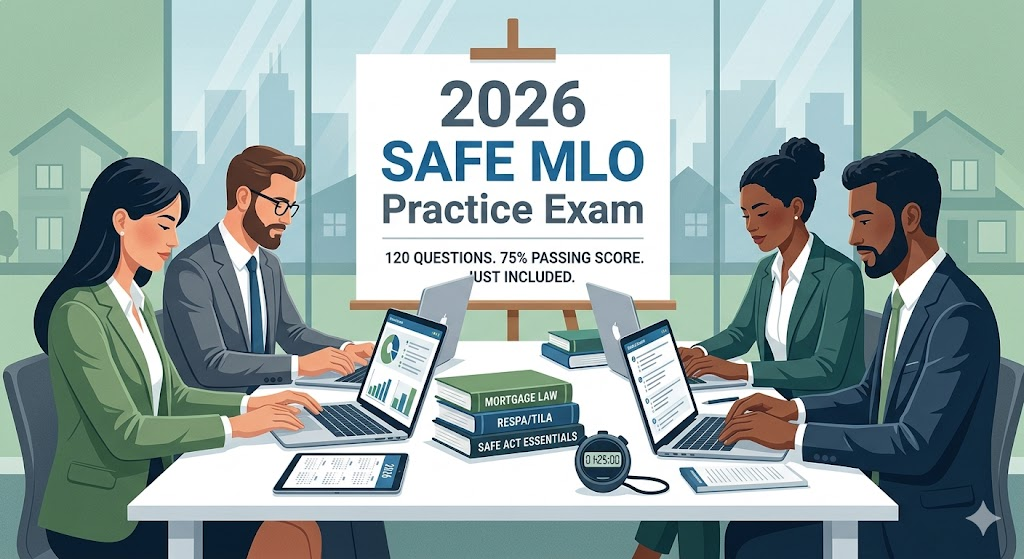
Additional Information
What the Course Entails and Exam Details
To master this material, candidates must immerse themselves in a diverse syllabus that covers the breadth of the residential mortgage landscape. The SAFE MLO core curriculum is strictly standardized. It ensures a baseline competence that is recognized nationwide, focusing on areas critical to both compliance and daily operations.
The core syllabus that comprehensive study materials must cover includes the following domains:
Federal Mortgage Related Laws (35%): This is the largest segment, requiring deep knowledge of acts like the Real Estate Settlement Procedures Act (RESPA - Regulation X), the Truth in Lending Act (TILA - Regulation Z), and the Equal Credit Opportunity Act (ECOA - Regulation B).
General Mortgage Knowledge (25%): This section includes mortgage industry terminology, definitions, and an understanding of different loan products, including conventional, non-conventional (FHA/VA), and high-cost mortgages.
Mortgage Loan Origination Activities (25%): This domain covers the practical day-to-day workflow. It includes processing loan applications, analyzing borrower data, understanding qualified mortgage (QM) rules, and the initial application-to-closing timeline.
Ethics (15%): High ethical standards are paramount. This section tests your understanding of consumer protection laws, prohibitions against predatory lending, and rules regarding referral fees and kickbacks.
What to Expect in the Final Exam
The actual NMLS National Test Component with UST is a rigorous, computer-based assessment. Knowing the format and the metrics of success is vital for a targeted preparation strategy. The exam environment is strictly proctored and highly regulated.
Key operational details of the 2026 final exam include:
Exam Structure: The test consists of 120 multiple-choice questions. It is important to note that only 115 of these are scored. The remaining 5 are unscored "pre-test" questions used by the test administrators to evaluate questions for future versions, but they are not identifiable.
Passing Score: The bar for passing is high. You must achieve a score of 75% or higher to pass the NMLS National Test.
Time Limit: Candidates are given a total of 225 minutes (3 hours and 45 minutes) to complete the examination. This includes an essential pre-exam tutorial.
Testing Protocol: When arriving at a testing center, you must present valid government identification. The test center will provide a whiteboard or scratch paper and a calculator. No personal belongings are permitted in the testing room.
How to Study and Exam Centers
Effective preparation for the SAFE MLO exam requires a structured approach and strategic testing practice. Diligence in studying is crucial, as the first-time pass rate often reflects the difficulty of the federal legal component. Utilizing comprehensive prep tools and diverse study methods is strongly recommended for success.
Effective Study Strategies:
Simulate Test Conditions: The most effective strategy is practicing with full-length timed tests. This not only builds stamina but also familiarizes you with the structure and phrasing of questions used in the actual exam.
Master the Laws (Not Just Memorize): Do not simply memorize the definitions of TILA and RESPA. You must understand why these laws exist and how they are applied to practical loan scenarios. This depth is what separates successful candidates.
Focus on Domain Breakdown: Structure your study time to match the percentage weights (Federal Law gets 35% of your time). Dedicating effort to your weakest categories will yield the highest return on investment.
How and Where to Take the Exam:
Registration: The SAFE MLO Exam is managed by the Nationwide Multistate Licensing System (NMLS). To take the exam, you must first create an NMLS account, pay the test fee, and obtain your NMLS ID.
Testing Centers (Prometric): The actual exam administration is handled by Prometric, an independent testing provider. After completing your NMLS registration, you will schedule your exam date at a local Prometric physical testing center. These facilities are available across the country and offer secure, controlled environments.
Job Opportunities from the Course
Earning your Mortgage Loan Originator designation via the SAFE MLO exam is the essential first step toward a wide array of rewarding career paths. Successfully passing the test demonstrates high competency and compliant knowledge, which is highly sought after by employers across the financial services sector. Below is a clear list of potential career opportunities unlocked by your certification.
Mortgage Loan Originator (MLO): This is the primary role, working in banks, credit unions, or non-bank lending institutions to help consumers navigate and apply for residential home loans.
Loan Officer (General/Retail): This classic role involves working at a branch, managing loan pipelines, and interacting directly with retail customers for all types of mortgages.
Mortgage Broker: An independent professional who acts as an intermediary, matching borrowers with many different lenders to find the best rates and products.
Commercial Loan Officer: While focusing on different properties, the MLO foundation often provides a strong bridge into commercial lending roles.
Compliance Officer/Analyst: For those who become experts in Federal Law, this role involves auditing loan files and ensuring lending practices remain legal within financial institutions.
Underwriter Assistant: Understanding the legal requirements of an MLO provides an excellent perspective for entry-level roles in the underwriting department, analyzing borrower data for approval.
Branch Manager (Future Progression): Experienced MLOs who demonstrate leadership and high sales performance often advance to management roles within banking and lending companies.
Frequently Asked Questions
Reviews
5.0
Based on 0 reviews
Leave a Review
No reviews yet. Be the first to review!