
Scottish Highland Dance Teacher Practice Exam
$69.00
- Buy to unlock unlimited access to all Quiz questions and Answers in this Quiz.
- After purchase you can print a PDF of the whole quiz at any point. The PDF will contain the questions and the correct answers.
About this Exam
This comprehensive Scottish Highland Dance Teacher Practice Exam is your essential preparation tool for achieving certification. Designed for experienced dancers and aspiring instructors, this practice test simulates the knowledge and skills required by major dance bodies. The actual certification unlocks professional teaching opportunities, allowing you to inspire the next generation of dancers, ensure the authenticity of this vibrant art form, and share the passion and history of Scottish dance. This practice exam helps you build confidence and identify key areas for further study, ensuring you are fully prepared for the final assessment.
Ready to test your knowledge?
Buy Now to Access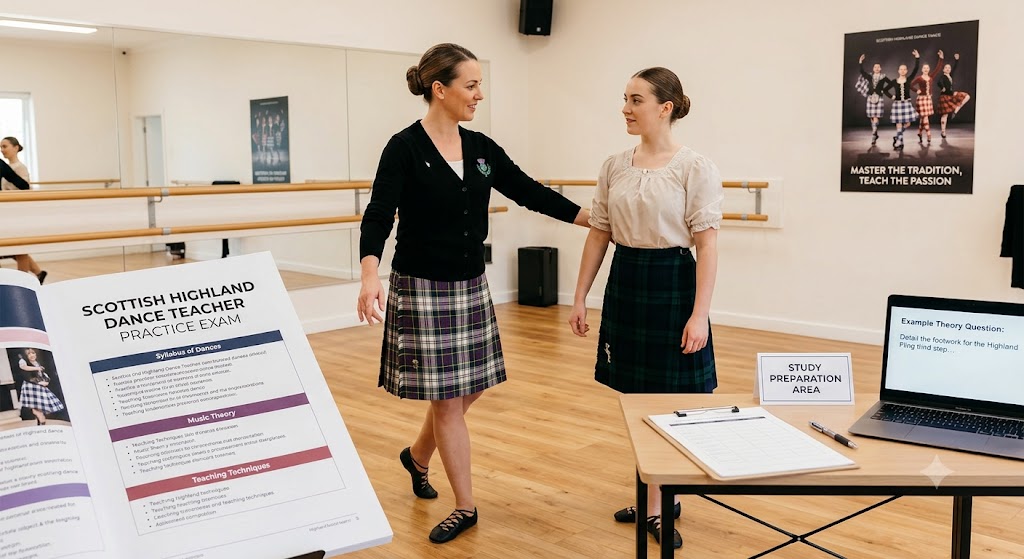
Additional Information
What the Course Entails and Exam Details
This section outlines the typical core topics and skills you will explore in preparation for a professional Scottish Highland Dance teacher qualification, and which are covered by this comprehensive practice exam. The course and practice exam are usually structured around a detailed syllabus set by the relevant professional association.
The curriculum typically covers:
Fundamental Positions and Techniques: Mastery of the basic foot, arm, and body positions.
Syllabus of Dances: Detailed knowledge and flawless performance/demonstration of key dances including the Highland Fling, Sword Dance, Sean Truibhas, Reels, and potentially National Dances and other traditional forms.
Music Theory and Accompaniment: Understanding the specific time signatures, rhythms, and structures of Highland dance music, typically provided by bagpipes.
Teaching Methods: Developing strategies for effective instruction, lesson planning, and adapting techniques for different age groups and skill levels.
History and Context: Insight into the cultural origins and historical significance of Highland dancing.
Anatomy and Safety: A basic understanding of muscle groups and practices to prevent injury.
The practice exam itself consists of a series of questions and potential practical challenges that reflect these diverse subject areas, allowing you to gauge your readiness across all fronts.
What to Expect in the Final Exam
The professional qualification exam for a Scottish Highland Dance teacher is generally a rigorous and multi-faceted assessment. Candidates can typically expect the following components, though exact formats can vary by organization:
Practical Demonstration: A significant portion of the exam. Candidates are required to flawlessly perform or clearly demonstrate key dances from the syllabus, often as both a leader and follower.
Teaching Demonstration: Candidates are typically asked to prepare and present a short teaching session, demonstrating their ability to explain, break down movements, and provide constructive corrections.
Written and/or Oral Theory Assessment: A structured component evaluating knowledge of terminology, dance structures, music theory, history, and teaching principles. This could be multiple choice, short answers, or an oral questioning session.
Passing Scores and Rules:
Passing Score: While specific percentage requirements can vary, candidates must demonstrate a high level of competency in both practical and theoretical elements to pass and receive certification. A pass is typically not just about a minimum score but a holistic evaluation of teaching potential.
Time Limits: Practical and teaching sections usually have specific time constraints. Written or oral components may also have associated time limits.
Rules: Strict rules are enforced, including professional dress (often including a kilt or appropriate dance attire), adherence to established syllabi, and respectful conduct towards examiners and other candidates.
How to Study and Exam Centers
Successfully preparing for the Scottish Highland Dance Teacher's Practice Exam and the subsequent professional certification requires dedication, practical experience, and strategic study. Here are effective strategies and details on common examination environments:
Study Strategies:
Obtain and Study the Official Syllabus: Identify the specific professional body you intend to get certified with (e.g., UKA, BATD, SDTA, or RSOBHD-affiliated) and ensure you are working from their current syllabus. This is your core document.
Utilize Practice Exams: Incorporate this Scottish Highland Dance Teacher's Practice Exam as a crucial assessment tool. Take it multiple times to build familiarity with potential question formats and identify weak areas.
Gain Teaching Experience: This is paramount. Assist senior teachers, volunteer, or begin instructing under mentorship to develop real-world teaching skills.
Physical Practice: Dedicate significant time to practicing and refining the actual dances. Film yourself to identify and correct any issues in your technique.
Seek Mentorship: If possible, work with an experienced certified teacher who can provide guidance and feedback.
Review Core Materials: Study standard technique books, historical texts, and music theory specific to Highland dancing.
Exam Centers & Formats:
Professional bodies conduct exams worldwide, ensuring accessibility for candidates in diverse locations. The final assessment environment typically includes:
Authorized Dance Schools and Studios: Often, accredited schools are approved as examination centers.
Regional Testing Hubs: Specific regional centers are established to host practical and written exams periodically.
Dance Events and Competitions: Assessments may be scheduled concurrently with major dance events or competitions.
Online Components: Some written theory components may be offered through secure online portals, especially for international candidates, while practical assessments generally remain in-person.
Ensure you check the official website of the certification body you are interested in for specific exam dates, locations, registration procedures, and potentially online testing options.
Job Opportunities from the Course
Earning a professional qualification as a Scottish Highland Dance teacher, for which this practice exam is essential preparation, opens doors to a rewarding career path within the global Highland dancing community.
Upon successful certification, you can pursue diverse roles including:
Highland Dance Teacher: Lead your own classes or teach in established dance schools.
Dance Studio Owner/Manager: Manage a dedicated dance facility.
Competition Adjudicator: Judge at local, national, and international Highland games and competitions (with further experience and training, which a teaching qualification can facilitate).
Choreographer: Create original routines for shows and performances.
Cultural Arts Coordinator: Work with community groups and arts organizations.
Workshop Leader: Travel and conduct specialized workshops and masterclasses.
This qualification demonstrates your competence, commitment, and credibility, placing you at the heart of preserving and promoting the powerful tradition of Scottish Highland Dance.
[Please Note: The details provided here are indicative and represent common practices within major Scottish Highland Dance organizations. Candidates must always consult the official website and detailed syllabus of the specific awarding body they are aiming for (e.g., the Royal Scottish Official Highland Dancing Association - RSOBHD, British Association of Teachers of Dancing - BATD, United Kingdom Alliance - UKA, Scottish Dance Teachers’ Alliance - SDTA) for the most current, specific exam structure, rules, and passing criteria. This practice exam is for study preparation and does not replace official, accredited assessment.]
Frequently Asked Questions
Reviews
5.0
Based on 0 reviews
Leave a Review
No reviews yet. Be the first to review!