
Setting of Landscape Plants (SLP) Practice Exam
$69.00
- Buy to unlock unlimited access to all Quiz questions and Answers in this Quiz.
- After purchase you can print a PDF of the whole quiz at any point. The PDF will contain the questions and the correct answers.
About this Exam
The Setting of Landscape Plants (SLP) certification is a specialized credential designed to validate an individual's proficiency in the foundational techniques of professional planting. This certification ensures that landscape technicians, nursery workers, and horticulture students possess the necessary skills to properly install a variety of plant materials, from delicate perennials to large balled-and-burlapped trees. By earning the SLP designation, professionals demonstrate their commitment to industry best practices, ensuring high plant survival rates and robust growth in new landscapes.
Ready to test your knowledge?
Buy Now to Access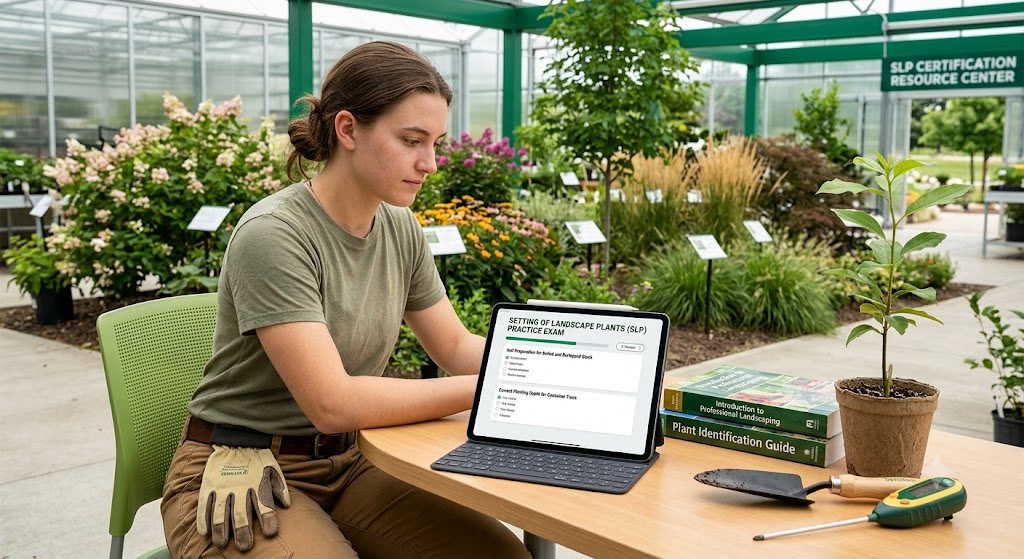
Additional Information
What the Course Entails and Exam Details
The SLP curriculum focuses heavily on practical application and the science behind successful planting. While specific course structures may vary by provider, the core topics consistently covered include:
Plant Biology Fundamentals for Installation: Understanding root systems, water requirements, and stress factors during transplanting.
Soil Preparation: Methods for assessing soil texture, drainage, compaction, and implementing proper amendments.
Planting Techniques: Detailed instruction on planting techniques for diverse stock types, including container-grown, bare-root, and balled-and-burlapped (B&B) trees and shrubs. This includes digging the correct hole size, proper depth, and backfilling procedures.
Post-Planting Care: Immediate establishment care, including correct watering schedules, mulching depth and benefits, initial pruning for structure, and staking procedures.
Site Evaluation and Selection: Matching plant requirements to site conditions, light exposure, and microclimates.
The SLP certification program is often delivered through workshops, technical colleges, or extension programs, culminating in a written or computerized exam, and sometimes a proctored hands-on assessment.
What to Expect in the Final Exam
The final SLP examination is typically a standardized assessment designed to test both theoretical knowledge and practical scenario application. The most common format is a computer-based multiple-choice exam, although some programs may require candidates to pass a practical, hands-on installation demonstration.
Candidates can expect questions that simulate field decisions, such as identifying the correct planting depth for a specific tree type in heavy clay soil. The passing score is generally set around 70% to 80%, depending on the specific certifying body. You will be allotted a specific time limit (e.g., 90 to 120 minutes) to complete the exam. The written portion is proctored, meaning it is administered in a secure, monitored environment, whether online or in person.
How to Study and Exam Centers
Effective preparation is key to success on the SLP exam. We recommend a multi-faceted study approach:
Actionable Study Strategies:
Utilize Practice Exams: Regularly taking an SLP Practice Exam is one of the most effective ways to identify knowledge gaps and get comfortable with the exam’s question format.
Review Core Materials: Study official manuals, course notes, and textbooks focused on landscape installation.
Gain Hands-On Experience: There is no substitute for physical practice. Working at a nursery, volunteering for community planting events, or working alongside an experienced landscape professional is invaluable for reinforcing theoretical concepts.
Create Flashcards: Memorize critical concepts such as mulching depths, specific soil amendment ratios, and irrigation requirements for different establishment phases.
Exam Centers:
Where and how you take the exam depends on the certifying organization (e.g., a state nursery association or a specific technical college system). Typical exam locations include:
Testing Centers: Authorized locations such as Pearson VUE centers or similar professional testing facilities.
Horticultural Schools and Colleges: Many technical schools that offer the SLP curriculum also serve as testing sites.
Professional Organization Events: Some certifications are administered at large industry trade shows or conferences.
Authorized Online Portals: Certain organizations provide secure, live-proctored online testing that allows you to take the exam from home.
It is crucial to register well in advance and confirm the specific location and documentation requirements for your scheduled date.
Job Opportunities from the Course
Earning the Setting of Landscape Plants certification opens the door to a variety of specialized roles within the green industry. Graduates and certified professionals are highly sought after by landscaping companies, municipalities, nurseries, and design-build firms.
Specific Job Titles Enabled by SLP Certification:
Landscape Installation Technician
Professional Gardener
Nursery Stock Manager
Greenspace Maintenance Supervisor
Landscape Project Lead
Irrigation and Planting Specialist
Frequently Asked Questions
Reviews
5.0
Based on 0 reviews
Leave a Review
No reviews yet. Be the first to review!