
Sights & Optics Accuracy Practice Exam
$69.00
- Buy to unlock unlimited access to all Quiz questions and Answers in this Quiz.
- After purchase you can print a PDF of the whole quiz at any point. The PDF will contain the questions and the correct answers.
About this Exam
The Sights & Optics Accuracy Practice Exam is a foundational step toward achieving professional certification in advanced shooting systems and precision marksmanship. This specialized program is designed for a broad audience, including recreational shooters looking to maximize their equipment’s potential, competitive marksmen aiming for consistent precision, law enforcement personnel needing advanced optical skills, and professionals within the firearms industry who require in-depth technical knowledge of sighting systems.
This certification validates that individuals possess the essential theoretical and practical understanding required to select, install, zero, and effectively utilize various sights and optical devices to enhance shooting accuracy across diverse scenarios. By passing this exam, you demonstrate your commitment to mastering the science behind accurate shot placement.
Ready to test your knowledge?
Buy Now to Access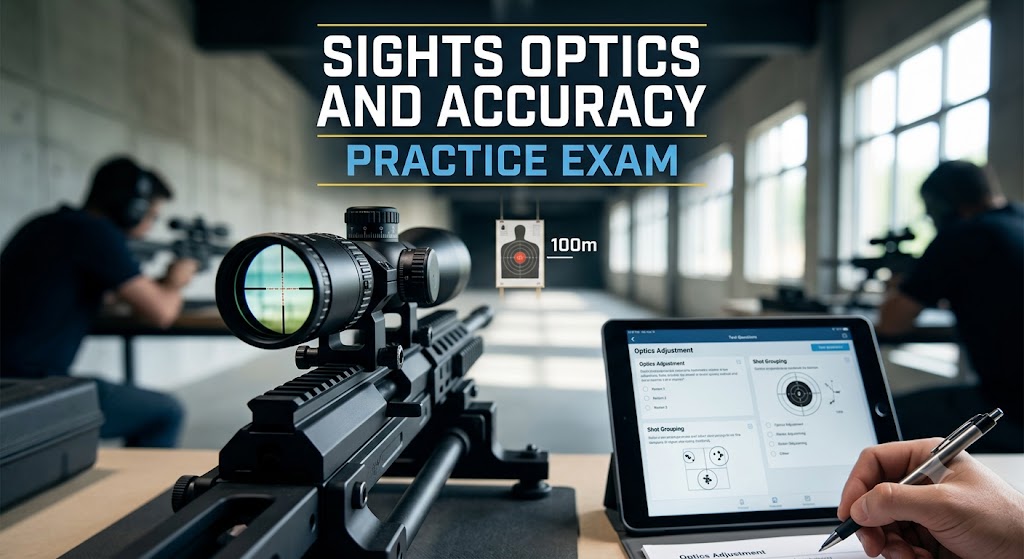
Additional Information
What the Course Entails and Exam Details
The core syllabus covers a comprehensive range of topics critical for accuracy. Students can expect to delve deeply into the following areas:
Core Topics Covered:
The Physics of Optics: Understanding how light interacts with lenses, magnification principles, and types of optical systems (refractors vs. reflectors).
Sighting System Types: In-depth review of iron sights (various configurations), red dot sights, holographic sights, and low-power variable optics (LPVOs).
Optical Enhancement Tools: Exploring the role of magnifiers and specialized night vision or thermal imaging attachments.
Ballistics and External Factors: The science of bullet trajectory, the effect of windage and elevation on accuracy, and understanding how environmental variables (like altitude and humidity) influence optics settings.
Zeroing Procedures: Step-by-step methodologies for established zeros (e.g., 25, 50, 100 yards) and understanding mechanical vs. zero offset.
Ranging and Holdovers: Techniques for using reticle markings (MOA/MIL) to estimate distance and compensate for bullet drop.
Equipment Maintenance and Selection: How to properly mount, level, and maintain optics, plus guidance on selecting the right system for specific shooting disciplines.
Exam Structure: The course curriculum prepares students for both a theoretical assessment and potentially a practical skills evaluation, ensuring well-rounded proficiency.
What to Expect in the Final Exam
The final certification exam is designed to be a rigorous validation of your skills. It typically consists of a combined format that tests both your knowledge retention and your ability to apply that knowledge in a controlled environment.
Exam Format:
Multiple Choice Questions: A significant portion of the exam focuses on theoretical concepts, equipment knowledge, and scenarios, requiring you to select the single best answer.
Scenario-Based Calculations: Be prepared to solve problems related to ranging, holdovers, and calculating optical adjustments based on specific environmental data.
Practical Skills Demonstration: Many authorized testing centers include a practical component. You may be required to properly mount an optic, perform a basic zeroing procedure, or demonstrate proper form and target acquisition under time constraints.
Scoring and Time Limits:
Passing Score: A minimum score (often around 80% on the theoretical part) is required to pass, alongside a 'Satisfactory' rating on the practical component.
Time Constraints: The exam is timed, typically giving you a strict 90 minutes to 2 hours to complete all written sections and the practical demonstration.
The specific exam protocols can vary slightly depending on the accredited organization delivering the test, but the core competencies remain standard.
How to Study and Exam Centers
Effective preparation is key to success on the Sights & Optics Accuracy Practice Exam.
Recommended Study Strategies:
Leverage Practice Tests: Use comprehensive practice exams to familiarize yourself with the question formats and identify weak areas in your knowledge. These are vital for time management practice.
Dive Into the Textbooks: Thoroughly review all course manuals and recommended educational materials provided by the accredited testing body.
Engage in Hands-on Practice: The most crucial element is live-fire and dry-fire practice. Spend significant time setting up, zeroing, and shooting with your chosen equipment under diverse conditions. Practical application bridges the gap between theory and execution.
Study Groups: Collaborating with peers can help clarify complex optical calculations and technical concepts.
Exam Centers: This examination is usually administered by specific, highly qualified entities, rather than general testing portals like Pearson VUE.
Authorized Practical Schools: The preferred location for taking this exam is through certified firearms academies or optical technician training schools that offer the preparatory course and possess the necessary range facilities.
Specific Training Institutes: In some cases, major optics manufacturers or defense contractors provide specialized certification programs at their dedicated training facilities.
On-Site Corporate Testing: Larger organizations may arrange for certified instructors to deliver the exam on-site.
Ensure you check the accredited organization's website for a list of approved training providers and exam locations.
Job Opportunities from the Course
A certification stemming from the Sights & Optics Accuracy Practice Exam unlocks diverse career opportunities across several sectors, validating a valuable and sought-after skill set.
Potential Career Paths:
Firearms Instructor/Range Officer: Leading courses on marksmanship and specialized optics usage at commercial ranges or training academies.
Optics Product Specialist/Sales: Working for optics manufacturers or distributors, advising customers, and conducting product demonstrations.
Law Enforcement Marksman/Sniper: Advanced optical skills are critical for specialized tactical units.
Military Marksman/Instructor: This certification supports roles that require advanced understanding of optical systems within the armed forces.
Optics Repair Technician: diagnosing and repairing high-end sighting systems.
Ballistics Analyst/Consultant: Providing technical expertise on accuracy and equipment optimization.
Industry Writer/Content Creator: Generating technical articles, reviews, and educational content focused on optics and accuracy for various media.
Frequently Asked Questions
Reviews
5.0
Based on 0 reviews
Leave a Review
No reviews yet. Be the first to review!