
Simulation Operations Course Practice Exam
$69.00
- Buy to unlock unlimited access to all Quiz questions and Answers in this Quiz.
- After purchase you can print a PDF of the whole quiz at any point. The PDF will contain the questions and the correct answers.
About this Exam
Welcome to your essential guide for mastering the Simulation Operations Course Practice Exam. This simulation operations certification is a cornerstone for professionals dedicated to the intersection of healthcare, technology, and education. It is specifically designed for healthcare simulation technicians, operations specialists, and educators seeking to validate their expertise in managing complex simulation environments. This exam tests your capability to ensure that high-fidelity simulations run smoothly, safely, and effectively, thereby enhancing the learning outcomes for medical students and practitioners.
Ready to test your knowledge?
Buy Now to Access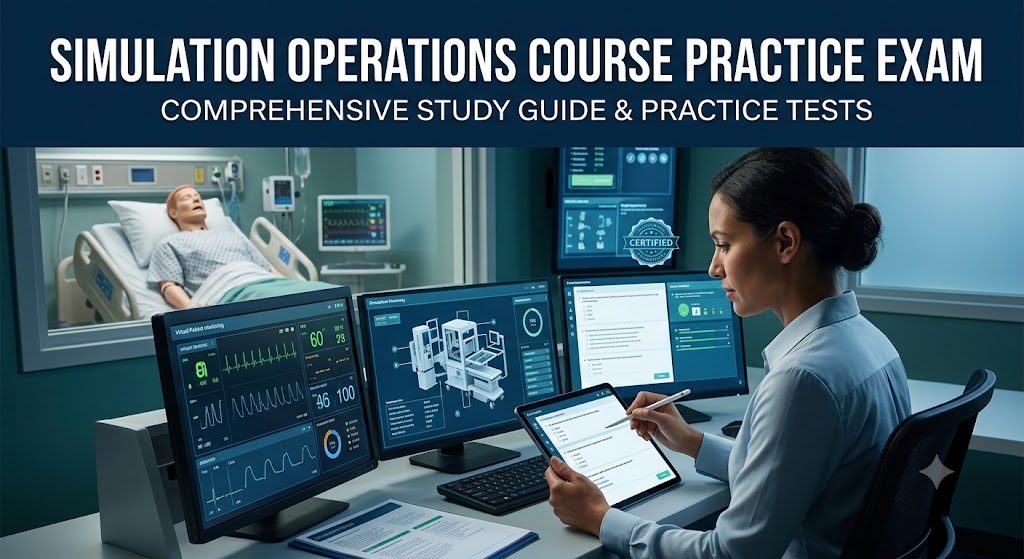
Additional Information
What the Course Entails and Exam Details
A comprehensive Simulation Operations course equips you with the diverse skillset required to manage a modern simulation center. The exam directly assesses your understanding and practical application of these core competencies. When you sit for the test, you can expect questions covering a wide spectrum of simulation operations management, including:
Simulation Technology Proficiency: Deep knowledge of high-fidelity manikins, audio-visual (AV) capture systems, virtual and augmented reality platforms, and integration of medical devices (like ventilators and defibrillators).
Scenario Design and Execution: Understanding the operational aspects of creating realistic clinical scenarios, troubleshooting during a "live" run, and maximizing learner engagement.
Healthcare Simulation Debriefing Systems: Knowledge of how simulation recording impacts debriefing and how to maintain optimal system performance.
Facility and Resource Management: Best practices for inventory control of simulators and supplies, scheduling complex multi-room simulations, and ensuring compliance with safety and accreditation standards.
Basic Troubleshooting and Maintenance: Proven ability to diagnose and repair common hardware and software issues quickly to minimize downtime.
What to Expect in the Final Exam
Preparation is key, and knowing the format of the Simulation Operations Course Final Exam will build your confidence. The final exam typically adopts a computerized format, often administered through authorized testing centers or secure online proctoring portals. You can generally expect:
Exam Format: A significant portion is composed of Multiple Choice Questions (MCQs), designed to test both foundational knowledge and scenario-based problem-solving. Some exams may also include interactive "drag-and-drop" or simulation-based questions that ask you to troubleshoot a virtual scenario.
Time Limit: The exam is typically timed, often allowing between 90 to 120 minutes to complete all sections. Pace yourself accordingly.
Passing Score Requirements: Passing scores vary by certifying body, but generally range between 70% and 80%. It is crucial to check the specific requirements of your course provider (e.g., SSH, or specific university programs).
Specific Rules: This is a closed-book exam. No external reference materials, unauthorized devices, or assistance are permitted. Maintain academic integrity
How to Study and Exam Centers
Achieving a passing score requires a strategic blend of study and practical experience. Do not rely on rote memorization alone.
Actionable Study Strategies:
Hands-on Practice is Non-negotiable: Spend as much time as possible in a simulation lab. Practice setting up, running, and troubleshooting the specific types of equipment covered in your course. The more familiar you are with the "feel" of operations, the better.
Utilize the Official Study Guide: Thoroughly review all course materials, manuals, and official study guides. These are your primary sources for exam content.
Create Operational Scenario Flashcards: Make flashcards for common troubleshooting steps for different simulators, AV connections, and software errors.
Take Multiple Practice Tests: Leverage the practice exams provided with your course and seek out reputable third-party practice tests. This will help you get accustomed to the question phrasing and time constraints. Analyze your results to identify weak areas.
Join Simulation Operations Communities: Engage with peers in online forums or professional organizations (like the Society for Simulation in Healthcare, SSH). Discussing practical challenges can offer invaluable insights.
Exam Centers and How to Take the Exam:
Authorized Course Providers: If you are taking the course through a specific university or healthcare system, they may host the exam in their authorized testing facility.
Online Proctoring Portals: Many certifications now offer secure, proctored online exams that you can take from your own location, provided you meet strict technical and environmental requirements.
Pearson VUE: For major, nationally recognized simulation certifications (like the CHSOS offered by SSH), exams are frequently administered through Pearson VUE’s extensive network of global testing centers. You will need to create an account and schedule your exam at a convenient location.
Job Opportunities from the Course
Earning your certification after completing a Simulation Operations course significantly enhances your employability and opens doors to several key career paths within healthcare education and technology.
Specific job titles unlocked by this course include:
Healthcare Simulation Operations Specialist (CHSOS)
Simulation Technician / Sim Tech
Simulation Laboratory Coordinator
Simulation Technology Manager
Healthcare Simulation Educator (with operational focus)
Director of Simulation Operations
Simulation AV/IT Specialist
Educational Technology Specialist (Healthcare)
Frequently Asked Questions
Reviews
5.0
Based on 0 reviews
Leave a Review
No reviews yet. Be the first to review!