
Ski Patrol Practice Exam
$69.00
- Buy to unlock unlimited access to all Quiz questions and Answers in this Quiz.
- After purchase you can print a PDF of the whole quiz at any point. The PDF will contain the questions and the correct answers.
About this Exam
Welcome to the ultimate preparation resource for your Ski Patrol certification journey! This guide is specifically designed for aspiring and current ski patrollers looking to sharpen their knowledge and skills through a comprehensive Ski Patrol Practice Exam. The official certification, often provided by organizations like the National Ski Patrol (NSP) or specific regional authorities, validates your ability to provide emergency medical care, perform rescues, and ensure mountain safety. Our practice exam serves as a crucial tool to assess your readiness, build confidence, and identify areas needing further study. It is designed for enthusiastic skiers and snowboarders committed to public service, medical response, and safe mountain operations. Passing the final exam is your gateway to a rewarding career or volunteer position on the slopes.
Ready to test your knowledge?
Buy Now to Access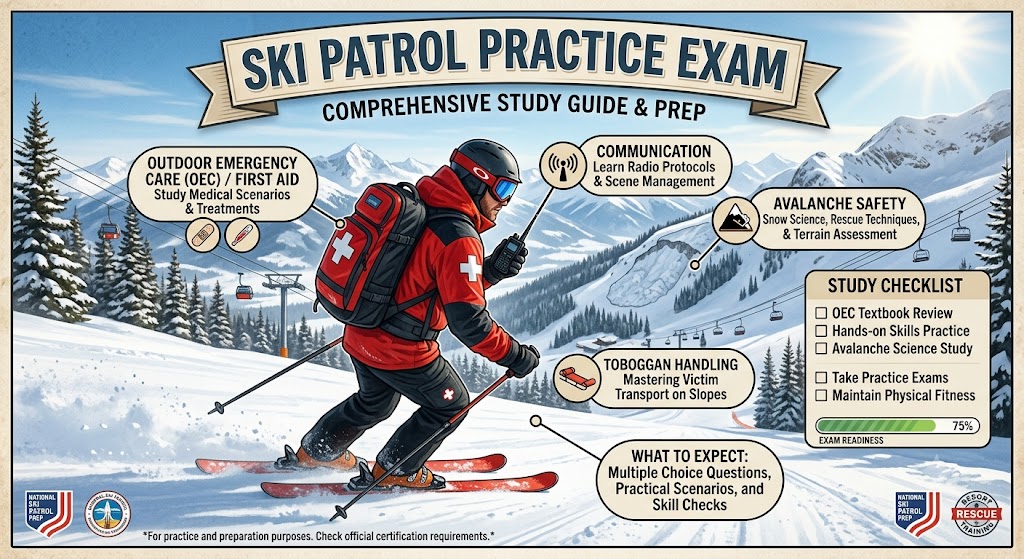
Additional Information
What the Course Entails and Exam Details
The path to becoming a ski patroller typically involves rigorous training, with a core focus on Outdoor Emergency Care (OEC) or equivalent first aid certification. The comprehensive course curriculum includes:
Outdoor Emergency Care (OEC): Advanced first aid skills tailored to the non-urban, cold-weather environment, covering everything from musculoskeletal injuries to environmental emergencies.
Avalanche Safety & Rescue: Understanding snowpack, avalanche terrain, transceiver use, and rescue protocols (especially vital for patrollers in mountainous regions).
Rescue Techniques: Toboggan handling, chairlift evacuation, search and rescue operations, and rope rescue skills.
Mountain Safety & Operations: Trail maintenance, marking hazards, environmental hazards, and enforcing resort safety rules.
Communication: Effective radio communication protocols, incident reporting, and public relations skills.
The Ski Patrol Practice Exam mirrors this breadth, offering multiple-choice questions and potentially practical skill scenarios (simulated in description/video/interactive format for study purposes) to evaluate your comprehension and application of these critical subjects. It is designed to expose you to the types of questions and situations you will encounter in the actual final exam.
What to Expect in the Final Exam
The actual final exam to become a certified ski patroller is a multi-part challenge. It typically consists of a combination of a written theory exam and one or more practical evaluations. The written portion is usually a multiple-choice exam, covering all aspects of the OEC curriculum, avalanche science, and patrol operations. It often has a significant number of questions and strict time limits. Practical evaluations are a critical component, involving on-the-hill scenarios where candidates must demonstrate their skills in:
Providing patient care and transport using a toboggan.
Responding to various medical and trauma scenarios in an outdoor environment.
Utilizing rescue equipment, such as avalanche transceivers and chairlift evacuation gear.
Communicating effectively under pressure.
To pass, candidates must typically achieve a high score (often 80% or higher) on the written exam and successfully pass all components of the practical evaluations, demonstrating proficiency and safety in every skill area. The final exam is often held over several days, and the pressure is real, but thorough preparation will serve you well.
How to Study and Exam Centers
Effective preparation is key to success on both the practice and the final exam. Here are actionable study strategies:
Utilize Practice Exams: Take our Ski Patrol Practice Exam multiple times to gauge your progress, identify weak points, and get comfortable with the exam format and time constraints.
Study the OEC Manual: Deeply read and review the Outdoor Emergency Care (6th Edition or current version) textbook, which is often the primary source for the medical portion.
Hands-on Skills Practice: Seek out opportunities for hands-on practice, either through your local patrol, training courses, or study groups. Practice patient assessment, bandaging, splinting, and toboggan handling.
Join a Study Group: Collaborate with fellow candidates to review material, quiz each other, and practice practical skills.
Review Avalanche Science: Dedicate time to understanding avalanche terrain, snowpack, and rescue, using official resources and training.
Maintain Physical Fitness: Ski patrolling is physically demanding. Maintain strong skiing/snowboarding skills and general physical conditioning.
The official exams are typically managed and administered by authorized organizations (like the National Ski Patrol in the U.S.), regional patrols, or specific ski resorts. Practical exams often take place at designated physical testing centers within a ski area, while written exams may be administered online through official portals or occasionally in physical classroom settings. When you register for your course, you will receive details on where your specific final written and practical exams will be held.
Job Opportunities from the Course
A Ski Patrol certification is a gateway to numerous exciting and fulfilling career and volunteer opportunities. Holding this credential can unlock roles such as:
Professional Ski Patroller (Paid)
Volunteer Ski Patroller
Ski Area Safety Coordinator
Mountain Operations Supervisor
Search and Rescue Technician (often in mountainous areas)
Ski School or Resort Safety Trainer
Outdoor Emergency Care Instructor
Ski Resort Medical Clinic Staff (specific roles)
Frequently Asked Questions
Reviews
5.0
Based on 0 reviews
Leave a Review
No reviews yet. Be the first to review!