
SkillsUSA Advertising Design Practice Exam
$69.00
- Buy to unlock unlimited access to all Quiz questions and Answers in this Quiz.
- After purchase you can print a PDF of the whole quiz at any point. The PDF will contain the questions and the correct answers.
About this Exam
The SkillsUSA Advertising Design exam is a specialized competition and assessment program designed for ambitious students in career and technical education (CTE) programs, targeting high school and college-level participants preparing for careers in the dynamic field of graphic and advertising design. This exam isn't just about knowledge; it tests the real-world application of concepts, evaluating a candidate's ability to create compelling visual communication strategies that meet client needs. It is ideal for creative individuals aspiring to become graphic designers, art directors, or visual marketers who want to validate their skills against industry standards.
Ready to test your knowledge?
Buy Now to Access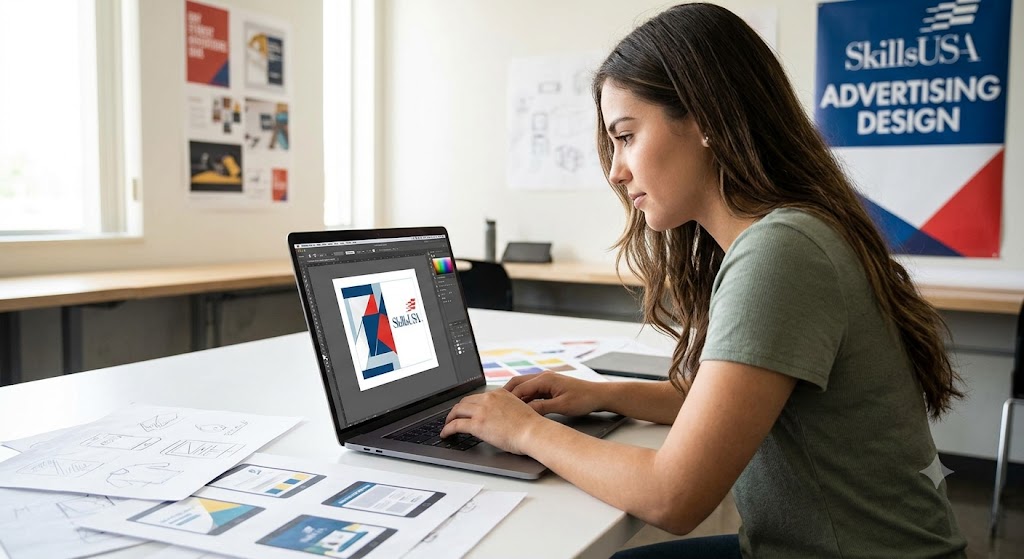
Additional Information
What the Course Entails and Exam Details
This comprehensive course of study and the subsequent exam evaluate mastery across essential domains in the design industry. Key topics typically include:
Conceptual Development: Mastering the art of brainstorming and generating creative advertising concepts that resonate with target audiences and fulfill specific campaign objectives.
Fundamental Design Principles: Demonstrating a deep understanding of core elements such as balance, contrast, repetition, alignment, hierarchy, and color theory to create visually sound designs.
Digital Graphic Design & Software: Exhibiting proficiency in industry-standard software, primarily the Adobe Creative Cloud suite, including specific applications for photo editing (Photoshop), vector graphics (Illustrator), and page layout (InDesign).
Typography: Selecting, arranging, and manipulating type effectively for readability, impact, and brand alignment.
Production Processes: Understanding technical requirements for both print and digital output, including image resolution, file formats, printing techniques, and proofing.
Client Communication & Ethics: Applying professional communication skills to interpret design briefs, present ideas, and navigate legal and ethical considerations in advertising.
What to Expect in the Final Exam
The full assessment typically combines both theoretical knowledge and practical skill performance, mirroring the requirements of a working design professional.
Written Knowledge Test: Candidates first complete a multiple-choice exam covering design theory, terminology, production standards, safety practices, and career concepts.
Practical Performance Challenge: The core component involves a timed hands-on competition where participants are given a design brief and client specifications. Under strict time constraints, they must develop sketches, produce a finished design solution using required software, and often create digital and physical mock-ups.
Time Limits: Candidates face tight deadlines for each phase, replicating real industry pressures.
Scoring: Evaluations are based on standardized rubrics judging creativity, execution quality, technical proficiency, presentation, and adherence to the design brief.
How to Study and Exam Centers
Preparing effectively for the SkillsUSA Advertising Design Practice Exam requires a strategic mix of study, practical application, and mock competition.
Study Actionable Strategies: Begin by thoroughly reviewing the official SkillsUSA Technical Standards for Advertising Design. Focus your study on mastering graphic design principles and color theory. Dedicate significant time to practicing in the Adobe Creative Suite, focusing on efficiency and key functions used in professional workflows.
Practice Methods: Complete past SkillsUSA competition prompts or create your own mock design challenges based on hypothetical client briefs. Set timers to simulate exam pressure and seek feedback from instructors or professionals to refine your technique and speed. Build a comprehensive physical and digital portfolio.
Where and How to Take the Exam: The standard assessment often takes place during State and National SkillsUSA leadership and skills conferences. Candidates must be active SkillsUSA members. Registration and testing portals vary, so consult with your local CTE instructor or state director for specific details on authorized testing centers and online portals.
Job Opportunities from the Course
A strong performance on this exam and completion of the associated course can open doors to numerous rewarding career paths, including:
Graphic Designer
Junior Art Director
Visual Merchandiser
Digital Content Creator
Desktop Publisher
UX/UI Designer (Entry Level)
Production Artist
Freelance Designer
Frequently Asked Questions
Reviews
5.0
Based on 0 reviews
Leave a Review
No reviews yet. Be the first to review!