
SKL Basic Usage Practice Exam
$69.00
- Buy to unlock unlimited access to all Quiz questions and Answers in this Quiz.
- After purchase you can print a PDF of the whole quiz at any point. The PDF will contain the questions and the correct answers.
About this Exam
The Simple Key Loader (SKL) Basic Usage Practice Test is an essential assessment designed for military personnel, defense contractors, and IT security specialists tasked with managing cryptographic keys. This exam verifies your fundamental understanding of the AN/PYQ-10 SKL, the ruggedized handheld device used to securely load cryptographic keys into End Cryptographic Units (ECUs). Mastering the SKL is critical for maintaining secure communications across various tactical networks. This practice test ensures you are prepared for the operational challenges and procedural requirements of key management in the field.
Ready to test your knowledge?
Buy Now to Access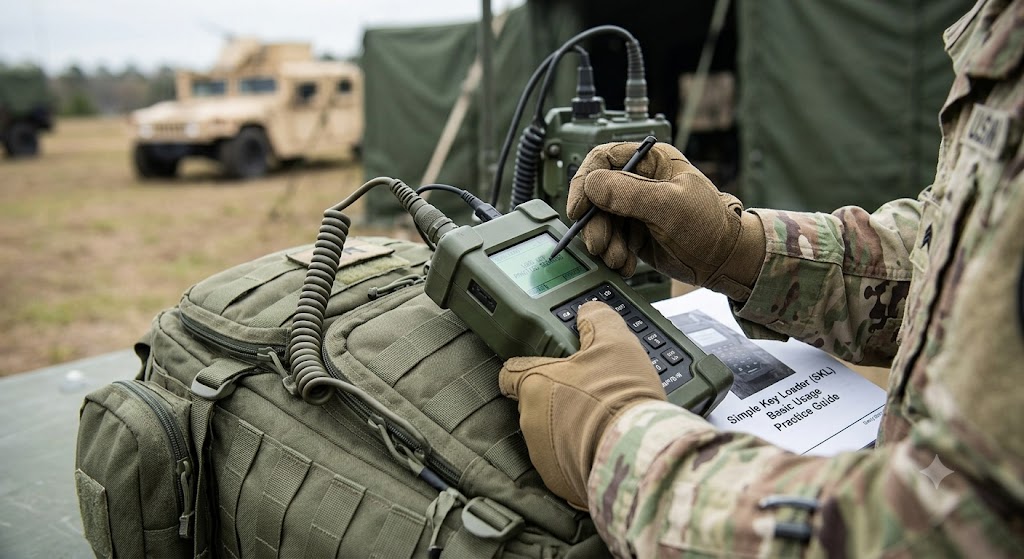
Additional Information
What the Course Entails and Exam Details
This course covers the foundational knowledge required to operate the SKL effectively and securely. It is designed to mirror the knowledge required for official certification and focuses heavily on practical application and adherence to security protocols.
Core topics include:
SKL Hardware Overview: Identifying physical components, ports, interfaces, and power management.
Operating System Navigation: Mastering the CoreView software interface and stylus operations.
Key Management Procedures: Understanding the lifecycle of cryptographic keys, including receiving, storing, and issuing keys.
Loading and Transferring Keys (Fill Operations): The step-by-step process of loading keys into various ECUs and other SKLs.
Database Management: Creating, backing up, restoring, and deleting key databases within the device.
Security Protocols and Audit Trails: Implementing mandatory security measures, managing user accounts, and reviewing audit logs for compliance.
Troubleshooting and Maintenance: Resolving common operational errors and performing basic device maintenance.
What to Expect in the Final Exam
While the exact format can vary by administering organization, the Simple Key Loader (SKL) Basic Usage exam generally follows a standardized structure to test both theoretical knowledge and practical application.
Format: The exam typically consists of multiple-choice questions designed to test procedural knowledge and security regulations. Many versions also include a significant practical or simulation-based component, where you must demonstrate the ability to perform key fill operations and database management tasks on an actual SKL or a certified simulator.
Passing Score: A high degree of accuracy is required due to the critical nature of cryptographic security. Passing scores are often set at 80% or higher.
Time Limit: The exam is usually timed, often providing between 60 to 90 minutes for the written portion and additional time for practical demonstrations.
Specific Rules: This is typically a closed-book exam. Adherence to strict COMSEC (Communications Security) material handling procedures is mandatory during the practical portion.
How to Study and Exam Centers
Preparation for the SKL Basic Usage test requires a balance of theoretical study and, most importantly, hands-on practice.
Study the Manuals: The primary resource is the technical manual (TM) for the AN/PYQ-10 SKL. Pay close attention to operating procedures, warning indicators, and security regulations.
Utilize Practice Tests: Use practice tests like this one to familiarize yourself with the types of questions asked and to identify knowledge gaps. Focus on rationalizing why a specific procedure is required.
Hands-on Practice: There is no substitute for practice with the actual device. If possible, spend time navigating the CoreView interface, performing simulated database backups, and practicing the fill procedures on training ECUs.
Review COMSEC Regulations: Ensure you have a thorough understanding of the overarching COMSEC and Information Assurance (IA) policies relevant to your organization.
Exam Centers: The SKL exam is not typically taken at civilian centers like Pearson VUE. It is administered through specific channels:
Military Information School (DINFOS) or Service-Specific Training Centers: Official certification is usually granted upon completion of specialized training courses at military installations.
Authorized Schoolhouses: Defense contractors and personnel may take the exam at authorized technical training facilities.
Unit-Level Certifiers: In some operational environments, designated COMSEC Managers or Custodians may be authorized to administer the certification or recertification.
Job Opportunities from the Course
Certification in SKL Basic Usage is a critical requirement for numerous roles in defense and secure communications. It unlocks career paths such as:
COMSEC Manager / Custodian
Information Assurance (IA) Specialist
Tactical Communications Systems Operator
Cyber Security Technician
Network Administrator (Defense Sector)
Field Service Technician (Defense Contracting)
Signal Corps Officer / NCO
Frequently Asked Questions
Reviews
5.0
Based on 0 reviews
Leave a Review
No reviews yet. Be the first to review!