
TAMU NFSC300 Religious Foods Exam 2 Practice
$69.00
- Buy to unlock unlimited access to all Quiz questions and Answers in this Quiz.
- After purchase you can print a PDF of the whole quiz at any point. The PDF will contain the questions and the correct answers.
About this Exam
Prepare to broaden your culinary and cultural horizons with the Texas A&M University (TAMU) NFSC300 Religious & Ethnic Foods Exam 2 Practice. This comprehensive course and its subsequent examination are designed for ambitious students pursuing careers in nutrition, food science, hospitality, and global studies. By investigating the deep connection between belief systems, traditional practices, and international cuisines, this practice exam empowers future professionals to understand and respect the diverse dietary needs of global populations. Gain the essential knowledge to navigate the complex intersection of food, faith, and culture in the modern world.
Ready to test your knowledge?
Buy Now to Access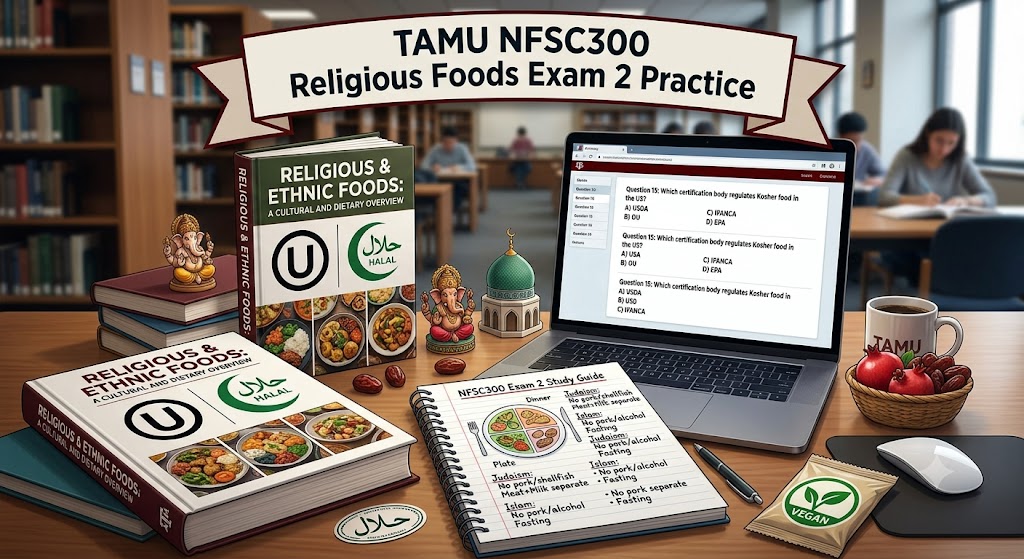
Additional Information
What the Course Entails and Exam Details
NFSC300 at Texas A&M University provides an immersive academic journey into the world’s leading religious and ethnic foodways. The curriculum is meticulously structured to cover the distinct dietary laws and cultural customs of major global religions, including detailed sections on Halal, Kosher, Hindu, Buddhist, and Christian food practices. Furthermore, students explore the unique flavors, techniques, and historical contexts of diverse ethnic cuisines from regions across Asia, Africa, the Middle East, Europe, and the Americas. This course emphasizes the profound social, emotional, and spiritual significance of food, preparing students to confidently manage and develop culturally appropriate nutrition plans, products, and services. The core syllabus includes critical analyses of food security, global food trends, and the socio-cultural determinants of health through the lens of diverse dietetics.
What to Expect in the Final Exam
While structured as a practice assessment, the TAMU NFSC300 Religious & Ethnic Foods Exam 2 is a rigorous evaluation of your comprehensive understanding of the course material. The actual final exam typically utilizes a comprehensive multiple-choice format, often incorporating detailed scenario-based questions that test your ability to apply cultural food knowledge in professional contexts. Students must accurately recall specific dietary laws, identify symbolic foods, compare and contrast global culinary traditions, and analyze the implications of these practices for public health and product development. Standard university testing rules apply; students are expected to achieve a passing score consistent with academic standards, usually 70% or higher. Prepare for a focused, timed examination that demands quick recall and practical application of global food cultural competence.
How to Study and Exam Centers
Maximizing your performance in this critical TAMU exam requires a strategic and proactive study plan. Start by thoroughly reviewing all assigned lectures, readings, and course materials. Create detailed comparative maps detailing the dietary requirements of major religious groups and the staple ingredients of diverse ethnic cuisines. Use mnemonic devices to master complex terminology, such as those related to Halal, Kosher, and Ayurvedic principles. Engage in active study methods, including group discussions to explore cultural nuances, flashcards for key definitions, and reviewing provided case studies to practice applying your knowledge. Utilize academic support services, such as campus study groups and instructor office hours, for targeted clarification. Since this is an internal university course, all NFSC300 exams, including Exam 2 and the Final, are administered directly by Texas A&M University, typically online via the institution's secure learning management system or in proctored physical testing centers on campus.
Job Opportunities from the Course
Successful completion of the TAMU NFSC300 Religious & Ethnic Foods course and its demanding examinations significantly elevates your career prospects in numerous dynamic fields. Graduates are highly sought after by employers who value cultural dexterity and specialized knowledge in nutrition and global cuisines. Your expertise opens doors to diverse and rewarding career paths, including:
Registered Dietitian and Nutritionist specializing in cultural dietetics
Food Scientist or Product Developer for global food brands
Multicultural Food Service Manager in healthcare or hospitality
International Aid or Development Specialist focusing on global food security
Restaurant Manager or Executive Chef for diverse, ethnic, or religious establishments
Culinary Educator or Workshop Facilitator on global food traditions
Travel and Food Journalist exploring intersectional global cuisines
Consultant for corporations on religious and cultural accommodation in food policies
Frequently Asked Questions
Reviews
5.0
Based on 0 reviews
Leave a Review
No reviews yet. Be the first to review!