
Texas Bartending License Practice Test
$69.00
- Buy to unlock unlimited access to all Quiz questions and Answers in this Quiz.
- After purchase you can print a PDF of the whole quiz at any point. The PDF will contain the questions and the correct answers.
About this Exam
Embarking on a career as a bartender in the vibrant hospitality industry of Texas is an exciting goal. While the state of Texas itself does not officially issue a physical "bartending license" for individuals, the crucial and universally recognized qualification in the Lone Star State is the Texas Alcoholic Beverage Commission (TABC) Seller/Server Certification. This comprehensive study guide article is designed for all aspiring bartenders, servers, and managers who need to obtain this mandatory certification. The TABC certification is required by many employers and demonstrates your understanding of essential Texas alcohol laws, responsible service practices, and public safety regulations, ensuring you are prepared to sell and serve alcoholic beverages with confidence and professionalism.
Ready to test your knowledge?
Buy Now to Access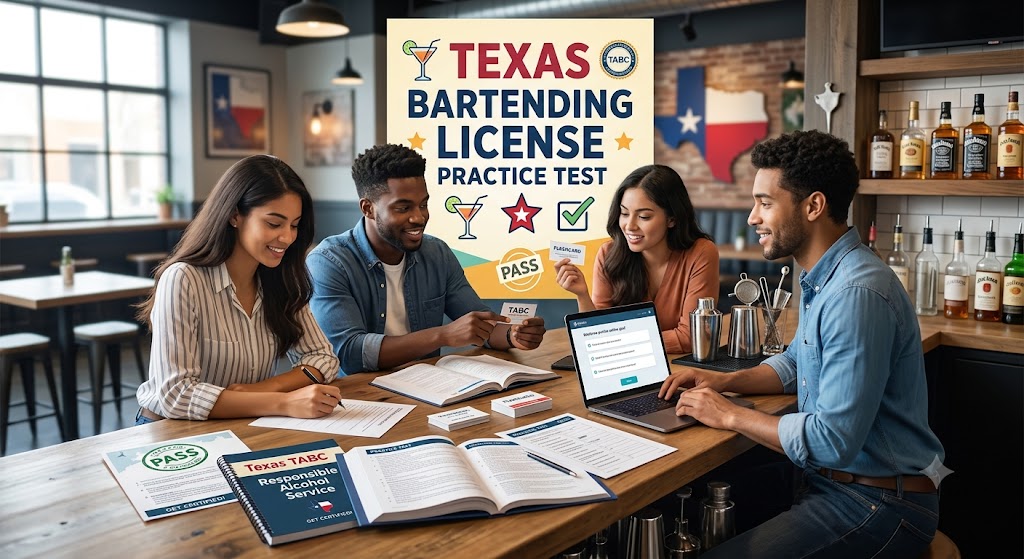
Additional Information
What the Course Entails and Exam Details
The TABC certification course covers a dynamic range of topics critical for anyone involved in the sale and service of alcohol. The curriculum ensures that you have a robust understanding of your legal responsibilities and the best practices for safe service. The core modules and skills taught include:
Texas Alcohol Laws: A thorough review of the key rules, regulations, and relevant sections of the Texas Alcoholic Beverage Code, including who can legally buy and consume alcohol, where it can be served, and the significant administrative sanctions for violations.
Responsible Service: Practical and crucial strategies for preventing the over-service of alcohol to patrons and effective, professional intervention techniques for dealing with intoxicated customers safely.
Preventing Service to Minors: Rigorous and clear methods for proper identification verification, how to spot even sophisticated fake IDs, and a solid understanding of the severe legal and personal consequences of serving alcohol to an individual under 21 years of age.
Intoxication and Signs: A deep dive into the definition of intoxication, understanding the many factors that can quickly affect a customer's level of impairment, and developing the critical skill of recognizing common and subtle signs of intoxication.
Liability and Safety: Comprehensive information regarding the potential civil and criminal liabilities that bartenders, servers, and their employers can face for irresponsible or illegal service, and a broad overview of the health and safety risks associated with alcohol consumption.
While some optional bartending schools may also include separate modules on drink recipes and mixology techniques, it is essential to remember that these technical skills are distinctly different from the state-mandated TABC knowledge required for the legal, certified practice of serving alcohol in Texas. Most students complete the entire TABC course and required exam easily in approximately two to four hours.
What to Expect in the Final Exam
The final step to achieving your TABC certification is passing a required assessment. This exam is designed to directly measure your knowledge of the essential laws and responsible service principles covered in your chosen approved course. Here’s a detailed breakdown of what you can typically expect in the final test:
Format: The exam predominantly, and in nearly all cases, consists entirely of a series of clear multiple-choice or true/false questions. These questions are straightforward and carefully crafted to reflect the critical information you will be trained on.
Content: Questions are meticulously and directly derived from the core topics outlined in the previous section. You can expect specific, practical scenarios and scenario-based questions to truly test your application of safe service principles and legal definitions.
Passing Score: To successfully earn your certification and demonstrate proficiency, you must achieve a passing grade, which is typically a score of at least 70% in many approved online programs and slightly higher in others. The exact percentage required will be clearly communicated by your chosen, accredited certification provider.
Time Limits and Rules: There are generally no time limits placed on the completion of approved online TABC exams, allowing you to proceed comfortably at your own pace and fully absorb the content before and during the assessment. Rules for physical, in-person courses may vary by the school and provider, so you should always check with your specific course instructor. The specific number of multiple-choice and true/false questions can also vary somewhat based on the provider, but typically ranges between 30 and 50 in total. Most online courses also provide you with several attempts to pass at no additional cost.
How to Study and Exam Centers
Successfully preparing for the TABC certification exam involves engaging with the approved training material. To study effectively and maximize your chances of passing with ease, consider these comprehensive strategies:
Review Course Material: Diligently read through all the provided lesson content, notes, and examples provided in your accredited course. Pay particularly close attention to key definitions, legal requirements, scenarios, and the severe, real-world consequences of specific actions.
Take Practice Tests: Actively utilize all official practice exams and interactive quizzes provided by your specific course provider. These tools are often included as part of the accredited package to simulate the format, types, and difficulty level of questions on the final test. This invaluable practice builds confidence and clearly highlights areas where you need to focus your additional study.
Use Flashcards: Create your own detailed flashcards to memorize critical information like acceptable forms of ID (e.g., specific driver's licenses, military IDs, passports), standard drink sizes, different legal definitions (e.g., 'minor', 'intoxication'), and precise blood alcohol content (BAC) limits.
Focus on Law: Pay meticulous attention to the sections detailing exactly what constitutes a legal versus an illegal sale, the distinct legal definitions used in the code, and the severe penalties for both personal and establishment violations.
Exam Centers: The TABC does not operate its own dedicated exam centers for the Seller/Server Certification. Instead, you obtain your certification by successfully completing a TABC-approved training course from an authorized private provider. The overwhelming majority of these approved courses and their final exams are now conveniently and flexibly available entirely online through various accredited portals. These courses are self-paced, allowing you to study and complete the test on your own schedule from any location with an internet connection, once you have purchased access.
Alternative Centers: While online is the dominant method, some specific bartending schools, hospitality training centers, and some large employers across Texas may also offer accredited, approved TABC-approved courses and their subsequent exams in-person at their physical, authorised locations, often as part of a larger employment training or extensive job-readiness program. To find an approved private provider and start your training, simply search the list of authorized providers directly on the official TABC website or via reputable online directories. Once you successfully pass the course and final exam, you will be able to instantly download and print your official, recognized TABC Seller/Server Certificate, which is then valid state-wide for a period of exactly two years. It is then reported directly to the TABC and is valid state-wide for the full two-year period.
Job Opportunities from the Course
A TABC Seller/Server Certification is the vital key that unlocks a vast array of exciting, diverse job opportunities in the booming Texas hospitality and beverage service sectors. Upon successfully earning this mandatory certification and developing your related bartending skills, you will be fully qualified and eligible to apply for high-demand, specialized positions and advance your career in multiple career paths, including:
Licensed Bartender in a large variety of settings: busy restaurants, lively bars, luxurious hotels, and exclusive nightclubs throughout the state.
Head Bartender / Lead Mixologist with additional, proven mixology expertise and experience, in high-end venues.
Bar Manager / Beverage Director with further management experience and strong industry knowledge.
Restaurant Manager overseeing comprehensive operations, including a bustling beverage service.
Restaurant Server including all food and alcohol service.
Retail Alcohol Sales Clerk in dedicated liquor stores and various specialized retail establishments where TABC training is a required prerequisite.
Hospitality Manager / Coordinator
Event Coordinator / Caterer directly managing beverage services and compliant alcohol sale and consumption for diverse events.
TABC-Approved Course Instructor with sufficient, specialized experience and qualifications.
Owner / Operator of your own successful bar, club, restaurant, or unique hospitality business.
Frequently Asked Questions
Reviews
5.0
Based on 0 reviews
Leave a Review
No reviews yet. Be the first to review!