
Texas Class B Fire Extinguisher License Practice Exam
$69.00
- Buy to unlock unlimited access to all Quiz questions and Answers in this Quiz.
- After purchase you can print a PDF of the whole quiz at any point. The PDF will contain the questions and the correct answers.
About this Exam
The Texas Class B Fire Extinguisher License is a vital certification for professionals dedicating their careers to fire safety maintenance. This license specifically authorizes individuals to service, install, and certify portable fire extinguishers in various commercial and industrial settings across the state of Texas. It is designed for individuals working as fire protection technicians, service personnel for safety equipment companies, and facility maintenance staff responsible for ensuring regulatory compliance. This comprehensive practice exam is your essential first step toward mastering the specialized knowledge required to pass the official Texas State Fire Marshal's Office (SFMO) test, validating your expertise and commitment to public safety.
Ready to test your knowledge?
Buy Now to Access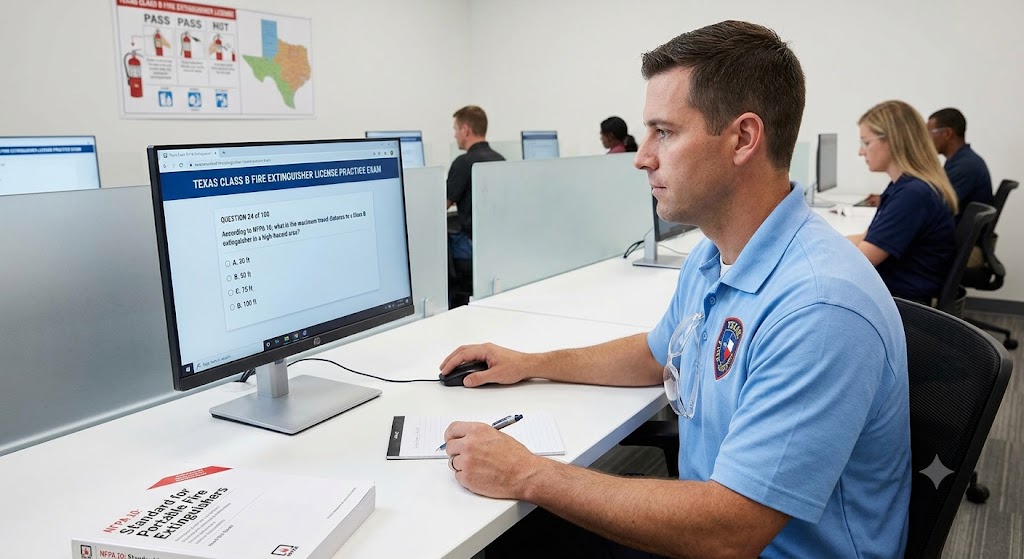
Additional Information
What the Course Entails and Exam Details
Preparing for the Texas Class B Fire Extinguisher License involves a detailed understanding of both national fire codes and specific state regulations. The core curriculum focuses heavily on NFPA 10 (Standard for Portable Fire Extinguishers), which is the foundation for the selection, installation, inspection, maintenance, and testing of portable extinguishing equipment. You will be required to demonstrate proficiency in identifying different classes of fires (A, B, C, D, and K) and matching them with the appropriate extinguishing agents. Key topics include detailed maintenance procedures, such as six-year internal examinations and hydrostatic testing intervals, as well as accurate record-keeping practices mandated by Texas law. Additionally, a significant portion of the exam assesses your knowledge of the Texas Insurance Code Chapter 6001 and the Texas Administrative Code, Title 28, Chapter 34, known colloquially as the "Fire Extinguisher Rules," which govern licensing, conduct, and enforcement in the state.
What to Expect in the Final Exam
The official final exam administered by the state is a rigorous assessment of your theoretical knowledge. It is a closed-book exam, requiring you to have committed key standards and regulations to memory. The format primarily consists of multiple-choice questions designed to test your ability to apply NFPA 10 standards and Texas state laws to practical scenarios. Candidates generally need to achieve a passing score of 70% or higher. While exact time limits can vary slightly, you should prepare for a timed session, typically lasting around 90 minutes. You must register in advance through the State Fire Marshal’s designated testing service and bring valid government-issued identification to the testing center. Strict adherence to testing protocols is required, and no electronic devices or reference materials are permitted during the examination.
How to Study and Exam Centers
Effective preparation for the Texas Class B License Exam demands a structured study approach. Begin by obtaining and thoroughly indexing the mandatory reference materials: the current edition of NFPA 10 and the latest version of the Texas Fire Extinguisher Statutes and Rules. Leverage high-quality practice tests, such as this one, to simulate the exam experience, practice time management, and identify weak areas. Actively quiz yourself on definitions, testing intervals, and specific regulatory requirements unique to Texas. For those preferring structured learning, several authorized schools and trade associations across Texas offer specialized prep courses. The official exam is not taken online; instead, you must schedule your test at an authorized physical testing center. The Texas Department of Insurance contracts with third-party testing vendors, such as PSI, which maintain multiple locations in major cities like Austin, Dallas, Houston, and San Antonio, providing convenient options for candidates statewide.
Job Opportunities from the Course
Earning your Texas Class B Fire Extinguisher License unlocks immediate career opportunities in the specialized field of fire protection. This certification is highly valued by employers and is often a mandatory requirement for service technicians.
Job possibilities include:
Fire Protection Technician: Installing, inspecting, and servicing fire extinguishers for diverse commercial clients.
Fire Extinguisher Service Technician: Performing mandated maintenance, refilling, and hydrostatic testing.
Safety Equipment Inspector: Ensuring facility compliance with fire safety codes and regulations.
Facility Maintenance Technician (Specialized): Dedicated role within large institutions managing fire suppression systems.
Fire Safety Sales Representative: Utilizing technical knowledge to advise clients on proper equipment and maintenance schedules.
Owner/Operator of a Fire Extinguisher Service Firm: Establishing your own licensed business in the fire protection industry.
Frequently Asked Questions
Reviews
5.0
Based on 0 reviews
Leave a Review
No reviews yet. Be the first to review!