
Texas Vehicle Safety Inspection Certification
$69.00
- Buy to unlock unlimited access to all Quiz questions and Answers in this Quiz.
- After purchase you can print a PDF of the whole quiz at any point. The PDF will contain the questions and the correct answers.
About this Exam
The Texas Vehicle Safety Inspection Certification is a mandatory qualification required by the Texas Department of Public Safety (DPS) for individuals seeking to become certified Vehicle Safety Inspectors. This certification ensures that inspectors have the knowledge and skills necessary to conduct thorough and accurate safety inspections on vehicles registered in the state of Texas, contributing significantly to road safety.
It is designed for automotive technicians, mechanics, and individuals working in the automotive industry who want to expand their services or advance their careers by performing official state inspections. Passing this exam demonstrates your commitment to vehicle safety regulations and your ability to identify potential hazards that could compromise the safety of Texas motorists.
Ready to test your knowledge?
Buy Now to Access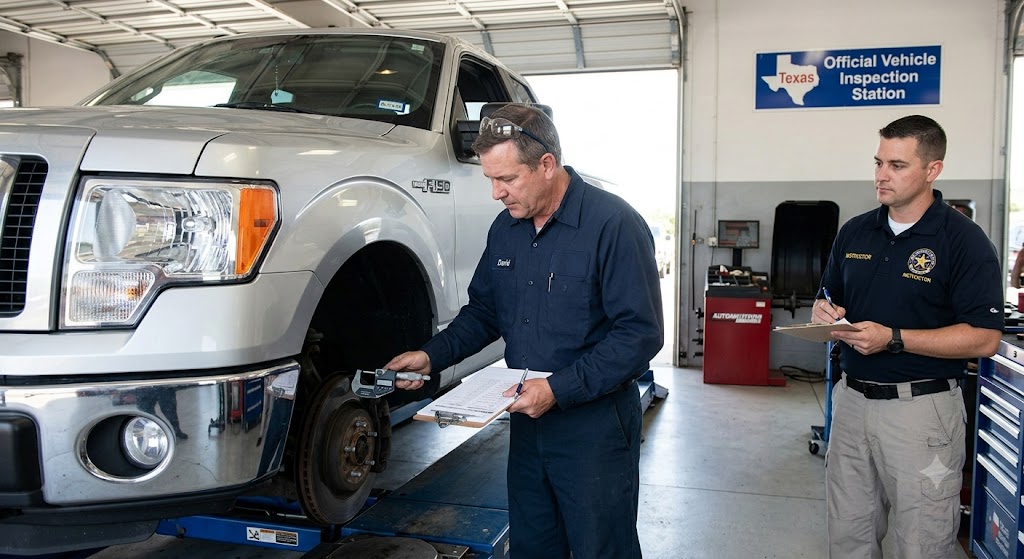
Additional Information
What the Course
Entails and Exam Details
This certification preparation typically involves studying
the official Texas regulations and procedures for vehicle inspections. While
specific training courses may vary, they generally cover the following core
areas based on the Texas Department of Public Safety requirements:
- Texas
Inspection Regulations: In-depth review of the Texas Administrative
Code (TAC) and DPS policies governing the Vehicle Inspection Program.
- Inspection
Procedures: Step-by-step guidance on how to properly inspect various
vehicle components, including:
- Brake
systems (service and parking brakes)
- Steering
and suspension mechanisms
- Tires
and wheels
- Lighting
equipment (headlights, tail lights, turn signals, etc.)
- Glass
and glazing (windshields, windows, and tinting)
- Mirrors
- Horns
- Windshield
wipers
- Exhaust
systems
- Fuel
systems
- Body
components and sheet metal
- Emissions
Inspections: Requirements and procedures for emissions testing,
specifically for vehicles registered in designated counties.
- Inspector
Responsibilities: Ethical considerations, documentation requirements,
record-keeping, and the proper use of inspection certificates and decals.
- Proper
Equipment Usage: Understanding the tools and equipment required to
perform accurate inspections.
What to Expect in
the Final Exam
The final certification exam is designed to test your
comprehension of the Texas Inspection Regulations and your ability to apply
that knowledge in a practical setting. You can typically expect a two-part
examination process:
- Written
Examination: A multiple-choice exam that evaluates your knowledge of
the Texas Vehicle Inspection Manual, specific regulations, vehicle
components, and safety standards. You must demonstrate a thorough
understanding of which items are inspectable and what conditions
constitute a failure.
- Passing
Score: The required passing score for the written exam is typically
around 75% or higher, as determined by the Texas DPS.
- Practical
Examination/Performance Test: This hands-on portion requires you to
demonstrate your ability to correctly perform a mock vehicle inspection. A
DPS representative or authorized instructor will observe you to ensure you
follow all prescribed procedures, accurately identify components, and
properly evaluate their condition.
It is crucial to be well-prepared for both parts of the
exam, as successful completion of both is required for certification.
How to Study and
Exam Centers
Preparing effectively is key to passing the Texas Vehicle
Safety Inspection Certification exam. Here are some actionable strategies:
- Study
the Official Manual: Your primary study resource should be the most
current version of the Texas Vehicle Inspection Manual, available directly
from the Texas Department of Public Safety website.
- Enroll
in an Approved Training Course: Many technical colleges, automotive
schools, and private training providers offer DPS-approved certification
courses. These courses often provide valuable hands-on training and
practice exams.
- Review
Regulations: Familiarize yourself with the relevant sections of the
Texas Administrative Code (TAC) pertaining to vehicle inspections.
- Utilize
Practice Tests: Seek out practice questions and exams, either through
your training provider or online resources, to get accustomed to the
format and types of questions you will encounter.
- Get
Practical Experience: If possible, observe or assist a currently
certified inspector to see the inspection process in action. Practice
performing inspections on various vehicles, paying close attention to
every detail outlined in the manual.
Exam Centers and Scheduling:
The written exam is typically administered at the conclusion
of a DPS-approved training course. If you are taking the exam without a formal
course (if permitted for renewal or specific circumstances), you may need to
schedule it through a designated DPS office or an authorized testing center.
The practical examination is usually scheduled directly with
a Texas DPS representative or an authorized instructor, often immediately
following successful completion of the written exam. You should check the Texas
DPS website or contact your local DPS office for the most up-to-date
information on exam scheduling, approved training providers, and testing
locations near you.
Job Opportunities
from the Course
Obtaining the Texas Vehicle Safety Inspection Certification
opens doors to several rewarding career opportunities within the Texas
automotive industry:
- Certified
Vehicle Safety Inspector: Perform official state inspections at
licensed inspection stations.
- Automotive
Technician/Mechanic: Enhance your existing role by being able to
provide official inspection services to customers.
- Service
Advisor: Utilize your knowledge to accurately explain inspection
requirements and results to clients.
- Service
Manager: Oversee inspection operations within an automotive facility.
- Fleet
Maintenance Technician: Conduct safety inspections on company-owned
vehicle fleets.
- Quality
Control Inspector: Work in environments that require rigorous vehicle
safety checks.
This certification not only makes you a more valuable asset
to your current or future employer but also demonstrates your dedication to
professionalism and public safety.
Frequently Asked Questions
Reviews
5.0
Based on 0 reviews
Leave a Review
No reviews yet. Be the first to review!