
The American Red Cross Cardiopulmonary Resuscitation (CPR) Practice Test
$69.00
- Buy to unlock unlimited access to all Quiz questions and Answers in this Quiz.
- After purchase you can print a PDF of the whole quiz at any point. The PDF will contain the questions and the correct answers.
About this Exam
The American Red Cross Cardiopulmonary Resuscitation (CPR) certification is a vital credential that validates your ability to respond effectively to cardiac emergencies. This course and the subsequent exam are designed for a diverse audience, including healthcare professionals, workplace responders, and community members who wish to be prepared to save a life. By obtaining this certification, you demonstrate that you possess the essential knowledge and practical skills to perform CPR and use an Automated External Defibrillator (AED). It's an indispensable asset for individuals looking to enhance their lifesaving capabilities and meet various professional or personal safety requirements.
Ready to test your knowledge?
Buy Now to Access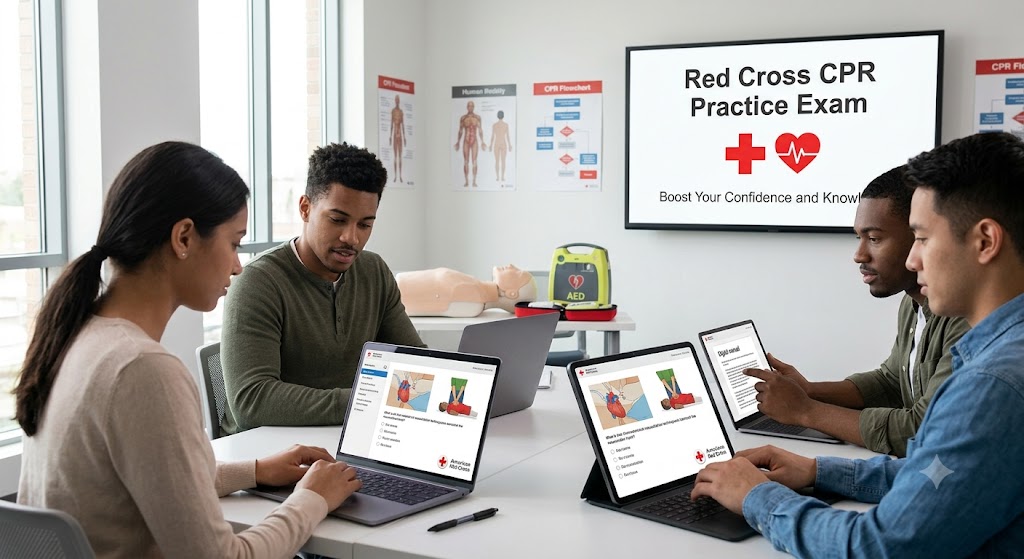
Additional Information
What the Course Entails and Exam Details
This comprehensive course covers a range of critical topics
to ensure you are fully prepared for cardiac emergencies. You will learn the
latest, evidence-based resuscitation algorithms for adults, children, and
infants. The core curriculum includes understanding the chains of survival,
recognizing the signs of cardiac arrest, and performing high-quality chest
compressions and rescue breaths. The course also provides detailed instruction
on the safe and effective use of an AED, which is often a key determinant of
survival in cardiac events. In addition, you will be trained on how to relieve
choking in all age groups. The exam itself is a rigorous assessment of this
knowledge, structured to test your understanding of each critical step and
scenario covered during your training.
What to Expect in the Final Exam
The final certification exam typically consists of two
distinct components designed to thoroughly evaluate your competency. The
cognitive portion is a multiple-choice exam administered online or in a
classroom setting. This test assesses your theoretical knowledge of CPR
algorithms, AED operation, and critical care principles. You must achieve a
passing score, often around 80% or higher, to move forward. The practical skill
assessment, conducted by a certified Red Cross instructor, is an essential
element where you must physically demonstrate your ability to perform
high-quality CPR and use an AED on a training manikin. Both parts are timed and
require you to strictly adhere to established protocols without deviation. Your
full concentration is required for both the written test and the hands-on
evaluation.
How to Study and Exam Centers
Preparation is key to succeeding on the American Red Cross
CPR exam. Start by thoroughly reviewing the provided course materials,
including the official student manual and online modules. Pay close attention
to current guidelines for chest compressions and rescue breathing. Utilizing
the official American Red Cross CPR Practice Test is an excellent way to
familiarize yourself with the format and types of questions you will encounter.
Take advantage of practice scenarios to reinforce your decision-making and
manual skills. For your certification, you will need to find an authorized Red
Cross training provider. These sessions are held in various authorized
locations, such as hospitals, community centers, schools, or dedicated Red
Cross testing facilities. Ensure you register for a class that includes the
required in-person skill assessment.
Job Opportunities from the Course
A Red Cross CPR certification is a valuable asset that can
enhance your resume and unlock numerous career opportunities across various
sectors. Many professions require this credential as a condition of employment
to ensure the safety of clients, patients, or the public. The skill set you
gain is universally recognized and highly valued by employers. Here is a list
of job titles and career paths that often require or are enhanced by having
this life-saving certification:
- Healthcare
Providers (Nurses, Doctors, EMTs/Paramedics, Medical Assistants, Physical
Therapists)
- First
Responders (Police Officers, Firefighters)
- Educators
(Teachers, Preschool Staff, Coaches)
- Childcare
Workers (Nannies, Daycare Providers)
- Lifeguards
and Swim Instructors
- Flight
Attendants and Airline Personnel
- Workplace
Safety Officers and Security Guards
- Fitness
Instructors and Personal Trainers
- Security
Personnel and Loss Prevention Officers
- Construction
and Industrial Workers
Frequently Asked Questions
Reviews
5.0
Based on 0 reviews
Leave a Review
No reviews yet. Be the first to review!