
Top 200 Drugs Anti Infectives Practice Exam
$69.00
- Buy to unlock unlimited access to all Quiz questions and Answers in this Quiz.
- After purchase you can print a PDF of the whole quiz at any point. The PDF will contain the questions and the correct answers.
About this Exam
Mastering pharmacology is a cornerstone of safe and
effective healthcare practice.
The 2PD Top 200 Drugs Anti-Infectives and Cardiovascular
Agents Practice Test is a vital resource designed for pharmacy students,
pharmacy technicians, nursing students, and other medical professionals seeking
to solidify their knowledge.
This comprehensive test focuses on two of the most critical
drug classes, challenging your ability to identify, understand, and apply
complex pharmacological concepts.
Whether you are preparing for your licensure exams (such as
the NAPLEX or PTCE) or simply aim to elevate your clinical acumen, this
practice exam offers a robust, challenging environment to hone your skills and
boost your confidence.
Ready to test your knowledge?
Buy Now to Access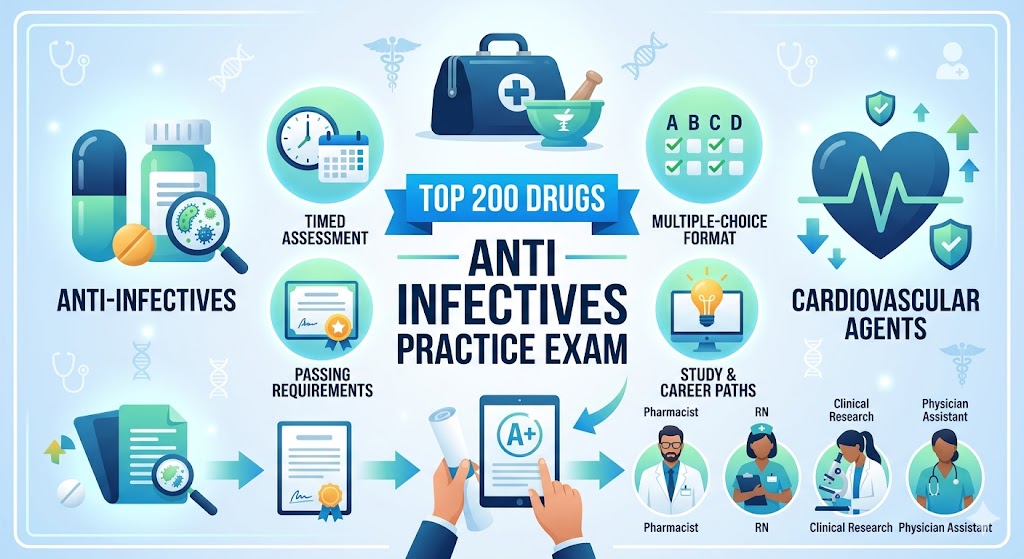
Additional Information
What the Course Entails and Exam Details
The focus of this practice test is narrow but incredibly
deep.
It concentrates specifically on the Anti-Infective and
Cardiovascular agent categories as they appear within the definitive Top 200
Drugs list.
You will be expected to demonstrate proficiency in
identifying:
- Anti-Infectives:
Classification of antibiotics (penicillins, cephalosporins, macrolides,
fluoroquinolones, etc.), antivirals, antifungals, and antiparasitics. This
includes their specific mechanisms of action, primary indications (e.g.,
treating specific bacterial strains like MRSA), critical side effects,
major drug interactions, and unique dosing considerations.
- Cardiovascular
Agents: Detailed knowledge of drugs used to treat hypertension, heart
failure, arrhythmias, and hyperlipidemia. Key classes covered include ACE
inhibitors, ARBs, beta-blockers, calcium channel blockers, diuretics,
statins, and anticoagulants.
You must understand how these drugs work on a physiological
level, how to recognize brand/generic pairs, and how to spot critical red flags
in therapy.
What to Expect in the Final Exam
While "practice tests" vary, they generally
emulate the rigor of real-world licensing examinations.
The 2PD Practice Test typically consists of multiple-choice
questions (MCQs), which are a mix of straight knowledge recall (e.g.,
"What class is Lisinopril?") and higher-level, scenario-based
questions (e.g., a patient case requiring you to select the appropriate
anti-infective or dosage adjustment).
There may also be fill-in-the-blank questions (often for
dosage calculations) or matching exercises for brand and generic names.
The scoring is usually calculated immediately upon
completion, providing you with a passing score percentage and often a detailed
rationale for incorrect answers.
The test is timed, demanding not only accuracy but also
quick, decisive thinking under pressure.
How to Study and Exam Centers
Effective study for this test must go beyond passive
reading.
We recommend a structured "Recall, Group, Apply"
strategy:
- Create
Dynamic Flashcards: Don't just list the drug name; create
comprehensive cards with the generic name, common brand names, therapeutic
class, mechanism of action, key indications, black box warnings, and major
side effects.
- Group
and Compare: Instead of memorizing one drug at a time, group them
(e.g., "all statins"). Create comparison charts to highlight
unique features or contraindications within a single class.
- Apply
through Practice: Take practice quizzes constantly. Use randomized
drug databases to test your recall of generic-to-brand (and vice-versa).
The best study involves repeated exposure and forcing your brain to
retrieve the information.
- Case
Studies: Review clinical case studies where you must identify the
appropriate drug therapy or recognize potential medication errors.
Job Opportunities from the Course
A strong score on this practice test—and subsequent
licensure/certification—signals mastery in critical areas of pharmacology.
This expertise is highly valued and opens doors to numerous
career paths, including:
- Certified
Pharmacy Technician (CPhT): Essential role in retail, hospital, or
closed-door pharmacies.
- Pharmacist:
Requires a PharmD and state licensure (this practice exam is ideal for
NAPLEX preparation).
- Registered
Nurse (RN): A deep understanding of anti-infectives and CV agents is
critical for safe medication administration.
- Cardiology
Physician Assistant (PA) or Nurse Practitioner (NP): Specializing in
cardiovascular care requires advanced knowledge of these drug classes.
- Medical
Scribe (Surgical/Cardiology Specialization): Invaluable support role
requiring extensive medical terminology and drug knowledge.
- Clinical
Research Coordinator (Cardiology Trials): Assisting in trials testing
new medications often requires a strong base in existing therapeutics.
Frequently Asked Questions
Reviews
5.0
Based on 0 reviews
Leave a Review
No reviews yet. Be the first to review!