
Unarmed Basic Security Practice Test
$69.00
- Buy to unlock unlimited access to all Quiz questions and Answers in this Quiz.
- After purchase you can print a PDF of the whole quiz at any point. The PDF will contain the questions and the correct answers.
About this Exam
Embarking on a career in unarmed private security is a fantastic way to enter the workforce, offering roles with immediate responsibility, a clear purpose, and diverse job paths. This foundational qualification is designed for individuals of all backgrounds who seek to establish themselves as professional security providers, demonstrating essential knowledge and adherence to safety protocols. A critical step in achieving this certification and demonstrating your readiness is to excel on the associated practice and final exams.
The Unarmed Basic Security Practice Test is a crucial preparatory tool, allowing you to gauge your understanding of fundamental security principles, legal restrictions, and emergency procedures. By successfully navigating this practice test and eventually the actual certification exam, you show potential employers you possess the core competencies needed to observe, report, and maintain safe environments without a weapon. This study guide and practice exam are your primary assets in ensuring you approach this essential career milestone with confidence and competence.
Ready to test your knowledge?
Buy Now to Access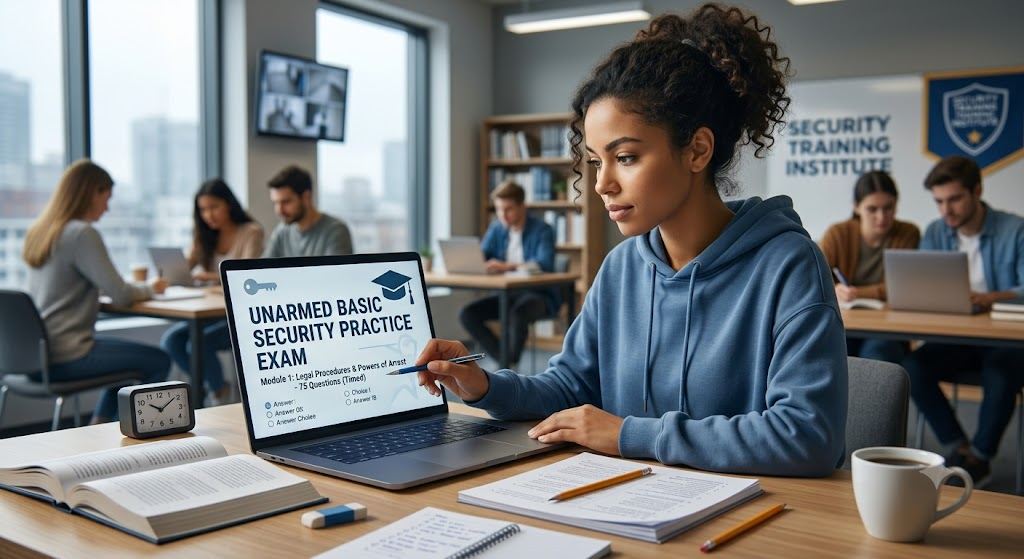
Additional Information
What the Course Entails and Exam Details
This comprehensive course, often spanning several days of structured training, meticulously covers the entire spectrum of knowledge essential for a successful career as an unarmed security professional. The detailed syllabus is designed to provide you with both theoretical understanding and practical awareness.
Key topics included in the extensive curriculum are:
Roles and Responsibilities of a Private Security Officer
Powers to Arrest and General Legal Authority
Communication Skills, including Verbal De-escalation and Professional Report Writing
Conflict Management and Dispute Resolution
Emergency Response Procedures, including First Aid and Fire Safety
Patrol Techniques, Observation, and Documentation
Ethics, Conduct, and Professionalism in the Workplace
Regulatory Requirements, Background Checks, and Licensure for Unarmed Officers
Each of these critical areas contributes to a holistic understanding of how an unarmed security officer can effectively fulfill their duty of care. The Unarmed Basic Security Practice Test is carefully aligned with this curriculum, simulating the types of questions and challenges you will encounter on the final assessment. The detailed exam details typically involve around 50 to 100 questions and require careful study of the official manual provided by your certifying body.
What to Expect in the Final Exam
The actual final examination for unarmed basic security is generally a comprehensive, standard format test, widely accepted across the industry. This crucial test is usually presented in a structured, multi-question format, primarily featuring multiple choice or true/false questions based on the core competencies and detailed knowledge points covered in the course syllabus. There could potentially be practical scenarios as well, so prepare well. The final exam details and passing score requirements can vary significantly by state, country, or specific certifying body, but commonly range from 70% to 80%.
You can usually expect the timed final exam to last between one and two hours, necessitating consistent focus, efficient time management, and a deep understanding of the course materials. It is essential to strictly adhere to all official test rules, which typically prohibit the use of unauthorized electronic devices, notes, or outside assistance. The final exam details will be provided precisely by your proctor or online platform before you begin.
How to Study and Exam Centers
Preparation is absolutely key for this exam. Utilize this definitive study guide and engage with the practice exam repeatedly to identify and bolster your weakest knowledge areas. Combine your practical efforts with careful, thorough reviews of all provided course manuals, official notes, and any relevant state laws and standard operating procedures. Actively create detailed flashcards, participate in group study sessions if possible, and simulate actual exam conditions by timing yourself during practice sessions. This study guide also covers finding the right places for both practice and the actual exam.
Regarding official exam centers, you should note that practice exams are typically available directly through authorized online portals provided by accredited security training providers or industry bodies. The final certification exam details often involve taking the test at a physical testing location. These centers could be specific authorized security schools, designated physical testing centers like Pearson VUE, or locations mandated by the state regulatory agency responsible for licensing security personnel. For the most up-to-date information on approved proctors and centers near you, always consult the official website of your specific training provider, state, or regulatory body. The final exam details, including location options, are typically part of your initial registration or course information.
Job Opportunities from the Course
Upon successfully passing the Unarmed Basic Security Practice Test and the subsequent final certification exam, a wide variety of engaging and vital job opportunities in diverse sectors will be immediately available to you. Security guards who are properly certified are in very high demand and can pursue stable careers with a lot of future opportunities for progression. This fundamental certification is the common starting point for a vast range of unarmed security roles, opening doors for entry-level positions and future leadership.
Below is a clear and concise list of the exciting career paths and specific job titles unlocked by this comprehensive qualification:
Security Guard / Officer
Patrol Officer (Foot, Vehicle, or Bike)
Event Security Staff (Concerts, Sports, Festivals)
Corporate Security Officer / Lobby Concierge
Retail Security Officer / Loss Prevention
Hospital / Healthcare Security Guard
School Security Monitor / Campus Safety
Front Desk Security Receptionist
Access Control Specialist
Mobile Patrol Officer
Site Supervisor / Lead Security Officer (after experience)
Corporate Security Guard Shack Attendant
Dispatch Operator (with relevant computer/communication skills)
Each of these dynamic roles involves critical responsibilities such as monitoring access points, performing regular patrols, reporting incidents, responding to non-violent emergencies, and providing a crucial safe presence. The extensive career field offers immediate opportunities in practically every type of environment imaginable, from bustling shopping malls and major transportation hubs to quiet corporate high-rises and critical infrastructure sites. This essential qualification truly is your powerful key to a rewarding and secure career path in a vital industry.
Frequently Asked Questions
Reviews
5.0
Based on 0 reviews
Leave a Review
No reviews yet. Be the first to review!