
Unarmed Security Officer Practice Test
$69.00
- Buy to unlock unlimited access to all Quiz questions and Answers in this Quiz.
- After purchase you can print a PDF of the whole quiz at any point. The PDF will contain the questions and the correct answers.
About this Exam
The Unarmed Security Officer qualification is a foundational step for individuals entering the private security industry. This certification, often mandated by state or regional regulatory bodies, validates that an aspiring security professional possesses the essential knowledge and understanding of basic security principles, safety protocols, and ethical conduct. It is designed for entry-level candidates seeking employment as security guards, patrol officers, or corporate security personnel in environments where carrying a weapon is not required or permitted. Successfully passing this exam demonstrates competency in maintaining a safe and secure environment.
Ready to test your knowledge?
Buy Now to Access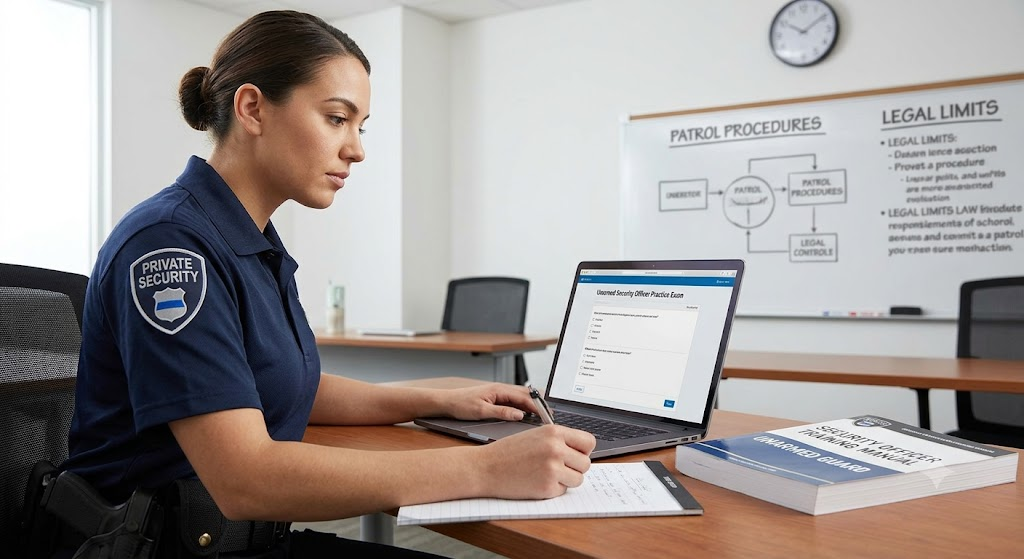
Additional Information
What the Course Entails and Exam Details
The comprehensive training leading to the Unarmed Security Officer exam typically covers a broad curriculum focused on foundational security skills and legal knowledge. Candidates will study core topics such as asset protection, observation and documentation, and the proper methods for conducting effective patrols in various environments. The curriculum emphasizes critical thinking in areas like the legal powers and limitations of security officers, including laws of arrest and search and seizure. Additionally, fundamental skills in effective communication, conflict resolution, first aid, and fire safety are thoroughly integrated. The exam itself evaluates knowledge across these domains, testing a candidate's ability to apply these principles in real-world scenarios.
What to Expect in the Final Exam
The final Unarmed Security Officer examination is usually a standardized, closed-book assessment. While formats can vary slightly by jurisdiction, candidates should generally expect a multiple-choice structure, containing approximately 50 to 100 questions. The test is designed to be completed within a specific time limit, typically ranging from 90 minutes to two hours. To achieve certification, a passing score—often set between 70% and 80%—is required. The questions are derived directly from the training curriculum and focus on applying practical knowledge rather than just memorization. Some exams may also incorporate simple situational judgment questions.
How to Study and Exam Centers
Effective preparation for the Unarmed Security Officer Practice Exam involves a dedicated study plan combining official resources and practice materials. Candidates are encouraged to thoroughly review the training manuals and study guides provided during their course. Utilizing practice exams is highly recommended to become familiar with the test format and identify areas needing improvement. Reviewing local regulations and legal definitions specific to your state or region is critical. The actual examination is typically administered through authorized training schools, state regulatory agencies, or designated third-party testing centers, which may offer both physical testing locations and secure online proctoring options depending on the jurisdiction.
Job Opportunities from the Course
Earning the Unarmed Security Officer certification opens the door to numerous entry-level positions within the private security sector. This credential validates your readiness for roles such as a Corporate Security Officer protecting office buildings, a Retail Security Guard preventing loss in stores, or a Residential Security Patrol monitoring gated communities. Other potential career paths include Event Security personnel for concerts and sporting events, Healthcare Security officers working in hospitals, and Access Control specialists managed entrances for various facilities. This certification serves as a critical stepping stone for advancing toward specialized security roles or supervisory positions.
Frequently Asked Questions
Reviews
5.0
Based on 0 reviews
Leave a Review
No reviews yet. Be the first to review!