
Unauthorized Disclosure for DoD and Industry SPeD Practice Exam
$69.00
- Buy to unlock unlimited access to all Quiz questions and Answers in this Quiz.
- After purchase you can print a PDF of the whole quiz at any point. The PDF will contain the questions and the correct answers.
About this Exam
The Defense Counterintelligence and Security Agency (DCSA) Center for Development of Security Excellence (CDSE) provides certifications through the Security Professional Education Development (SPeD) Program. The Unauthorized Disclosure certification focuses on a critical aspect of national security: preventing the non-permissive sharing of classified and controlled unclassified information. This practice exam is designed for individuals seeking this certification, including military personnel, DoD civilian employees, and defense contractors who handle or have access to sensitive defense information. The certification demonstrates an individual’s mastery of the policies and protocols required to safeguard information and respond effectively when a disclosure occurs. By simulating the actual exam environment, this study guide helps candidates identify their strengths and weaknesses in understanding unauthorized disclosure mechanisms, reporting procedures, and security protocols.
Ready to test your knowledge?
Buy Now to Access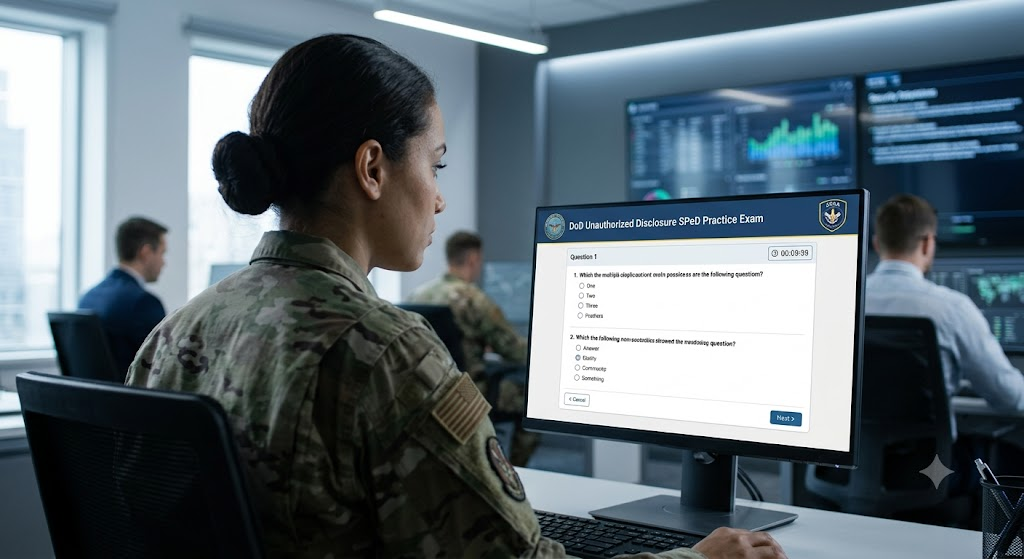
Additional Information
What the Course Entails and Exam Details
This practice exam, and the underlying SPeD Unauthorized Disclosure certification, requires deep knowledge across several fundamental domains of information security. You must demonstrate proficiency in:
Understanding UD Mechanisms: Identifying how unauthorized disclosures occur, whether intentional (insider threat, malicious actor) or unintentional (negligence, improper handling).
DoD Policy and Regulation: Mastery of relevant DoD Instructions, Directives, and manuals governing classified information, controlled unclassified information (CUI), and the protection of sensitive data.
Roles and Responsibilities: Understanding the distinct responsibilities of every person holding a security clearance, as well as the specialized roles of security officers, supervisors, and counterintelligence personnel.
Reporting Procedures: Knowledge of the exact steps and timelines required to report known or suspected unauthorized disclosures to the proper authorities.
Incident Response and Mitigation: Understanding the immediate actions taken to contain a potential leak, mitigate damage, and preserve evidence for investigations.
Investigations and Consequences: Familiarity with the general process of security investigations following a disclosure and the potential legal, administrative, and professional penalties involved.
The actual SPeD Unauthorized Disclosure exam is typically a proctored, online examination consisting of multiple-choice questions designed to test both knowledge recall and the practical application of policy to realistic scenarios.
What to Expect in the Final Exam
While the exact structure of the official SPeD exam can vary, you should generally expect a standard standardized testing format:
Format: Primarily multiple-choice and potentially multi-select questions. You will often encounter scenario-based questions where you must choose the correct course of action or apply a policy based on a provided situation.
Time Limit: The exam is timed, often ranging from 60 to 90 minutes. You must manage your time efficiently across all questions.
Passing Score: The DoD SPeD program maintains a high passing standard, generally requiring a score in the range of 75% to 80% to achieve certification.
Security: The certification exam is typically taken in a controlled, proctored environment, ensuring integrity and preventing unauthorized assistance. Retakes may have specific waiting periods or limitations.
How to Study and Exam Centers
Preparation is critical to success in the SPeD Unauthorized Disclosure certification. Effective study strategies include:
Utilize Official DoD/CDSE Resources: The Center for Development of Security Excellence (CDSE) website provides essential study materials, including online courses, security infographics, toolkits, and policy directives. Focus heavily on these primary resources.
Deep Policy Review: Master the underlying DoD Instructions and Manuals related to classified information, such as DoDM 5200.01 and regulations on CUI.
Practice with Scenarios: Simulate real-world situations and practice applying security policies. Analyze scenarios involving data spills, media interviews, public speaking, and the use of unclassified systems to ensure you know the correct protocols.
Take Reputable Practice Exams: Use professional practice exams, like the one associated with this guide, to familiarize yourself with the question types and formatting, test your knowledge under timed conditions, and identify areas needing additional study.
Create Flashcards: Use flashcards for key terms, definitions, reporting timelines, and critical DoD directives.
Where to Take the Exam:
The actual SPeD certification exam is administered through the DCSA Center for Development of Security Excellence (CDSE). Authorized candidates typically register and take the exam online via the Security Training, Education, and Professionalization Portal (STEPP) or through approved DoD learning management systems. Proctored sessions might be facilitated at designated military installations or testing facilities. Always check the official DCSA/CDSE website for the most current information on registration and testing options.
Job Opportunities from the Course
Earning the DoD Unauthorized Disclosure SPeD Certification validates your expertise and commitment to national security, opening doors to advanced career paths within the DoD and industry. This certification is highly valued for numerous roles, including:
Security Specialist / Security Manager
Information Security (INFOSEC) Analyst
Facility Security Officer (FSO)
Counterintelligence Special Agent / Analyst
Operations Security (OPSEC) Specialist
Compliance Manager (Defense Contracting)
Program Security Officer (PSO)
Security Adjudicator
DoD Contractor Security Liaison
IT Security Professional (with security clearance)
By achieving this certification, you distinguish yourself as a knowledgeable and reliable professional dedicated to protecting vital national interests.
Frequently Asked Questions
Reviews
5.0
Based on 0 reviews
Leave a Review
No reviews yet. Be the first to review!